



The Recommended Reading Order for the Peter Newman Series
For readers looking to follow the career of Major (later Brigadier General) Peter Newman, the recommended path is straightforward: read the novels in their original publication order. The series is highly serialized, with character relationships, political consequences, and Newman's military promotions developing sequentially from one book to the next.
Here is the recommended reading order for the series:
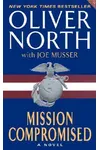
- Mission Compromised (2002)
- The Jericho Sanction (2003)
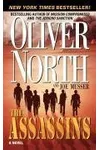
- The Assassins (2005)
- After Jihad (2009)
- Heroes Proved (2012)
Breaking Down the Peter Newman Books
1. Mission Compromised (2002)
The series launches with Mission Compromised, introducing readers to Major Peter Newman, a highly decorated U.S. Marine assigned to a clandestine White House group. Newman is tasked with leading a top-secret unit to eliminate global terrorists suspected of harboring weapons of mass destruction. However, the mission is compromised from within, leaving Newman betrayed and fighting for survival. This initial entry establishes the primary themes of the series: tactical military realism, political betrayal, and the protagonist's deeply held Christian faith, which grounds his morality in the gray zones of covert warfare.
2. The Jericho Sanction (2003)
Following the fallout of his first mission, Newman returns in The Jericho Sanction. His cover is blown in Jerusalem, and his wife, Rachel, is kidnapped by hostile forces. Newman must navigate a treacherous landscape of Middle Eastern geopolitics and counterterrorism to thwart Iraq's nuclear ambitions while launching a desperate personal rescue mission. The novel raises the stakes by testing Newman's commitment to both his country and his family under extreme duress.
3. The Assassins (2005)
In The Assassins, the series transitions into a broader conflict. Set in the wake of coordinated jihadist strikes on Saudi Arabian oil pipelines that devastate the global economy, the U.S. Congress passes a controversial "Assassination Bill." Newman, now a Brigadier General, is selected to lead a specialized Threat Mitigation Unit authorized to hunt down and neutralize international targets. The plot builds to a race against time to intercept a hijacked commercial plane carrying a nuclear weapon toward Washington, D.C.
4. After Jihad (2009)
After Jihad marks a significant shift in the series' narrative. Jumping forward to the year 2032, the story finds an older Peter Newman navigating a futuristic America. The country is depicted as a shadow of its former self, recovering from a long-term recession and dominated by pervasive government surveillance and overreach. Newman is called back into active duty to investigate the disappearance of a prominent fuel-cell scientist, placing him in direct conflict with corrupt political authorities.
5. Heroes Proved (2012)
The final novel, Heroes Proved, is also set in the speculative environment of 2032. The United States is governed by a repressive political administration that has outlawed the NRA and labeled conservative Christians as global conspirators. When a physicist with sensitive state secrets is kidnapped by terrorists, the administration attempts to suppress the news to protect an upcoming election. Newman is framed as a hostile dissident and must go on the run with a team of loyal operatives to rescue the scientist and clear his name.
Timeline Jumps and Continuity Caveats
While the first three novels operate in a contemporary military-espionage setting, readers should be prepared for the dramatic transition that occurs between The Assassins and After Jihad. The timeline skips nearly three decades into the future to the year 2032. This narrative leap allows Oliver North to explore speculative themes of domestic political drift, economic decline, and systemic surveillance. Despite the jump in time and tone, the character continuity remains intact, as the older Newman carries the scars and experiences of his early career into these speculative futures.
Practical Reader Advice
For the best reading experience, starting with the first novel, Mission Compromised, is essential. The emotional core of the series—Newman's relationship with his wife Rachel and his struggles to balance domestic life with highly classified deployments—builds directly across the first three books. Reading them out of order will spoil major plot points and character fates.
The series is particularly notable for its distinct blend of detailed military logistics and a faith-based worldview. Oliver North's own experiences as a combat Marine and national security advisor inject a high degree of technical authenticity into the tactical operations, while co-author Joe Musser's contribution to the early books helps refine the narrative pacing. Fans of traditional military thrillers like those of Tom Clancy or Vince Flynn will find familiar espionage elements, but should expect a strong emphasis on Christian faith and moral conviction that distinguishes the series within the genre.