



The Recommended Reading Order
When it comes to reading Ross Thomas's Philip St. Ives series, the best path forward is straightforward. Because the series is compact, character-driven, and relies on the slow development of St. Ives's personal outlook and relationships, you should read the books in their original publication order. There are no complicated prequels or timeline jumps to worry about, meaning you can experience the professional mediator's career exactly as it was originally presented to readers in the 1970s.
Here is the recommended reading path for the Philip St. Ives novels:
- The Brass Go-Between (1969) – St. Ives is hired to negotiate the return of a priceless, stolen African tribal shield, plunging him into a web of greed, double-crosses, and murder.
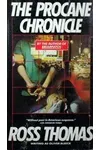
- The Procane Chronicle (1971) – Also published under the title The Thief Who Painted Sunlight, this novel sees St. Ives hired by a professional thief to recover stolen diaries containing sensitive information.
- Protocol for a Kidnapping (1971) – A high-stakes international assignment where St. Ives travels to Yugoslavia to negotiate the release of a kidnapped U.S. ambassador.
- The Highbinders (1973) – St. Ives is drawn into a complex caper involving a priceless jade relic, set against the backdrop of London and the international art theft market.
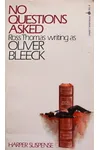
- No Questions Asked (1976) – The final novel in the series, where the theft of rare historical books spirals out of control, forcing St. Ives to confront the deadliest stakes of his career.
Publication Order vs. Chronological Order
In terms of narrative timeline, the chronological order of the series matches the publication order. However, bibliophiles and collectors sometimes encounter slight discrepancies in chronological listings online. While local databases and early editions place The Procane Chronicle as the second book and Protocol for a Kidnapping as the third (both released in 1971), some modern mystery databases list them in the reverse order. Because both novels stand on their own as isolated negotiation cases, this minor discrepancy has no impact on character development or plot continuity. You can comfortably read either one first, though starting with The Brass Go-Between remains mandatory to establish St. Ives's background and unique occupation.
The Oliver Bleeck Pseudonym and Tone
Ross Thomas wrote this five-book series under the pseudonym Oliver Bleeck. According to accounts from Thomas's family, the pen name was a deliberate nod to his literary inspiration, Charles Dickens. The name 'Oliver' was chosen in honor of Oliver Twist, while 'Bleeck' was a playful reference to Bleak House. While Ross Thomas was already famous under his own name for writing sprawling, cynical political thrillers with large casts of characters, the Oliver Bleeck novels allowed him to write tight, focused, and intimate first-person narratives. The St. Ives books are leaner, typically running under 200 pages, and feature a lighter, dryly humorous caper tone that sets them apart from the heavy geopolitical conspiracies of Thomas's other works.
A Closer Look at the Books
1. The Brass Go-Between (1969)
This debut novel introduces readers to Philip St. Ives: a former Washington, D.C., crime reporter who has carved out a highly specialized, lucrative, and dangerous niche as a professional mediator. When a museum's invaluable African shield is stolen, St. Ives is hired as the intermediary to pay the ransom. What should be a simple transaction quickly turns bloody, establishing the series' signature style of sharp dialogue, rapid pacing, and moral ambiguity.
2. The Procane Chronicle / The Thief Who Painted Sunlight (1971)
In this classic caper, St. Ives is hired by Abner Procane, a master thief whose personal diaries have been stolen. The diaries contain detailed plans of Procane's past and future robberies, making their recovery a matter of life and death. The novel was published in some territories under the alternative title The Thief Who Painted Sunlight, but regardless of the title, it remains one of the most celebrated entries in the series for its intricate plotting.
3. Protocol for a Kidnapping (1971)
Taking St. Ives out of his usual urban American locales, this story sends him to Cold War-era Yugoslavia. His mission is to broker the release of a kidnapped American ambassador. The setting allows Ross Thomas to showcase his deep understanding of international politics and espionage, blending foreign intrigue with St. Ives's trademark cynicism and quick-witted survival instincts.
4. The Highbinders (1973)
The fourth book centers on the theft of a priceless Chinese jade artifact. St. Ives is hired to negotiate its return, a job that takes him to London and deep into the underworld of high-end art thieves, smugglers, and eccentric collectors. The dialogue in this installment is exceptionally sharp, showcasing Thomas's talent for creating memorable, quirky side characters who live by their own twisted moral codes.
5. No Questions Asked (1976)
The series concludes with a case involving the theft of a rare historical book from a university library. The insurance company hires St. Ives to buy it back, but the deal goes wrong almost immediately. As allies turn to enemies and the body count rises, St. Ives is forced to navigate a maze of betrayal to survive, bringing the series to a thrilling and satisfying conclusion.
The 1976 Film Adaptation: St. Ives
In 1976, Warner Bros. adapted The Procane Chronicle into a feature film titled St. Ives. Directed by J. Lee Thompson, the movie starred legendary action icon Charles Bronson as Raymond St. Ives (a slight name change from the novel's Philip). The film also starred John Houseman as the wealthy thief Abner Procane and Jacqueline Bisset as a mysterious femme fatale. While the film took significant creative liberties—shifting the tone toward a more traditional Hollywood action-thriller and changing the protagonist's background from a pure mediator to a former cop—it successfully captured the caper spirit of Ross Thomas's writing and introduced the character to a much wider audience.
What to Know Before You Start
Before diving in, new readers should understand that Philip St. Ives is not a private detective. He does not investigate crimes, search for clues, or try to bring criminals to justice. His sole job is to act as a neutral agent who exchanges money for stolen property or hostages, taking a flat ten-percent cut of the ransom. This unique premise means the stories focus heavily on the mechanics of negotiation, trust, and the gray areas between the law and the criminal world. If you enjoy smart dialogues, snappy pacing, and protagonists who rely on their wits rather than violence, this series is a perfect fit.