
The Recommended Reading Path for Philo Vance
For the best experience, the Philo Vance Murder Cases should be read in their original publication order. The series follows a straightforward chronological sequence of Vance's career as recorded by his close friend and chronicler, "S.S. Van Dine" (the pen name of art critic Willard Huntington Wright). Reading the books in order allows you to follow the natural development of Vance's character and witness the shifting trends of Golden Age detective fiction as the series transitions from intellectual, footnote-heavy puzzles to swifter, more cinematic narratives in the late 1930s.
The 12 Philo Vance Novels in Order of Publication
Below is the complete bibliography of the series in its original publication sequence:
- The Benson Murder Case (1926): The debut novel that introduces the dapper, monocle-wearing Philo Vance. He assists District Attorney John F.-X. Markham in solving the murder of a Wall Street broker using purely psychological deduction rather than physical clues.
- The Canary Murder Case (1927): A locked-room mystery involving the murder of a Broadway singer known as "the Canary." Vance famously cracks the case by analyzing the suspects' personalities during a high-stakes poker game.
- The Greene Murder Case (1928): A dark, gothic mystery set in a gloomy mansion where members of the wealthy Greene family are systematically murdered. This is widely considered one of the darkest entries in the series.
- The Bishop Murder Case (1928 / 1929): One of the series' most famous books, where Vance tracks a serial killer who models his gruesome crimes after Mother Goose nursery rhymes.
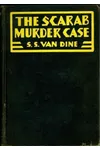
- The Scarab Murder Case (1929 / 1930): Set in a private museum of Egyptian antiquities, this mystery explores archaeological intrigue and a complex frame-up.
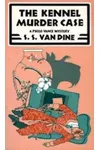
- The Kennel Murder Case (1933): A classic locked-room mystery where the clue to the killer's identity hinges on the behavior of a wounded Scottish Terrier.
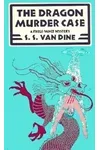
- The Dragon Murder Case (1934): Set on a sprawling estate in northern Manhattan, Vance investigates a death associated with local legends of a predatory dragon.
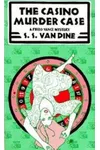
- The Casino Murder Case (1934): A high-stakes mystery centered around poisonings at a private gambling casino.
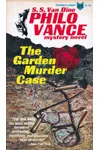
- The Garden Murder Case (1935): A sports-gambling mystery set against the backdrop of horse racing, where a suspicious death at a penthouse garden party sets off a hunt for a serial poisoner.
- The Kidnap Murder Case (1936): A faster-paced mystery that sees Vance handling a kidnapping plot, moving slightly away from the traditional puzzle-box format.
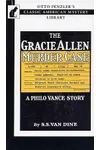
- The Gracie Allen Murder Case / The Smell of Murder (1938): A unique, lighthearted crossover featuring the real-life comedy star Gracie Allen alongside the refined Philo Vance.
- The Winter Murder Case (1939): Published posthumously, this leaner story is set at an estate in the Berkshires, focusing on ice-skating and a stolen collection of emeralds.
Understanding Chronological Caveats and Serializations
While the publication order is the most logical path, readers should note that several novels were serialized in magazines prior to their official book releases. For instance, The Bishop Murder Case was serialized in 1928 before its book publication in 1929. Similarly, The Scarab Murder Case ran in magazines in late 1929 before appearing in book stores in 1930. These minor overlaps do not affect the reading order, as the internal chronology of Vance's cases aligns perfectly with their release sequence.
The Evolution of S.S. Van Dine's Style
The Philo Vance series is famously split into two distinct eras. The first four novels—spanning from The Benson Murder Case through The Bishop Murder Case—represent the peak of the "Golden Age" style. These books are highly intellectual, features extensive footnotes detailing art history, psychology, and philosophy, and portray Vance as a detached, ultra-sophisticated intellectual. These early volumes were massive bestsellers that helped keep publisher Charles Scribner's Sons afloat during the onset of the Great Depression.
In contrast, the later novels, written during the 1930s, lean away from dense academic padding and move toward more commercial, action-oriented structures. The shift was partly due to the financial pressures of the era and the author's growing weariness of his own creation. By the time of The Kidnap Murder Case and The Gracie Allen Murder Case, the stories had become shorter, faster, and more aligned with Hollywood screenplay structures.
What to Know Before You Start
Before diving into the series, readers should be prepared for Philo Vance's distinct personality. As an aristocratic dandy who speaks with a stylized, highbrow accent (frequently dropping his "g's" and dropping French or Latin phrases), Vance was a polarizing figure. While millions of readers loved his snobbish charm, he also drew criticism from hardboiled crime writers like Raymond Chandler and humorists who mocked his precious demeanor.
Furthermore, S.S. Van Dine was a major theorist of the detective genre. In 1928, Willard Huntington Wright published his famous essay, "Twenty Rules for Writing Detective Stories," which argued that a mystery should be a fair, intellectual game between the author and the reader, free from romance or arbitrary plot twists. Understanding these rules adds an extra layer of enjoyment when reading the early novels, as they represent the literal application of Wright's theories.
Adaptations, Spin-offs, and Special Cases
The popularity of Philo Vance extended far beyond the printed page, resulting in fifteen film adaptations between 1929 and 1947. Famous actors such as William Powell, Basil Rathbone, and Warren William stepped into Vance's polished shoes. The most notable spin-off/crossover is The Gracie Allen Murder Case, which was specifically written to coincide with a Paramount Pictures film adaptation starring the beloved comedian Gracie Allen. The book serves as both a standard Vance mystery and a comedic vehicle, making it a unique curiosity for vintage pop culture fans.
The final book in the series, The Winter Murder Case, was published posthumously in late 1939. Willard Huntington Wright died in April of that year. He typically wrote his books in three stages: a short synopsis, a 15,000-word intermediate version, and a fully expanded final draft. At the time of his death, The Winter Murder Case was only in its intermediate stage. It was published in this leaner, novella-like form, giving modern readers a fascinating look at the author's raw, unpadded storytelling process.