





Where to Start the Plainsmen Series
If you want to experience the dust, grit, and historical drama of the Indian Wars as Terry C. Johnston intended, the best starting point is the very first novel, Sioux Dawn. The series functions as a continuous chronological journey following Seamus Donegan, a fictional Irish immigrant who finds work as a civilian scout for the U.S. Army. Because Donegan grows, ages, and climbs the military ranks across these sixteen novels, reading them out of order will spoil his personal life events, marriages, and friendships, even if each book focuses on a distinct historical campaign.
The Plainsmen Series Order: Publication and Chronological Timeline
Terry C. Johnston wrote and published the 16 novels in a sequence that closely tracks the real-world progression of the Plains Indian Wars between 1866 and 1877. Below is the recommended reading order, including the publication years and the key historical conflicts depicted in each volume:
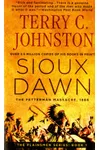
- Sioux Dawn (1990) – Set in 1866, this book introduces Seamus Donegan during the build-up to the Fetterman Massacre along the Bozeman Trail.
- Red Cloud's Revenge (1990) – Set in 1867, covering the intense combat of the Hay Field and Wagon Box fights. (Note: Read this before The Stalkers to keep the historical timeline straight).
- The Stalkers (1990) – Set in 1868, focusing on the harrowing Battle of Beecher Island where fifty scouts hold out against hundreds of Cheyenne warriors.
- Black Sun (1991) – Set in 1869, depicting the Battle of Summit Springs and the defeat of the Cheyenne Dog Soldiers.
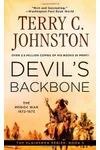
- Devil's Backbone (1991) – Set in 1872–1873, shifting focus to the Oregon Territory during the Modoc War and the siege of Captain Jack's stronghold.
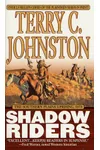
- Shadow Riders (1991) – Set in 1873, following the U.S. Army's campaign against Chief White Bear and the Kiowa during the Southern Plains Uprising.
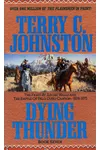
- Dying Thunder (1992) – Set in 1876, capturing the Battle of the Rosebud, a crucial precursor to the Little Bighorn campaign.
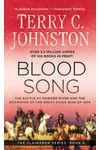
- Blood Song (1993) – Set in 1876, placing Donegan near the infamous Battle of Little Bighorn (Custer's Last Stand).
- Reap the Whirlwind (1994) – Set in 1876, highlighting the Battle of Slim Buttes and the Army's relentless pursuit of Lakota forces.
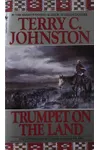
- Trumpet on the Land (1995) – Set in 1876, covering the Battle of Warbonnet Creek and the subsequent Dull Knife Fight.
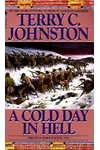
- A Cold Day in Hell (1996) – Set in late 1876 and early 1877, focusing on the Battle of Wolf Mountain during a freezing Montana winter.
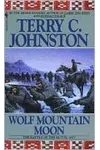
- Wolf Mountain Moon (1997) – Set in 1877, chronicling the Lame Deer Fight and the final winter actions of the Great Sioux War.
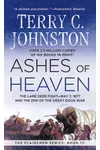
- Ashes of Heaven (1998) – Set in 1877, detailing the negotiations leading to the surrender of Lakota leader Crazy Horse at Fort Robinson.
- Cries from the Earth (1999) – Set in 1877, tracing the outbreak of the Nez Perce War and the initial battles in Idaho.
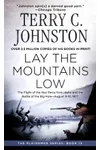
- Lay the Mountains Low (2000) – Set in 1877, tracking the dramatic Nez Perce flight toward Canada, the Battle of Canyon Creek, and Chief Joseph's surrender.
- Turn the Stars Upside Down (2001) – Set in late 1877, concluding the saga with Crazy Horse's death, the final Lakota surrenders, and Seamus Donegan's retirement.
Crucial Reading Caveats: The Chronological Swap
While the Plainsmen series is straightforward, readers often run into confusion with the second and third books. The Stalkers was published shortly before Red Cloud's Revenge in 1990. However, Red Cloud's Revenge is set in 1867, while The Stalkers takes place in 1868. Because of this publishing overlap, many library catalogs and online retailers list The Stalkers as Book 2 and Red Cloud's Revenge as Book 3. To maintain a smooth historical progression and track Donegan's career chronologically, you should read Red Cloud's Revenge second and The Stalkers third.
What to Know Before You Start
Terry C. Johnston was renowned for his obsessive dedication to historical accuracy. He personally visited the battle sites, traveled the historical trails, and studied primary source documents to capture the geography, weather, and tactics of the Indian Wars. However, readers should be prepared for the grit of the frontier: Johnston does not romanticize the violence. The battle scenes are incredibly graphic, and the books detail the harsh, often brutal realities experienced by soldiers, homesteaders, and Native American populations alike.
Rather than taking a simple good-vs-evil approach, Johnston tries to show the moral complexities of the period. Through Donegan's eyes, we see the bureaucracy of the U.S. Army, the desperate struggles of the Native tribes defending their ancestral homes, and the personal tragedies that defined the expansion of the American frontier.
Related Series and Crossovers
If you finish the Plainsmen series and want more of Terry C. Johnston's signature historical fiction style, you have two other excellent options set in the same frontier universe:
The Titus Bass (Carry the Wind) Series
This is Johnston's other masterpiece. Focusing on the mountain men and the Rocky Mountain fur trade era of the 1830s and 1840s, this nine-book series is set prior to the events of the Plainsmen. The first book written, Carry the Wind (1982), won the Western Writers of America Medicine Pipe Bearer's Award for Best First Novel. If you decide to read this series, note that the publication order differs significantly from the chronological timeline of Titus Bass's life. Reading the Titus Bass books chronologically starting with Dance on the Wind is highly recommended.
The Jonah Hook (Sons of the Plains) Trilogy
Comprising Cry of the Hawk (1992), Winter Rain (1993), and Dream Catcher (1994), this trilogy runs parallel to the Plainsmen era. It follows Jonah Hook, a former Confederate soldier who returns home to find his family abducted, leading him on a desperate search across the frontier. It offers a wonderful companion perspective to Seamus Donegan's military-focused journey.