
The Recommended Reading Order
To experience the full emotional weight of Kent Haruf's masterfully crafted community, readers should follow the publication sequence. Although these books are often described as a 'trilogy of place' rather than a single continuous narrative, the community of Holt, Colorado, evolves steadily from one novel to the next. Reading them in sequence allows you to appreciate the subtle growth of the town and its residents.
Here is the recommended reading order for the core Plainsong series:
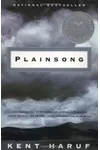
- Plainsong (1999) – The breakout novel that introduces the town of Holt, the pregnant teenager Victoria Roubideaux, the high school teacher Tom Guthrie, and the unforgettable, elderly rancher brothers Harold and Raymond McPheron.
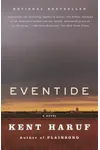
- Eventide (2004) – A direct narrative sequel to Plainsong. This novel picks up the lives of Victoria, the McPheron brothers, and other Holt residents as they navigate new challenges, losses, and unexpected connections.
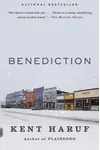
- Benediction (2013) – The final installment in the trilogy. Centering on Dad Lewis, a terminally ill hardware store owner reflecting on his life, this book is thematic and mostly standalone, though it features passing cameos and mentions of characters from the earlier books.
The Broader Holt, Colorado Universe
Before achieving widespread acclaim with the Plainsong trilogy, Kent Haruf had already established the fictional town of Holt in his earlier works. Following the trilogy, he returned to Holt one final time before his death. While these three external books are not part of the core Plainsong trilogy, they share the same physical setting, stark high plains atmosphere, and quiet human dignity. They can be read in any order, but reading them alongside the trilogy provides a complete picture of Haruf's literary landscape.
The complete list of Kent Haruf's novels set in Holt, in order of publication, includes:
- The Tie That Binds (1984) – Haruf's debut novel, exploring the sacrifices and isolation of rural life through the story of Edith Goodnough.
- Where You Once Belonged (1990) – A tragic story focusing on Jack Burdette, a local high school football star who returns to Holt and betrays the community's trust.
- Plainsong (1999) – Book one of the Plainsong trilogy.
- Eventide (2004) – Book two of the Plainsong trilogy.
- Benediction (2013) – Book three of the Plainsong trilogy.
- Our Souls at Night (2015) – Published posthumously, this short, poignant novel follows Addie Moore and Louis Waters, two elderly neighbors in Holt seeking companionship in their twilight years.
Continuity and Connection: What to Expect
Understanding how these books link together will help you set the right expectations before diving in. The relationship between the novels varies significantly:
The Close Bond of Plainsong and Eventide
Plainsong and Eventide function as a continuous story. Eventide directly addresses the aftermath of the decisions made in Plainsong, focusing heavily on the evolution of Victoria Roubideaux's life as she prepares for college, and the emotional adaptation of the bachelor McPheron brothers who took her in. Secondary characters, such as the teacher Maggie Jones, also return. Because of these strong narrative threads, reading Eventide without having read Plainsong first is highly discouraged.
Benediction as a Thematic Conclusion
Benediction shifts its spotlight to a completely new household: the Lewis family. While it is set in Holt and shares the same slow, reflective pacing, the plot does not depend on the events of Plainsong or Eventide. Instead of following the McPherons or Victoria, it explores mortality, regret, and reconciliation. The characters from the first two novels do not play active roles in the plot, though sharp-eyed readers will notice subtle, passing nods to the McPheron farm during driving scenes, reinforcing the shared universe.
What to Know Before You Start
Kent Haruf's style is distinct, minimalist, and deeply poetic, often compared to the unadorned purity of plainsong church music. Before you begin your journey to Holt, keep these stylistic elements in mind:
No Quotation Marks: Haruf does not use traditional quotation marks to indicate dialogue. Instead, conversations flow directly within the prose. While this might feel jarring for the first few pages, most readers find they quickly adapt to the natural, conversational rhythm of his writing.
A Trilogy of Place: Holt, Colorado is inspired by Haruf's own upbringing in rural communities like Yuma, Colorado. The high plains landscape—flat, windswept, dry, and subject to harsh winters—acts as a primary character. The environment shapes the stubborn resilience, isolation, and deep-seated neighborliness of the people who live there.
Quiet Realism: Do not expect high-stakes action, thrillers, or fast-paced plot twists. Haruf's work is celebrated for its slow, deliberate pacing and focus on everyday struggles: raising children, farming, aging, and finding warmth in small acts of kindness. It is a series that celebrates the extraordinary nature of ordinary lives.