

The Recommended Reading Path
For modern readers wishing to dive into the Polesotechnic League, there are two primary paths: reading the original standalone collections and novels, or seeking out the comprehensive omnibus editions published by Baen Books under the title The Technic Civilization Saga. Because Poul Anderson's galactic merchant tales are highly episodic and span centuries of future history, starting with the right entry point is crucial for contextualizing the grand decline and fall of this interstellar era.
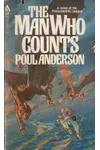
If you are tracking down the original editions, the absolute best starting point is The Man Who Counts (originally published as War of the Wing-Men in 1958). This novel introduces Nicholas van Rijn, the central merchant prince of the series, and showcases Anderson's trademark blend of planetary survival, hard science, and political realism. From there, readers should tackle the short story collections Trader to the Stars and The Trouble Twisters to see how the universe expands, before following the overarching narrative through to its dramatic culmination in Mirkheim.
Alternatively, the modern chronological path is simplified by Baen's omnibus editions compiled by Hank Davis. For this route, start with volume one, The Van Rijn Method, which collects the earliest stories of the League's rise along with The Man Who Counts, followed by volume two, David Falkayn: Star Trader, and volume three, Rise of the Terran Empire.
Publication Order vs. Chronological Order
Poul Anderson did not write the Polesotechnic League stories in chronological order. Instead, he painted a massive canvas over three decades, jumping back and forth across a 400-year timeline. Below are the two main ways to approach the core seven-book cycle.
The Original Publication Order
Reading in publication order allows you to experience the universe as it was originally built, showing how Anderson refined his concepts of space travel, alien biology, and future economics over time.
- War of the Wing-Men / The Man Who Counts (1958) – The first novel-length adventure featuring Nicholas van Rijn marooned on the harsh planet Diomedes.
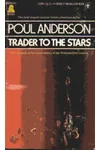
- Trader to the Stars (1964) – A Prometheus Award-winning collection of three novellas introducing key settings and political dynamics of the League.
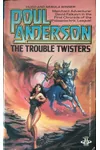
- The Trouble Twisters (1966) – A collection that introduces David Falkayn, van Rijn's brilliant young protégé, and his diverse alien trade team.
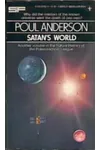
- Satan's World (1968) – A full-length novel where Falkayn's team discovers a rogue planet, triggering a galactic corporate conflict.
- The People of the Wind (1973) – Set after the League's golden era, focusing on the cultural friction and war between humans and the avian Ythri.
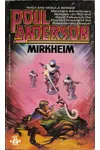
- Mirkheim (1977) – The geopolitical climax of the League era, depicting the merchant coalition's decay into warfare.
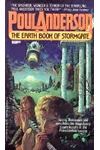
- The Earth Book of Stormgate (1978) – A sweeping anthology of short stories that fills in history, background lore, and the origins of human-Ythri relations.
The Chronological Reading Order
Chronological order aligns the narrative with the internal timeline of Anderson's future history. It is highly recommended if you want to watch the gradual rise, golden age, corruption, and eventual collapse of the League.
- War of the Wing-Men / The Man Who Counts (1958)
- Trader to the Stars (1964)
- The Trouble Twisters (1966)
- Satan's World (1968)
- The Earth Book of Stormgate (1978) – (Note: While this collection contains stories spanning the entire timeline, it is best read here as it sets up the deep political background and alien alliances prior to the final acts of the League).
- Mirkheim (1977)
- The People of the Wind (1973)
Detailed Core Series Breakdown
To fully appreciate the Polesotechnic League, it helps to understand what each core book brings to the broader narrative tapestry:
The Man Who Counts (1958)
Originally published under the publisher-imposed title War of the Wing-Men, this classic story introduces Nicholas van Rijn, the beer-drinking, spice-trading, deceptively sharp head of the Solar Spice & Liquors Company. When his spaceship crash-lands on the planet Diomedes, van Rijn must use his mercantile wits to negotiate between two warring native species to secure a way off the planet.
Trader to the Stars (1964)
This collection contains three foundational novellas: 'Hiding Place', 'Territory', and 'The Master Key'. It establishes the rules of the Polesotechnic League—a loose, laissez-faire association of interstellar merchant guilds operating with little to no government interference. It earned the Prometheus Hall of Fame Award for its libertarian themes.
The Trouble Twisters (1966)
This book transitions the spotlight to David Falkayn, a young nobleman turned trader apprentice. It collects the stories 'The Three-Cornered Wheel', 'A Sun Invisible', and the title novella. Falkayn's trade team includes memorable alien sophonts like the feline-like Cynthian Adzel and the giant, centaur-like Hermetian Chee Lan, highlighting Anderson's remarkable skill at designing biologically plausible extraterrestrials.
Satan's World (1968)
In this high-stakes thriller, Falkayn's crew discovers a wandering super-metal-rich planet, which they name Satan's World. The discovery triggers an espionage war between the League, rival corporate spies, and a mysterious, xenophobic alien collective known as the Shenna, pushing the galaxy to the brink of total war.
The Earth Book of Stormgate (1978)
Framed as a translation of records kept by the avian Ythri colony on the planet Avalon, this collection gathers twelve stories. It includes pivotal early-timeline tales like 'Wings of Victory' and 'Margin of Profit', bridging major gaps and providing deep cultural context for the human and alien societies that define the later eras.
Mirkheim (1977)
The definitive end of the Polesotechnic League era. The discovery of super-heavy elements on the planet Mirkheim leads to a brutal war of monopolies. As the League's free-trade ideals rot into corporate warfare and government intervention, both van Rijn and Falkayn face the tragic realization that their freewheeling era of exploration has reached its final chapter.
The People of the Wind (1973)
Nominated for both the Hugo and Nebula awards, this novel takes place generations after the fall of the League. It serves as a bridge to the Terran Empire era, focusing on the planet Avalon where humans and Ythri have built a shared society. When the expanding Terran Empire attempts to annex Avalon, the colonists must fight to defend their unique joint culture.
What to Know Before You Start
Before launching into the Polesotechnic League, it is helpful to keep a few key concepts in mind:
- The Technic Civilization Connection: The Polesotechnic League is only the first major era of Poul Anderson's massive Technic History. The collapse of the League leads into the dark age of the 'Long Night', which is followed by the rise of the Terran Empire (the setting for Anderson's famous Dominic Flandry secret agent novels).
- Coined Terminology: Poul Anderson is credited with popularizing the word sophont in science fiction through these stories, using it to refer to any self-aware, intelligent being, whether human or alien.
- Avoid Confusion: Do not confuse the Polesotechnic League with the Psychotechnic League. The latter is a completely separate future history series written by Anderson earlier in his career, dealing with mathematical sociology and mental science.
- Standalone Appeal: Because the stories were written for science fiction magazines, they are highly episodic. You do not need to read every single story to enjoy the major novels; they are designed to be accessible as standalones.