

How to Read the Pot Thief Mystery Series
For the best reading experience, it is highly recommended to read the Pot Thief mysteries in publication order. Because the books follow the personal growth of the protagonist, Hubert 'Hubie' Schuze, and his evolving relationship with his business partner, Susannah, reading the books consecutively prevents spoilers and helps you appreciate the slow-burn character development and running jokes.
Fortunately, the chronological timeline matches the publication order exactly. There are no confusing prequels, spin-offs, or split timelines to navigate, making this a straightforward and satisfying sequence to collect and read.
The Pot Thief Books in Order
Here is the complete list of J. Michael Orenduff’s Pot Thief novels in their recommended reading order:
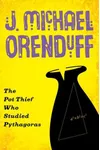
- The Pot Thief Who Studied Pythagoras (2009) – Hubie is offered $25,000 to steal a rare Mogollon pot from a museum, but he quickly finds himself framed for murder.
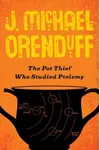
- The Pot Thief Who Studied Ptolemy (2009) – A quest to recover sacred Native American pots from a high-security facility puts Hubie’s lockpicking and strategic skills to the test.
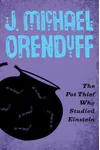
- The Pot Thief Who Studied Einstein (2010) – What starts as a simple appraisal of Anasazi pottery turns deadly when the collector is murdered and Hubie becomes the prime suspect.
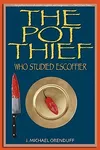
- The Pot Thief Who Studied Escoffier (2011) – Blending culinary arts with archaeological theft, Hubie must solve a puzzle tied to a grand feast and a missing treasure.
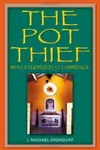
- The Pot Thief Who Studied D. H. Lawrence (2012) – The literary legacy of D. H. Lawrence in Taos, New Mexico, sets the stage for a mystery involving rare manuscripts and historic secrets.
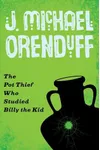
- The Pot Thief Who Studied Billy the Kid (2013) – Hubie digs into New Mexico’s rich outlaw history when a legendary relic associated with Billy the Kid sparks greed and murder.
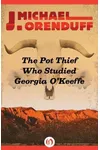
- The Pot Thief Who Studied Georgia O'Keeffe (2016) – Pitted against the U.S. Army, Hubie struggles to save a precious artifact linked to the iconic Southwestern artist's territory.
- The Pot Thief Who Studied Edward Abbey (2018) – Environmentalism, conservation ethics, and archaeological greed collide when Hubie investigates a case inspired by the famous desert writer.
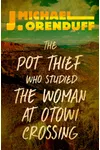
- The Pot Thief Who Studied the Woman at Otowi Crossing (2020) – Linking the scientific history of Los Alamos to local legends, Hubie works to untangle a complex web of atomic-age secrets and ancient heritage.
- The Pot Thief Who Studied Calvin (2025) – Hubie’s computer-science nephew Tristan designs a 3D-printed replica pot that attracts dangerous, murderous attention from collectors who believe it holds a secret.
What to Know Before You Start
Before diving into Hubie's world, it helps to understand the unique flavor of these books. While they are classified as cozy mysteries, they offer a distinct blend of elements that sets them apart from typical entries in the genre:
The Setting is a Character
Set primarily in the Old Town neighborhood of Albuquerque, New Mexico, the series serves as a love letter to the Land of Enchantment. Orenduff brings the region to life with vivid descriptions of local eateries, plazas, and the beautiful, high-desert landscape. Readers will regularly find Hubie sipping margaritas, eating spicy pico de gallo, and interacting with a diverse cast of Native American, Hispanic, Basque, and Anglo characters.
An Intellectual but Lighthearted Tone
Don't let the cozy label fool you—these books are packed with intellectual wit, wordplay, and philosophical musings. As the titles suggest, each mystery is themed around a historical intellectual or artist. Hubie frequently reflects on Pythagorean geometry, Ptolemaic astronomy, or Einstein's physics, linking these grand concepts back to the immediate puzzles he faces in the New Mexico dirt.
Ethical Dilemmas and Artifact Trade
Unlike standard detective stories, Hubie is not a traditional law-abiding citizen. He is a 'pot thief'—someone who illegally digs for prehistoric Native American pottery on public land. Orenduff uses this occupation to raise thought-provoking questions about cultural ownership, the ethics of antiquities laws, and whether preservation by private collectors is better or worse than leaving history buried. Despite his illicit digging, Hubie operates under a strict personal moral code: he respects the ancient artisans and deeply opposes the destruction or commercial exploitation of sacred sites.