

How to Read Preacher’s Law in Order
The Preacher's Law series is best read in its original publication order. The overarching narrative tracks the evolution of J.D. Preacher, a former Confederate soldier and Mosby's Ranger, as he hunts down the outlaws who destroyed his family. Because the character's development and overarching storyline build directly from one book to the next, reading them chronologically as published ensures the most satisfying experience.
Here is the recommended reading order for the series:
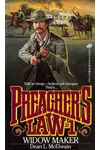
- Widow Maker (1987)
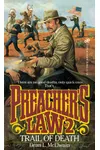
- Trail of Death (1987)
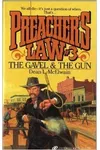
- The Gavel and the Gun (1987)
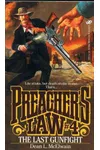
- The Last Gunfight (1988)
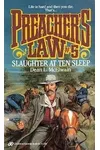
- Slaughter at Ten Sleep (1988)
- Rebel (1988)
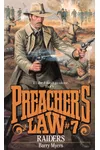
- Raiders (1989)
The Core Saga: Recommended Starting Point
Any reader looking to step into the world of Preacher’s Law must begin with Widow Maker (1987). This debut novel sets up J.D. Preacher's foundational motivation. Returning home from the devastation of the Civil War, Preacher discovers his family's plantation burned to ashes, his parents murdered, and his sister brutally attacked. Making matters worse, the culprits are members of Quantrill's Raiders—a notorious group once led by Preacher’s own older brother. This tragedy kicks off his lifelong vendetta and establishes his personal brand of frontier justice, known simply as "Preacher's Law."
The story flows directly into the second book, Trail of Death, where the bloody chase intensifies across the frontier, and the third, The Gavel and the Gun. It is in this third installment that Preacher's path crosses with the legendary "Hanging Judge" Isaac Parker, who blackmails Preacher into working as an unconventional deputy to clean up the lawless territories in exchange for clearing his own name.
Chronology vs. Publication Order: What to Expect
While the first four books (concluding with The Last Gunfight in 1988) represent the primary revenge arc where Preacher hunts down the raiders, the subsequent books shift focus. Rather than moving forward indefinitely, later entries such as Slaughter at Ten Sleep, Rebel, and Raiders explore different episodes, local conflicts, and details from Preacher's past on the frontier. However, because these books were written to build upon the reader's existing knowledge of J.D. Preacher's character and trauma, sticking to the publication order remains the most popular and logical approach.
The Authors Behind the Pseudonyms
One of the most fascinating aspects of Preacher’s Law is its authorship. The first five novels in the series were published under the pseudonym Dean L. McElwain. In reality, McElwain was a "house name" owned by the publisher and utilized by multiple authors. The most prominent contributor to this pseudonym was the highly prolific Western and adventure novelist David Robbins (also writing as Dave Robbins), who penned the fifth book, Slaughter at Ten Sleep, among others.
For the final two books, Rebel (1988) and Raiders (1989), the writing duties were officially handed over to author Barry Myers. Despite the change in authors, the series maintained its gritty tone, fast-paced action, and psychological depth, capturing the internal struggle of a protagonist who despises his own nickname, "The Widow Maker," yet cannot seem to escape his violent destiny.
What to Know Before You Saddle Up
Before diving in, readers should be prepared for a series that leans heavily into the gritty, pulpy style of late-1980s mass-market paperbacks. Preacher is not a traditional clean-cut hero; he is a deeply scarred, lightning-fast gunman who operates in a moral grey area. The series also stands out for integrating real historical figures of the American West. In The Gavel and the Gun, for instance, readers will spot cameos from historical legends like Doc Holliday, the Earp brothers, Bat Masterson, the James brothers, and marshal Hec Thomas, adding an extra layer of historical flavor to the fictional vengeance.
Since these books have long been out of print, finding physical copies today usually requires searching through used bookstores, online marketplaces, or collector sites. However, for fans of uncompromising, action-packed Westerns with a psychological edge, tracking down this hidden gem of a series is well worth the effort.