


Where to Start with the Quantum Logic Universe
Greg Bear’s Quantum Logic universe is a masterclass in hard science fiction and technothriller writing. Because the series spans a vast timeline and features distinct shifts in tone, new readers often struggle with where to begin. You have two main routes to choose from: the chronological order or the publication order. Both paths offer a rewarding experience, but they suit different types of readers.
Option 1: The Chronological Order (Recommended for World-Building Fans)
If you want to watch the technology and political structures of Bear's universe evolve naturally from a recognizable near-future Earth into a far-future spacefaring society, start here. This path begins with the modern technothrillers and culminates in the Martian colonies of the 22nd century:
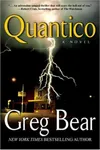
- Quantico (Published: 2005/2007 | Set: 2024)
- Mariposa (Published: 2009 | Set: 2035)
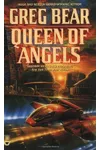
- Queen of Angels (Published: 1990 | Set: 2047)
- Slant (Published: 1997 | Set: 2050s/2060s)
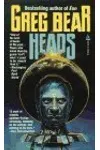
- Heads (Published: 1990 | Set: 2110)
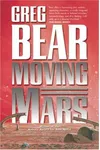
- Moving Mars (Published: 1993 | Set: 2171)
Note: While chronological order makes logical sense, be prepared for a massive shift in style and prose complexity between the relatively straightforward thriller Mariposa and the dense, poetic cyberpunk of Queen of Angels.
Option 2: The Publication Order (Recommended for Pure Sci-Fi Enthusiasts)
If you want to experience the universe exactly as Greg Bear conceived it, we recommend reading the books in the order they were published. This lets you jump straight into the Hugo and Nebula-nominated core of the universe before looping back to the prequels:
- Queen of Angels (1990)
- Heads (1990)
- Moving Mars (1993)
- Slant (1997)
- Quantico (2005/2007)
- Mariposa (2009)
This path is highly favored by classic sci-fi fans because it introduces the key concepts of nanotechnology and artificial intelligence when Bear's speculative voice was at its most experimental.
The Two Core Subseries
The Quantum Logic universe is divided into two distinct subseries. Understanding how these pieces fit together will help you decide which book to pick up next.
The Quantico Sequence (Near-Future Technothrillers)
The first chronological part of the saga consists of two novels: Quantico and its sequel Mariposa. These books feel more like political thrillers in the vein of Tom Clancy or Michael Crichton than traditional space opera. They follow FBI agents training and operating in a volatile, post-9/11 world where bioterrorism, state surveillance, and the precursors to true artificial intelligence are starting to emerge. Read these if you enjoy high-stakes investigations and military suspense.
The Queen of Angels Sequence (Far-Future Hard Sci-Fi)
The remaining four books form the heart of the original series: Queen of Angels, Heads, Moving Mars, and Slant. Set decades and centuries later, these books dive deep into the consequences of nanotechnology, the birth of self-aware computers (like the recurring AI character Jill), and the political independence of colonized space. These novels are philosophically dense and push the boundaries of human consciousness and social engineering.
Detailed Book Breakdown
Here is what you need to know about each individual installment in the Quantum Logic universe:
Quantico (2005/2007)
Set in 2024, this novel introduces young FBI agents William Griffin, Fouad Al-Husam, and Jane Rowland as they investigate a terrifying biological threat. A rogue scientist has engineered a target-specific plague, forcing the agents to navigate domestic instability and global tension. It serves as an excellent entry point for readers who prefer thrillers over heavy sci-fi.
Mariposa (2009)
Taking place in 2035, this direct sequel to Quantico finds the United States on the brink of financial collapse and political fracturing. It bridges the gap between near-future geopolitics and the high-tech, nanotech-integrated society seen in Queen of Angels. The plot features advanced neurological manipulation and undercover FBI operations.
Queen of Angels (1990)
Set in 2047 Los Angeles, this seminal work explores a society transformed by "therapy"—a nanotechnology-based treatment that has virtually eliminated violent crime. When a famous poet commits a brutal murder, detective Mary Choy is tasked with hunting him down. Meanwhile, scientists attempt to birth the world's first truly self-aware artificial intelligence, named Jill. It is a complex, multi-layered story about guilt, consciousness, and what it means to be human.
Slant (1997)
Set in the 2050s, Slant (sometimes published under the title /) serves as a direct sequel to Queen of Angels. The utopian, therapy-stabilized society is beginning to unravel as a flaw in the treatments leads to widespread psychological breakdown. Mary Choy returns to investigate a corporate conspiracy that threatens the digital infrastructure of the entire world, while the AI Jill faces its own existential challenges.
Heads (1990)
A shorter novella set on a colonized Moon in the early 22nd century. The story follows researchers at the lunar base trying to achieve absolute zero. During their experiments, they discover a stash of cryogenically frozen human heads, sparking a massive political and religious conflict with a cult-like movement called Logology (a thin parody of Scientology). Though shorter, it provides vital context for lunar society.
Moving Mars (1993)
Winner of the Nebula Award for Best Novel, this epic is set in 2171 and follows Martian colonists as they strive for independence from the bureaucratic control of Earth. The narrative centers on Casseia Majumdar, a young woman who becomes a key political leader during a cold war between the planets. When Martian scientists discover mind-bending new physics, the destiny of Mars changes forever. It is widely considered one of Greg Bear's absolute best novels.
What to Know Before You Start
Before diving in, keep these quick tips in mind:
- Style and Tone: The style changes dramatically. The Quantico books are accessible, fast-paced thrillers. The Queen of Angels books are dense, experimental, and require close reading.
- Standalone Readability: Almost all of these books can be enjoyed on their own. In particular, Moving Mars stands perfectly fine as a standalone masterpiece, even if you never read the others.
- Common Disagreements: Some fans prefer to skip Quantico and Mariposa entirely, arguing that they lack the philosophical depth of the original four sci-fi novels. However, if you enjoy complete world-building, they are highly recommended.