








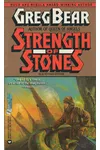

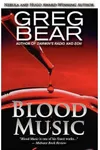
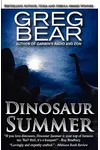

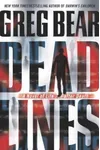

Picture a storyteller who spun tales of galactic wars and microscopic machines, blending hard science with mind-bending ideas—meet Greg Bear! Born in 1951 in San Diego, California, Bear became a titan of science fiction, crafting over 44 novels and earning multiple Hugo and Nebula awards. His knack for weaving cutting-edge science into thrilling narratives made him a visionary, and his co-founding of San Diego Comic-Con cemented his pop culture legacy.
From his first short story sold at age 15 to his epic Halo novels, Bear’s career was a love letter to the cosmos. Let’s dive into the life and works of this sci-fi legend!
The Making of Greg Bear
Greg Bear’s early life was a whirlwind of adventure, thanks to his father’s Navy career. From Japan to Alaska, young Greg soaked up diverse cultures, fueling his imagination. At San Diego State University, he earned a Bachelor of Arts and worked as a teaching assistant for sci-fi author Elizabeth Chater, sparking a lifelong friendship. By 1967, at just 15, he sold his first story, “Destroyers,” to Famous Science Fiction, kicking off a career that would redefine hard sci-fi.
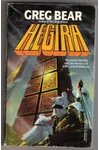
Influenced by Ray Bradbury, with whom he corresponded, Bear blended scientific rigor with speculative wonder. His early jobs—bookseller, planetarium narrator, and journalist—honed his storytelling, setting the stage for his debut novel, Hegira, in 1979.
Greg Bear’s Unforgettable Stories
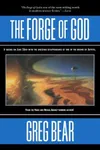
Bear’s novels are a masterclass in hard science fiction, packed with meticulous detail and big ideas. Blood Music (1985), a Hugo and Nebula winner, introduced nanotechnology to sci-fi, imagining intelligent cells reshaping humanity. Fans still rave about its chilling take on bioengineering gone wild. The Forge of God (1987) tackles the Fermi paradox, with Earth caught in a cosmic trap set by predatory alien intelligences—pure, edge-of-your-seat drama.
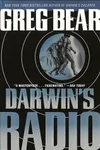
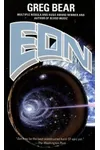
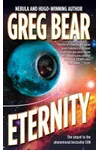
Eon (1985), part of The Way series, explores parallel universes through a mysterious asteroid housing a vanished civilization. Its sequel, Eternity, dives deeper into multiversal conflicts. Darwin’s Radio (1999), another Nebula winner, blends molecular biology with a virus-driven evolutionary leap, earning praise from Nature for its scientific grounding. Bear’s style—cerebral yet accessible—made complex concepts thrilling, often addressing cultural shifts, consciousness, and humanity’s place in the universe.
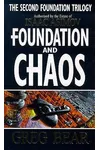
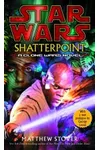
Beyond original works, Bear left his mark on iconic franchises. His Halo Forerunner Saga (2011–2013) enriched the game’s lore, while Foundation and Chaos (1998) added depth to Isaac Asimov’s universe. Each story showcased Bear’s ability to balance science, suspense, and heart.
Why Greg Bear Matters
Greg Bear didn’t just write sci-fi; he shaped it. His pioneering use of nanotechnology and explorations of AI, evolution, and cosmic survival inspired countless authors and scientists. As a San Diego Comic-Con co-founder, he helped create a global stage for genre fans, influencing pop culture for decades. His advisory roles with NASA, Microsoft, and the CIA show how his ideas resonated beyond fiction, tackling real-world challenges.
Bear’s passing in 2022 at age 71 left a void, but his stories continue to captivate. From Blood Music’s microscopic marvels to Eon’s cosmic mysteries, his work invites readers to question reality and dream big.
About Greg Bear
- Born: August 20, 1951, San Diego, California
- Key Works: Blood Music, Eon, The Forge of God, Darwin’s Radio
- Awards: 5 Nebula Awards, 2 Hugo Awards, 2023 Kate Wilhelm Solstice Award
- Fun Fact: Co-founded San Diego Comic-Con in 1970
Image: Portrait of Greg Bear, capturing his thoughtful gaze and sci-fi spirit (Alt: Portrait of Greg Bear).
Snag Blood Music or Eon and dive into Greg Bear’s thrilling, brain-tickling sci-fi universe!