
The Recommended Reading Order for Ricky Ricotta
For young readers and parents diving into the colorful, action-packed world of Ricky Ricotta's Mighty Robot, the good news is that the series is incredibly straightforward to follow. Written by Dav Pilkey (the creative force behind Captain Underpants and Dog Man), the series consists of nine main books and one activity book. The narrative timeline is linear, following a simple progression where Ricky and his Robot meet in the first book, and then face a succession of extraterrestrial villains in the subsequent titles.
Because the main books follow a strict chronological order that matches their publication order, the best way to read the series is from Book 1 through Book 9. Here is the recommended path:
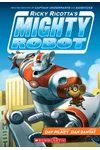
- Ricky Ricotta's Mighty Robot (2000) – Ricky meets his giant mechanical friend and saves Squeakyville from Dr. Stinky McNasty.
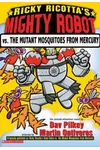
- Ricky Ricotta's Mighty Robot vs. the Mutant Mosquitoes from Mercury (2000) – The duo faces Mr. Mosquito and his giant mutant bugs.
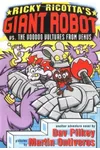
- Ricky Ricotta's Mighty Robot vs. the Voodoo Vultures from Venus (2001) – Victor Vulture attempts to brainwash the mice of Squeakyville.
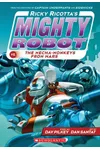
- Ricky Ricotta's Mighty Robot vs. the Mecha-Monkeys from Mars (2002) – Major Monkey plans to invade Earth with his giant primate army.
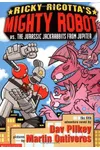
- Ricky Ricotta's Mighty Robot vs. the Jurassic Jackrabbits from Jupiter (2002) – General Jackrabbit creates prehistoric bunny clones to take over.
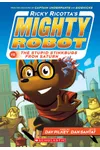
- Ricky Ricotta's Mighty Robot vs. The Stupid Stinkbugs from Saturn (2002) – Sergeant Stinkbug leads a smelly invasion force.
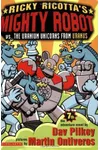
- Ricky Ricotta's Mighty Robot vs. the Uranium Unicorns from Uranus (2005) – Uncle Unicorn uses giant robotic beasts to challenge the Mighty Robot.
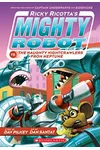
- Ricky Ricotta's Mighty Robot vs. The Naughty Nightcrawlers From Neptune (2015) – Nimrod Nightcrawler plans to sink the city using giant worms.
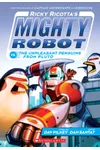
- Ricky Ricotta's Mighty Robot vs. The Unpleasant Penguins from Pluto (2016) – President Penguin takes over the local park, leading to a chilly final showdown.
Understanding the Planetary Progression
One of the most charming elements of Dav Pilkey's series is the planetary theme that structures the order of the books. After the introductory adventure on Earth in the first book, Ricky and the Mighty Robot battle villains originating from the other planets in our solar system, moving in order from the sun outward:
- Mercury: Book 2 features Mutant Mosquitoes.
- Venus: Book 3 introduces Voodoo Vultures.
- Mars: Book 4 features Mecha-Monkeys.
- Jupiter: Book 5 features Jurassic Jackrabbits.
- Saturn: Book 6 features Stupid Stinkbugs.
- Uranus: Book 7 features Uranium Unicorns.
- Neptune: Book 8 features Naughty Nightcrawlers.
- Pluto: Book 9 features Unpleasant Penguins.
This layout serves as a fun educational tool for young kids, helping them learn the sequence of the planets in our solar system while enjoying the sci-fi action.
The Astro-Activity Book & Extra Material
In addition to the nine main adventures, Dav Pilkey released a companion activity book to keep young minds engaged between stories:
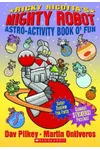
- Ricky Ricotta's Mighty Robot Astro-Activity Book O' Fun (2006)
This book is packed with puzzles, games, drawing activities, and mini-comics. In terms of timeline, it was released between Book 7 and Book 8. While it is completely optional and doesn't contain any major plot points necessary to understand the main series, it is a fun supplement for children who have finished the first seven books. It features the original illustration style of Martin Ontiveros, but remains a beloved collector's item for fans of the franchise.
The Two Illustrative Eras: Ontiveros vs. Santat
When collecting or borrowing the Ricky Ricotta books, parents and readers will encounter two distinct versions of the series. The series has a fascinating publishing history that is split into two eras, defined by the illustrators who brought Dav Pilkey's words to life:
The Original Era (2000–2006)
The first seven books were originally illustrated by Martin Ontiveros. These versions feature simple, bold, black-and-white comic-style artwork. During this period, the first three books were actually titled Ricky Ricotta's Giant Robot before the word "Giant" was permanently replaced with "Mighty" to align with later releases. Following the publication of the Astro-Activity Book O' Fun in 2006, the series went on a long hiatus, leaving the planned eighth and ninth books unpublished for a decade.
The Full-Color Reboot Era (2014–2016)
In 2013, Scholastic announced that the series would be rebooted with new artwork by Caldecott Medal-winning illustrator Dan Santat. Santat re-illustrated all of the original seven books in full color, updating the visual designs of Squeakyville, the robot, and the alien threats. Crucially, Santat also illustrated the brand-new eighth and ninth books, which finally brought the series to its planned conclusion. If you are buying new copies today, you are almost certainly getting the vibrant, full-color Santat editions, which are highly recommended for modern early readers.
What to Know Before You Start
Before diving in, here are a few practical tips to help you get the most out of Ricky Ricotta's adventures:
- Target Age Group: The books are specifically designed for kids aged 5 to 9. They serve as an excellent bridge between picture books and early chapter books.
- Flip-O-Rama: Like the Captain Underpants series, the Ricky Ricotta books feature "Flip-O-Rama" pages, which allow kids to flip pages back and forth rapidly to animate action sequences. This makes the physical reading experience highly interactive.
- Mini-Comics: Each book includes short, in-universe comic strips drawn by Ricky himself, adding variety to the layout and keeping reluctant readers engaged.
- A Gentler Dav Pilkey: Parents who might be hesitant about the potty humor and cheeky pranks in Captain Underpants will find Ricky Ricotta to be much gentler. The core themes focus heavily on courage, stand-up-to-bullying values, friendship, and positive family relationships.