


How to Start Reading the Saint-Germain Series
Spanning over 25 novels and four decades of publication history, Chelsea Quinn Yarbro's Saint-Germain Cycle is the longest-running vampire series in modern literature. Because the books jump back and forth across different historical eras, deciding where to start can be intimidating. Luckily, the structure of the series offers two primary reading paths, each with its own unique benefits.
The Best Starting Point: Hôtel Transylvania
Regardless of whether you choose a publication or chronological path, almost all readers and critics agree that you should start with Hôtel Transylvania (originally published in 1978). Set in the lavish but dangerous salons of 1740s Paris, this novel introduces Count Saint-Germain and his eternal companion, Madelaine de Montalia. It establishes the unique rules of Yarbro's vampire mythos—namely, that Saint-Germain is an empathetic, gentle figure who views the exchange of blood as a consensual, highly intimate act rather than a predatory assault. Starting here provides the perfect foundation for the character's traits, his alchemical powers, and the series' distinct tone before you dive into other historical periods.
Option 1: The Publication Order Path
Reading in publication order is highly recommended for newcomers. This path allows you to experience the character's world-building exactly as Chelsea Quinn Yarbro developed it. You will watch the writing style evolve and see how Yarbro gradually filled in the gaps of the Count's long life. Because each book is designed as a standalone historical vignette, you won't get lost, and the shifts between eras will keep the narrative fresh.
Option 2: The Chronological Timeline Path
For readers who prefer a linear historical narrative, reading chronologically allows you to watch Count Saint-Germain grow from his ancient origins to the dawn of the 20th century. Born in the Carpathian Mountains in 2119 BCE and turned into a vampire in 2080 BCE, Saint-Germain lives through Nero's Rome, the Byzantine Empire, medieval Europe, the French Revolution, and both World Wars. Reading chronologically creates a grand historical epic, tracing the steady rise and fall of human civilizations through the eyes of an immortal survivor.
Publication Order of Saint-Germain Books
Below is the complete list of main Saint-Germain novels and short story collections in their order of release. Note that minor differences exist between databases regarding exact years (for example, some catalogs list Blood Games in 1979 and others in 1980, and Tempting Fate in 1981 versus 1982). We have preserved the primary publication timeline here:
- Hôtel Transylvania (1978) – Set in 1740s Paris. The perfect series introduction.
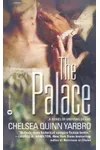
- The Palace (1978) – Set in 15th-century Florence during the rise of Savonarola.
- Blood Games (1979/1980) – Set in Nero's Rome (circa 69 CE). Introduces Atta Olivia Clemens.
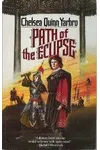
- Path of the Eclipse (1981) – Set in 13th-century China, Tibet, and India during the Mongol invasions.
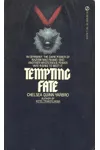
- Tempting Fate (1981/1982) – Set in Europe and Russia during and after WWI (1917–1928).
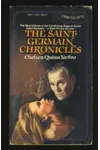
- The Saint-Germain Chronicles (1983) – The first essential short story collection.
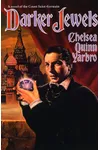
- Darker Jewels (1993) – Set in 16th-century Russia during the reign of Ivan the Terrible.
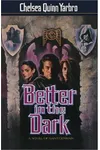
- Better in the Dark (1993) – Set in 10th-century Saxony.
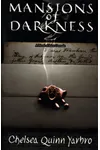
- Mansions of Darkness (1996) – Set in 17th-century Spanish Peru.
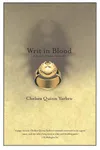
- Writ in Blood (1997) – Set in Europe right before WWI (1910–1914).
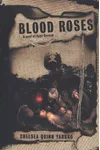
- Blood Roses (1998) – Set in 14th-century France during the Black Death.
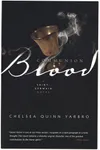
- Communion Blood (1999) – Set in 17th-century Rome.
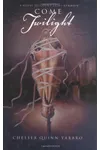
- Come Twilight (2000) – Set in Spain across the 7th, 8th, and 12th centuries.
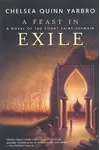
- A Feast in Exile (2001) – Set in 14th-century Constantinople.
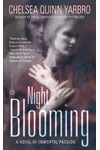
- Night Blooming (2002) – Set in Europe during Charlemagne's reign (circa 796–801 CE).
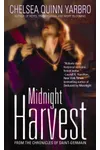
- Midnight Harvest (2003) – Set in the United States and Spain during the 1930s.
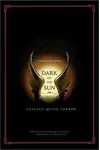
- Dark of the Sun (2004) – Set in 6th-century China and Eastern Europe (circa 535–537 CE).
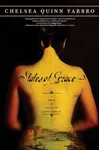
- States of Grace (2005) – Set in 16th-century Europe.
- Roman Dusk (2006) – Set in Rome during the reign of Emperor Heliogabalus (circa 218–220 CE).
- Saint-Germain Memoirs (2007) – A collection of short stories filling in historical gaps.
- Borne in Blood (2007) – Set in 1817 Switzerland.
- A Dangerous Climate (2008) – Set in early 19th-century St. Petersburg, Russia.
- Burning Shadows (2009) – Set in the Carpathian Mountains (circa 438–440 CE).
- An Embarrassment of Riches (2011) – Set in 13th-century Bohemia (1278–1281 CE).
- Commedia della Morte (2012) – Set during the Reign of Terror in late 18th-century France.
- Night Pilgrims (2013) – Set in 13th-century Egypt, Nubia, and Ethiopia.
- Sustenance (2014) – Set in 17th-century Amsterdam.
The Chronological Reading Timeline
If you prefer to follow Count Saint-Germain’s journey linearly through human history, use the following chronological order. Note that some books (like Come Twilight) span multiple eras, and we place them where the bulk of their narrative or their starting points occur:
- Blood Games (Rome, 60–70 CE)
- Roman Dusk (Rome, 218–220 CE)
- Burning Shadows (Carpathians, 438–440 CE)
- Dark of the Sun (China/Eastern Europe, 535–537 CE)
- Night Blooming (Charlemagne's Court, 796–801 CE)
- Better in the Dark (Saxony, 10th Century)
- Path of the Eclipse (China/Tibet, 1211–1219 CE)
- Night Pilgrims (Egypt/Ethiopia, 1225–1228 CE)
- An Embarrassment of Riches (Bohemia, 1278–1281 CE)
- Blood Roses (France, 14th Century)
- A Feast in Exile (Constantinople, 14th Century)
- The Palace (Florence, 15th Century)
- Darker Jewels (Russia, 16th Century)
- States of Grace (Europe, 16th Century)
- Mansions of Darkness (Peru, 17th Century)
- Communion Blood (Rome, 17th Century)
- Sustenance (Amsterdam, 17th Century)
- Hôtel Transylvania (Paris, 1740s)
- Commedia della Morte (France, late 18th Century)
- Borne in Blood (Switzerland, 1817)
- A Dangerous Climate (Russia, early 19th Century)
- Writ in Blood (Europe, 1910–1914)
- Tempting Fate (Russia/Europe, 1917–1928)
- Midnight Harvest (US/Spain, 1930s)
Subseries, Spin-offs, and Crossover Characters
One of the most rewarding aspects of the Saint-Germain Cycle is its sprawling family tree. Several of the mortals Saint-Germain loves and saves are turned into vampires, going on to star in their own spin-off series. These companion books are highly recommended and can be read alongside the main cycle to enrich your understanding of the universe.
The Atta Olivia Clemens Trilogy
Olivia Clemens is introduced in Blood Games. Saved by Saint-Germain in ancient Rome, she receives her own trilogy, which focuses on her struggles to survive as a female vampire in a deeply patriarchal historical world. These books are best read after Blood Games:
- A Flame in Byzantium (1987) – Set in 6th-century Constantinople.
- Crusader's Torch (1988) – Set in Palestine during the Third Crusade (circa 1188–1214 CE).
- A Candle for d'Artagnan (1989) – Set in 17th-century France.
The Madelaine de Montalia Duology
Madelaine is Saint-Germain's beloved partner introduced in Hôtel Transylvania. Her spin-off novels follow her own archaeological and historical adventures. Reading them adds crucial depth to the relationship between the two main immortals:
- Out of the House of Life (1990) – Set in Egypt (spanning 1500–800 BCE and 1823–1826 CE). This book is particularly notable because it details Saint-Germain's origin story and early life in Egypt through letters Madelaine uncovers.
- In the Face of Death (2004) – Set in 19th-century America (the Civil War era and the American West).
What to Know Before You Start
Chelsea Quinn Yarbro’s vampire mythos is vastly different from traditional gothic horror. Saint-Germain does not hunt, nor does he kill. He is an earth-bound creature who requires native soil to rest, has no fangs, and relies on blood given willingly. The tone of the books leans heavily into historical fiction, romantic intrigue, and political drama, with the supernatural elements acting as a backdrop. Be prepared for a slower, more deliberate pacing, heavy on historical detail and atmospheric world-building. Furthermore, be aware that Chelsea Quinn Yarbro passed away in 2025; while she completed manuscripts for additional books such as Forgotten Gods and Orphans of Memory, these remained unpublished or forthcoming at the time of her death, leaving the official published novel count at 27 main titles plus the spin-offs.