









Where to Start Reading Chelsea Quinn Yarbro
With a career spanning over four decades and more than 80 books, tackling Chelsea Quinn Yarbro's bibliography can feel daunting. The definitive entry point for any reader is Hôtel Transylvania (1978). This book introduces Count Saint-Germain, her most famous creation, and establishes the unique rules of her vampire mythos. While Saint-Germain is an immortal whose stories span millennia, starting with the first published novel is highly recommended because it builds the core relationship between the Count and his beloved companion, Madelaine de Montalia, which serves as an emotional anchor for the rest of the expanded universe.
For readers who prefer to avoid vampires entirely, Yarbro's historical mysteries and speculative science fiction standalones provide excellent alternative starting points. Ogilvie, Tallant and Moon (1976) introduces her Native American detective Charlie Moon, while the chilling Time of the Fourth Horseman (1976) showcases her talent for dystopian sci-fi.
The Saint-Germain Cycle: Two Ways to Read
The Saint-Germain series is the longest-running vampire saga in literature. Unlike traditional horror, Yarbro depicts the Count not as a bloodthirsty monster, but as a compassionate, cultured observer of human history. The series is non-linear and jumps across centuries, leading to a split in how fans recommend reading the books.
Option 1: Publication Order (Recommended for Newcomers)
Reading in publication order allows you to experience Yarbro's world-building, stylistic growth, and character development as she originally designed them. The publication order for the main Saint-Germain novels is:
- Hôtel Transylvania (1978)
- The Palace (1978)
- Blood Games (1979)
- Path of the Eclipse (1981)
- Tempting Fate (1981)
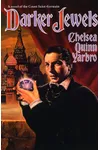
- Darker Jewels (1993)
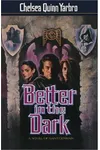
- Better in the Dark (1993)
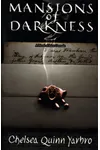
- Mansions of Darkness (1996)
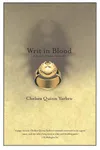
- Writ in Blood (1997)
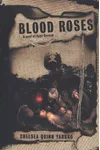
- Blood Roses (1998)
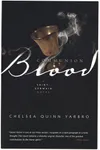
- Communion Blood (1999)
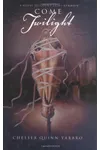
- Come Twilight (2000)
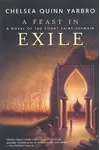
- A Feast in Exile (2001)
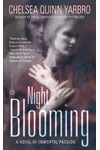
- Night Blooming (2002)
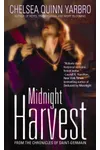
- Midnight Harvest (2003)
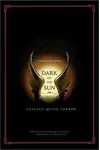
- Dark of the Sun (2004)
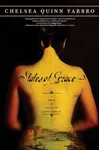
- States of Grace (2005)
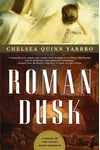
- Roman Dusk (2006)
- Borne in Blood (2007)
- A Dangerous Climate (2008)
- Burning Shadows (2009)
- An Embarrassment of Riches (2011)
- Commedia della Morte (2012)
- Night Pilgrims (2013)
- Sustenance (2014)
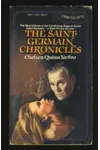
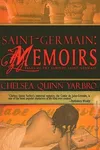
Short stories and collections such as The Saint-Germain Chronicles (1983) and Saint-Germain Memoirs (2007) can be read at any point after the first five novels.
Option 2: Chronological Reading Order
For seasoned readers who want to follow the Count's life linearly from ancient times through the mid-20th century, the chronological sequence rearranges the novels based on their historical settings. Below is the chronological order for the primary novels (excluding short story collections):
- Out of the House of Life (Set in Ancient Egypt, 1500–800 BC — also part of the Madelaine series)
- Blood Games (Set in Nero's Rome, 60–70 AD)
- Roman Dusk (Set in the late Roman Empire, 218–220 AD)
- Burning Shadows (Set during the rise of Attila the Hun, 438–440 AD)
- Dark of the Sun (Set in 6th-century China, 500s AD)
- Night Blooming (Set in Charlemagne's court, 790s AD)
- Better in the Dark (Set in 10th-century Germany, 900s AD)
- Path of the Eclipse (Set in 13th-century Asia, 1210s AD)
- Night Pilgrims (Set in 13th-century Egypt, 1220s AD)
- An Embarrassment of Riches (Set in 13th-century Bohemia, 1240s AD)
- Blood Roses (Set during the Black Death in France, 1340s AD)
- A Feast in Exile (Set in 15th-century India, 1400s AD)
- The Palace (Set in Renaissance Florence, 1490s AD)
- States of Grace (Set in 16th-century Europe, 1500s AD)
- Darker Jewels (Set in Ivan the Terrible's Russia, 1580s AD)
- Communion Blood (Set in 17th-century Rome, 1600s AD)
- Mansions of Darkness (Set in 17th-century Spanish America, 1600s AD)
- Hôtel Transylvania (Set in 18th-century Paris, 1740s AD)
- A Dangerous Climate (Set in 18th-century St. Petersburg, 1700s AD)
- Commedia della Morte (Set in late 18th-century Venice, 1790s AD)
- In the Face of Death (Set during the American Civil War, 1860s AD — Madelaine series)
- Borne in Blood (Set in 19th-century Switzerland, 1800s AD)
- Writ in Blood (Set in 1910s Europe on the eve of WWI)
- Tempting Fate (Set in Weimar Germany, 1917–1924 AD)
- Midnight Harvest (Set in 1930s Europe and the US)
- Sustenance (Set in 1950s Cold War Europe and New York)
The Companion Series: Olivia & Madelaine
Yarbro expanded the Saint-Germain universe through two companion series featuring other vampires created by or linked to the Count. These books are deeply integrated into the lore and should be read alongside the main cycle.
Atta Olivia Clemens Series
This subseries follows Olivia, a Roman woman turned into a vampire by Saint-Germain. Her books are set during key historical transitions and offer a female perspective on immortality:
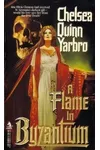
- A Flame in Byzantium (1988) — Set in 6th-century Constantinople. Chronologically, this fits alongside Dark of the Sun.
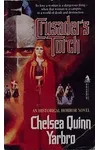
- Crusader's Torch (1989) — Set during the Crusades in the 13th century. Chronologically fits near Night Pilgrims.
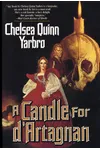
- A Candle for d'Artagnan (1989) — Set in 17th-century France. Chronologically fits near Communion Blood.
Madelaine de Montalia Series
Madelaine is Saint-Germain's true love, turned into a vampire in the 18th century. Her standalone adventures explore different historical eras:
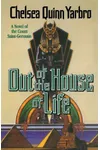
- Out of the House of Life (1990) — Tells the story of Madelaine studying Saint-Germain's early life in Egypt via archaeological tablets.
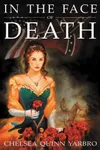
- In the Face of Death (2001) — Follows Madelaine in 19th-century America during the Civil War.
Other Notable Series and Pseudonyms
Yarbro is famously versatile, writing mysteries, fantasy, and New Age philosophy under several names:
- Charlie Moon Mysteries: Writing under her own name, these books (beginning with Ogilvie, Tallant and Moon) focus on a Native American private investigator handling complex, modern crimes.
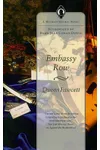
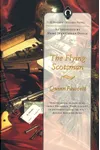
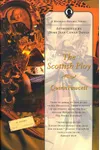
- Quinn Fawcett Pseudonym: Collaborating with Bill Fawcett, Yarbro wrote historical mystery thrillers. These include the Mycroft Holmes series (detailing Sherlock's older brother) and the Ian Fleming series (depicting James Bond's creator as a wartime spymaster).
- The Vildecaz Talents (Camille Gabor Pseudonym): A high-fantasy trilogy (Nimuar's Loss, The Deceptive Oracle, and Agnith's Promise) centering on magical talents and political intrigue, also collected in a single omnibus.
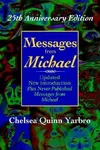
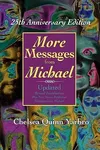
- Messages from Michael: A New Age spiritual series presenting channeled teachings from an entity named Michael.