


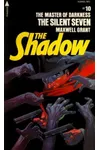
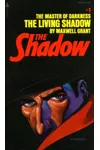
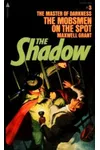
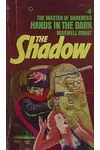
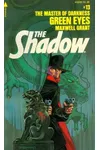
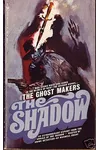

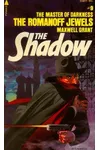
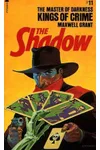
Where to Start Reading The Shadow
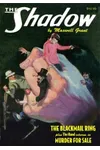
With over 300 stories published during the golden age of pulp magazines, entering the world of the cloaked vigilante can feel overwhelming. Fortunately, because these pulp novels were written for twice-monthly magazines, they are largely episodic. However, starting at the beginning is highly recommended to appreciate how the character's mythos evolved.
We recommend starting with the first five novels in publication order. This sequence introduces the core formula, the main agents, and the primary disguises of the Master of Darkness:
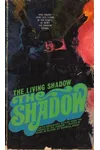
- The Living Shadow (1931) – The very first novel. It introduces Harry Vincent, the Shadow's premier agent, and establishes the dark, suspenseful tone.
- Eyes of the Shadow (1931) – Dives deeper into the Shadow's secret network and introduces key elements of his New York operations.
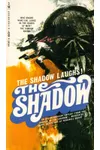
- The Shadow Laughs! (1931) – A landmark entry that introduces the wealthy socialite Lamont Cranston, whose identity the Shadow frequently borrows.
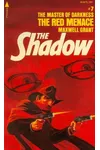
- The Red Menace (1931) – Pits the Shadow against a massive criminal conspiracy, highlighting his tactical brilliance.
- Gangdom's Doom (1931) – A gritty, action-packed story showcasing the Shadow's relentless war against organized crime syndicates.
Publication Order vs. Chronological Order
For the original run of 325 novels published between 1931 and 1949, publication order is the most logical path. The stories were written and published rapidly, and reading them as they appeared allows you to experience the natural progression of the Shadow's abilities, his growing network of agents, and his shifting rogues' gallery.
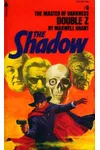
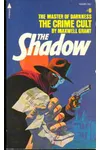
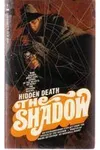
A chronological reading order is not strictly necessary or different, as the stories generally take place in the order they were published. However, readers should be aware of a major shift in the 1960s. After the original pulp magazine ended in 1949, Belmont Books launched a series of nine paperback novels in the 1960s. These paperbacks updated the character for the Cold War era and can be read as a distinct, modern subseries after you have sampled the classic 1930s novels.
The Men Behind the Mask: Maxwell Grant
Every original novel in the series carries the byline of "Maxwell Grant." In reality, Maxwell Grant was a house pseudonym created by publisher Street & Smith. This allowed multiple writers to produce content for the twice-monthly schedule, though one man did the heavy lifting:
- Walter B. Gibson: The primary creative force, Gibson wrote 282 of the 325 original novels. A professional magician and ghostwriter for Harry Houdini, Gibson infused the stories with illusions, escape artistry, and mystery.
- Theodore Tinsley: Wrote 27 novels between 1936 and 1943, introducing a more action-oriented and violent tone to the series.
- Bruce Elliott: Wrote 15 novels in the late 1940s, attempting to ground the character in traditional detective mystery style.
- Lester Dent: The creator of Doc Savage, Dent contributed a single novel, The Golden Vulture, in 1938.
- Dennis Lynds: Wrote eight of the nine Belmont Books paperbacks in the 1960s, shifting the character into contemporary spy-thriller adventures.
Who is Lamont Cranston? Kent Allard Explained
One of the most common points of confusion for new readers is the identity of the Shadow. In the famous radio show, the character is introduced as "Lamont Cranston, a wealthy young man about town." However, the pulp novels tell a more complex story:
The Shadow's true identity is actually Kent Allard, a legendary World War I aviator who was believed dead after his plane crashed in the South American jungle. Allard returned to New York and created the Shadow persona to fight crime. Because Allard needed to move freely through different social circles, he made deals with real people to borrow their identities. The most famous of these was the real Lamont Cranston, a wealthy travel enthusiast who was frequently out of the country, allowing Allard to impersonate him. He also posed as businessman Fritz Rudolf and police commissioner Henry Arnaud.
The Shadow's Network of Agents
Unlike modern superheroes who work completely alone, the Shadow relies heavily on a syndicate of agents who act as his eyes and ears in the city. The most important recurring agents to watch for include:
- Harry Vincent: The first agent recruited in The Living Shadow. Saved from suicide by the Shadow, he is the most trusted field operative.
- Margo Lane: The Shadow's companion and socialite contact. She was originally created for the 1937 radio drama to give the character someone to talk to, but she proved so popular that Gibson eventually integrated her into the pulp novels.
- Moe Shrevnitz: A cab driver who provides the Shadow with transportation and valuable information about the city's criminal underworld.
Key Villains to Watch For
While the Shadow spent many issues fighting street thugs and mobsters, he occasionally faced recurring masterminds who tested his intellect:
- Shiwan Khan: The Shadow's absolute arch-nemesis. A psychic mastermind claiming descent from Genghis Khan, he clashed with the Shadow in multiple novels, including The Golden Master.
- The Cobra: A master extortionist and chemical genius who remains one of the Shadow's most persistent early adversaries.