










Where Should You Start Reading?
If you are planning to dive into the legendary exploits of the League of the Scarlet Pimpernel, the absolute best place to start is the original 1905 classic, The Scarlet Pimpernel. While Baroness Emma Orczy later penned prequels set in the seventeenth century, beginning with the 1905 novel is essential. It is here that you are introduced to the core relationship between the seemingly foppish Sir Percy Blakeney and his clever French wife, Marguerite, alongside their primary antagonist, Citizen Chauvelin. Starting with any other book will spoil the mystery of the Pimpernel's identity and dilute the emotional core of the series.
The Two Ways to Read the Series
Because Baroness Orczy did not write the books in chronological order, readers generally choose between two distinct reading paths: Publication Order or Chronological Order. Below, we break down both approaches so you can decide which fits your reading style best.
Option 1: Publication Order (Recommended)
Reading in order of publication is the most natural way to experience the evolution of the Scarlet Pimpernel. Orczy wrote many of the sequels and short stories to satisfy a passionate public demand after the initial play and novel became massive hits. This path allows you to experience the characters and their universe exactly as historical readers did.
- The Scarlet Pimpernel (1905)
- I Will Repay (1906)
- The Elusive Pimpernel (1908)
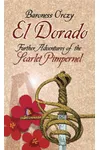
- El Dorado (1913)
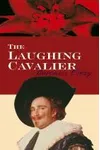
- The Laughing Cavalier (1914)
- Lord Tony's Wife (1916)
- The League Of The Scarlet Pimpernel (1919)
- The First Sir Percy (1921)
- The Triumph Of The Scarlet Pimpernel (1922)
- Pimpernel and Rosemary (1924)
- Sir Percy Hits Back (1927)
- The Adventures Of The Scarlet Pimpernel (1929)
- In the Rue Monge (1931)
- A Child of the Revolution (1932)
- The Way Of The Scarlet Pimpernel (1933)
- The Scarlet Pimpernel Looks at the World (1933)
- Sir Percy Leads The Band (1936)
- Mam'zelle Guillotine (1940)
Option 2: Chronological Order
If you want to follow the timeline of the Blakeney family from their seventeenth-century ancestors to their twentieth-century descendants, you can read the books chronologically. Keep in mind that the first two books in this list feature an ancestor and not the original Sir Percy, while the final books transition to descendants and essay collections.
- The Laughing Cavalier (1914) – Set in 1624, this prequel introduces Sir Percy Blake of Blakeney, an adventurer who serves as the model for Frans Hals' famous painting and is the direct ancestor of the Scarlet Pimpernel.
- The First Sir Percy (1921) – Set in 1640, this is the direct sequel to the ancestor's adventures.
- The Scarlet Pimpernel (1905) – The core novel, setting off the French Revolution timeline in 1792.
- Sir Percy Leads The Band (1936) – Set in 1793, this prequel to the League years finds Sir Percy in the thick of early revolutionary chaos.
- The League Of The Scarlet Pimpernel (1919) – A collection of short stories detailing early rescues by the League in 1793.
- I Will Repay (1906) – Set in 1793, focusing on a young Frenchman caught between vengeance and his oath.
- The Elusive Pimpernel (1908) – Set in 1793, this novel heightens the cat-and-mouse game between Sir Percy and Citizen Chauvelin.
- The Way Of The Scarlet Pimpernel (1933) – Set in 1793, showing the Pimpernel navigating increasingly dangerous Parisian streets.
- Lord Tony's Wife (1916) – Set in 1793, focusing on the rescue of a young French heiress and her English husband.
- El Dorado (1913) – Set in 1794, this is a pivotal entry dealing with the daring attempt to rescue the young Dauphin (Louis XVII) from the Temple Prison.
- Mam'zelle Guillotine (1940) – Set in 1794, focusing on the dark reign of Terror and the rescue of innocent victims.
- The Triumph Of The Scarlet Pimpernel (1922) – Set in 1794, tracing events up to the fall of Robespierre and the Thermidorian Reaction.
- Sir Percy Hits Back (1927) – Set in 1794, where Sir Percy must protect those closest to him as the Revolution turns on itself.
- The Adventures Of The Scarlet Pimpernel (1929) – Another collection of short stories featuring high-stakes rescues in 1794.
- A Child of the Revolution (1932) – Set in 1794, tracking romance and political shifting during the final months of the Terror.
- In the Rue Monge (1931) – A short story set in 1794 capturing a singular, daring rescue.
- Pimpernel and Rosemary (1924) – Set in the early 1920s post-WWI, this spin-off stars Peter Blakeney, the modern-day descendant of Sir Percy, in a plot involving Hungarian nobility.
- The Scarlet Pimpernel Looks at the World (1933) – A unique collection of essays in which Orczy uses Sir Percy's voice to comment on 1930s politics and culture.
Understanding the Ancestors, Spin-offs, and Essay Collections
To avoid confusion, it helps to understand how the non-standard entries fit into the broader reading order. Baroness Orczy used the success of her character to explore different eras and formats. Here is a breakdown of what to expect:
The 17th-Century Ancestors
The Laughing Cavalier (1914) and The First Sir Percy (1921) do not feature the original Scarlet Pimpernel. Instead, they follow Sir Percy Blake of Blakeney, a mercenary operating in the Netherlands during the Thirty Years' War. The first novel is famously built around the real-life Dutch portrait by Frans Hals. While they share the lighthearted adventure style of the main series, they are functionally standalones that can be read at any point after the main 1905 novel.
The 1920s Descendant
In Pimpernel and Rosemary (1924), the action jumps forward to the aftermath of the First World War. The hero is Peter Blakeney, Sir Percy's direct descendant, who inherits his ancestor's knack for disguises and daring rescues. The setting shifts to Transylvania and Hungary, drawing heavily on Orczy's own aristocratic Hungarian background.
The 1930s Commentary
Perhaps the most unusual entry is The Scarlet Pimpernel Looks at the World (1933). This is not a work of fiction, but a collection of essays. Orczy writes from the perspective of Sir Percy Blakeney, offering observations on the social, cultural, and political landscape of the early 1930s. It is best treated as a curiosity for dedicated fans rather than a narrative installment.
Practical Reading Advice
If you find the extensive list daunting, do not worry. You do not need to commit to reading all eighteen volumes to enjoy the story. Many of the novels work well as standalone historical adventures, and Orczy frequently recaps the events of previous books to keep new readers oriented. For a satisfying, self-contained story arc, we recommend starting with the "Core Trilogy": The Scarlet Pimpernel (1905), The Elusive Pimpernel (1908), and El Dorado (1913). These three books form the backbone of the conflict between Sir Percy Blakeney and Citizen Chauvelin, resolving the most significant narrative threads of the series.