






















How to Read Baroness Orczy's Books
Emma Orczy, widely known as Baroness Orczy, was a prolific Hungarian-born British novelist who left an indelible mark on both historical adventure and detective fiction. While she wrote dozens of standalone historical romances, she is best remembered for creating the first hero with a secret identity: the Scarlet Pimpernel. Additionally, she pioneered detective fiction with the Teahouse Detective and Lady Molly of Scotland Yard. Navigating her expansive catalog can be tricky due to overlapping titles, ancestral prequels, and publication dates that do not match the internal story chronology.
Recommended Starting Point: The Scarlet Pimpernel
If you are new to Baroness Orczy, the absolute best place to start is with her masterpiece, The Scarlet Pimpernel (1905). This novel introduces Sir Percy Blakeney, the wealthy and seemingly dim-witted English baronet who secretly rescues French aristocrats from the guillotine. It establishes the central romance, the historical backdrop of the Reign of Terror, and the high-stakes double-life trope that inspired characters like Zorro and Batman. Reading this first is essential, as almost all subsequent Pimpernel books build upon the relationships and reputation established here.
The Scarlet Pimpernel Universe
The Scarlet Pimpernel series is not a straightforward chronological sequence. It consists of full-length novels, short story collections, prequels set in the 17th century featuring Sir Percy’s ancestors, and a sequel set during the First World War featuring his descendant. Readers generally choose between two primary paths: Publication Order or Chronological Order.
The Case for Publication Order
Reading in publication order allows you to experience the series as Orczy developed it. You begin with the core trilogy of The Scarlet Pimpernel, I Will Repay, and The Elusive Pimpernel, before branching out into side stories, short stories, and prequels. This order is highly recommended for first-time readers because the prequels assume familiarity with the legendary reputation of the main character.
- The Scarlet Pimpernel (1905)
- I Will Repay (1906)
- The Elusive Pimpernel (1908)
- El Dorado (1913)
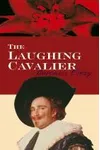
- The Laughing Cavalier (1914) — Ancestral Prequel
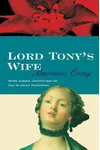
- Lord Tony's Wife (1916)
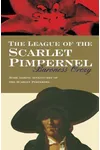
- The League Of The Scarlet Pimpernel (1919) — Short Story Collection
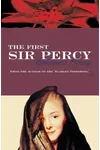
- The First Sir Percy (1921) — Ancestral Prequel Sequel
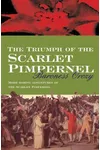
- The Triumph Of The Scarlet Pimpernel (1922)
- Pimpernel and Rosemary (1924) — WWI-era Descendant Sequel
- Sir Percy Hits Back (1927)
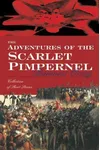
- The Adventures Of The Scarlet Pimpernel (1929) — Short Story Collection
- In the Rue Monge (1931) — Short Story/Novella
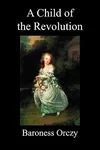
- A Child of the Revolution (1932)
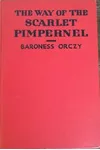
- The Way Of The Scarlet Pimpernel (1933)
- The Scarlet Pimpernel Looks at the World (1933) — Fictional Essays/Stories
- Sir Percy Leads The Band (1936)
- Mam'zelle Guillotine (1940)
The Case for Chronological Order
If you want to follow the timeline of the Blakeney family and the French Revolution sequentially, you should read chronologically. Under this path, you begin in the 17th century with Sir Percy's mercenary ancestor, "Diogenes" (the subject of the famous Frans Hals painting), in the Dutch Republic. You then follow the Revolutionary activities of Sir Percy from the start of the Terror to the aftermath, ending with a leap forward to WWI with his descendant Peter Blakeney in Pimpernel and Rosemary.
- The Laughing Cavalier (1914) — Set in 1623–1624; introduces Sir Percy's ancestor "Diogenes".
- The First Sir Percy (1921) — Direct sequel to The Laughing Cavalier, set in the 17th century.
- The Scarlet Pimpernel (1905) — Set in 1792; the classic introduction of Sir Percy Blakeney.
- Sir Percy Leads The Band (1936) — Set in 1793; details the early days of the League.
- The League Of The Scarlet Pimpernel (1919) — Short stories taking place during the height of the Terror.
- I Will Repay (1906) — Set in 1793; focuses on a young French girl's oath of vengeance.
- The Elusive Pimpernel (1908) — Set in 1793; features the return of the villain Chauvelin.
- The Way Of The Scarlet Pimpernel (1933) — Set in 1793; depicts rescues during the Reign of Terror.
- Lord Tony's Wife (1916) — Set in 1793; follows the rescue of League member Lord Antony Dewhurst's wife.
- El Dorado (1913) — Set in 1793; details the daring attempt to rescue the young Dauphin.
- Mam'zelle Guillotine (1940) — Set in 1793; focuses on the villainous Robespierre's associates.
- The Triumph Of The Scarlet Pimpernel (1922) — Set in 1794; deals with the fall of Robespierre.
- Sir Percy Hits Back (1927) — Set in 1794; Sir Percy faces dangers in France to save his daughter's friend.
- The Adventures Of The Scarlet Pimpernel (1929) — Further short stories set during the Revolution.
- A Child of the Revolution (1932) — Set in 1794; heavily features the revolution's social fallout.
- In the Rue Monge (1931) — A short story showing the ongoing street-level rescues.
- Pimpernel and Rosemary (1924) — Set during World War I; features Sir Percy's descendant, Peter Blakeney.
- The Scarlet Pimpernel Looks at the World (1933) — A collection of essays and reflections viewing modern times through the eyes of the historical hero.
The Detective Series: Teahouse Detective & Lady Molly
Orczy was also a vital contributor to the early golden age of detective fiction. She created two highly influential series that mystery fans should not miss.
The Teahouse Detective (The Old Man in the Corner)
This series features an unnamed, eccentric armchair detective who sits in the corner of a London tea shop, speaking to a journalist named Polly Burton. He solves complex, sensational crimes solely from newspaper clippings while obsessively tying knots in a piece of string. Although The Old Man in the Corner is the most famous title, The Case of Miss Elliott was published first in book form. These are short stories, so they can be read in any order, but the publication sequence is as follows:
- The Case of Miss Elliott (1905)
- The Old Man in the Corner (1908)
- Unravelled Knots (1926)
Lady Molly of Scotland Yard
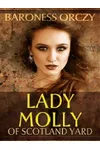
Published in 1910, Lady Molly of Scotland Yard is a collection of twelve short stories. It is historically significant for introducing one of the earliest female detective characters in English literature, Lady Molly Robertson-Kirk. Lady Molly works in the Female Department of Scotland Yard and relies on female intuition and close observation of details that male detectives dismiss. The stories are narrated by her loyal assistant, Mary Granard, and can easily be read as a standalone volume.
What to Know Before You Start
When diving into Baroness Orczy’s bibliography, keep a few caveats in mind. First, several works overlap across categories. For example, The Laughing Cavalier, Pimpernel and Rosemary, and In the Rue Monge are sometimes cataloged as standalone novels, yet they are structurally linked to the Scarlet Pimpernel lineage. Second, her historical novels reflect the romanticized, melodramatic, and aristocratic biases of her era. For the best experience, start with the core 1905 novel The Scarlet Pimpernel, proceed with the main sequels (I Will Repay, The Elusive Pimpernel, and El Dorado), and then explore her detective stories for a change of pace.