




How to Read the Southern Victory Series in Order
The Southern Victory series (commonly referred to by fans as Timeline 191 or the TL-191 universe) is a monumental work of alternate history by Harry Turtledove. Spanning eleven novels, the series follows the political, military, and social evolution of a divided North America from 1881 to 1945.
Because the series follows a strict, linear chronological timeline with multi-generational character arcs, the recommended reading order is the exact publication order. Reading these books out of sequence is highly discouraged, as the geopolitical shifts, character deaths, and major historical developments build directly on preceding events.
The Complete Reading Order
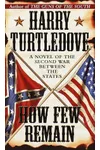
- How Few Remain (1997) — The standalone novel that initiates the timeline, set during the Second Mexican War in 1881.
- The Great War: American Front (1998) — The beginning of the alternate World War I trilogy, starting in 1914.
- The Great War: Walk in Hell (1999) — The second volume of the trilogy, detailing the brutal campaigns of 1915–1916.
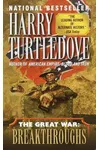
- The Great War: Breakthroughs (2000) — The conclusion of the trilogy, bringing the war to an end in 1917.
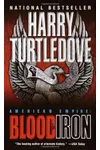
- American Empire: Blood and Iron (2001) — The start of the interwar trilogy, tracing the rise of radical movements in the defeated nations from 1917–1924.
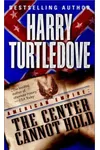
- American Empire: The Center Cannot Hold (2002) — The middle interwar volume, following the depression-era politics and escalating tensions of 1924–1934.
- American Empire: The Victorious Opposition (2003) — The final interwar volume, leading up to the outbreak of the next global war from 1934–1939.
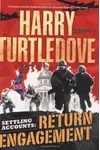
- Settling Accounts: Return Engagement (2004) — The opening volume of the alternate World War II tetralogy, as war returns to North America in 1939.
- Settling Accounts: Drive to the East (2005) — The second volume of the tetralogy, detailing major military drives and internal atrocities in 1941–1942.
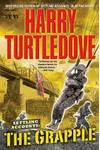
- Settling Accounts: The Grapple (2006) — The third volume of the tetralogy, where the war reaches its turning point in 1942–1943.
- Settling Accounts: In at the Death (2007) — The final volume of the series, wrapping up the global conflict and concluding the alternate timeline in 1945.
What to Know Before You Start
The entire timeline hinges on a single historical divergence in 1862 during the American Civil War. In our timeline, a copy of Confederate General Robert E. Lee's Special Order 191 was lost and recovered by Union soldiers, allowing General George B. McClellan to anticipate Lee's moves and halt the Confederate invasion of Maryland at the Battle of Antietam. In Timeline 191, Lee's orders are recovered by Confederate soldiers instead. This leads to a decisive Confederate victory on Union soil, British and French recognition of the Confederate States of America, and the permanent division of the United States.
While the divergence occurs in 1862, the story itself does not begin until How Few Remain, which is set nineteen years later in 1881. The book establishes the geopolitical rivalry between the United States (allied with Germany) and the Confederate States (allied with Great Britain and France), setting the stage for the global conflicts that follow.
Turtledove utilizes a wide cast of characters to present a panoramic view of this alternate world. Readers follow soldiers, farmers, politicians, and civilians across multiple social classes, races, and geographic locations. Real historical figures like Abraham Lincoln, Theodore Roosevelt, and George Custer mingle with fictional characters. Many characters persist across multiple subseries, aging in real-time as the decades pass.
The Subseries Breakdown
1. The Setup: How Few Remain
This standalone novel sets the board. In 1881, the Confederacy purchases Sonora and Chihuahua from the cash-strapped Empire of Mexico. U.S. President James G. Blaine uses this as a casus belli to declare war, seeking to restore the Union's honor. The resulting Second Mexican War ends in another humiliating defeat for the United States, cementing a deep-seated national desire for revenge and shaping the political landscape for the next half-century.
2. The Great War Trilogy
Taking place between 1914 and 1917, this trilogy mirrors the First World War but places its primary battlefields on the North American continent. The United States and the German Empire face off against the Confederacy, Great Britain, France, Russia, and Canada. Trench warfare devastates Maryland, Kentucky, and the Great Plains, while chemical weapons and early tanks (known in this timeline as "barrels") make their debut.
3. The American Empire Trilogy
Covering the years 1917 to 1939, this trilogy focuses on the aftermath of the Great War. A defeated Confederacy struggles with economic collapse and hyperinflation, leading to the rise of the Freedom Party—a fascist organization led by Jake Featherston, a veteran sergeant with a talent for radio propaganda. The United States, having won the war under the Socialist administration of Upton Sinclair, struggles to maintain order in occupied territories while ignoring the growing threat to the south.
4. The Settling Accounts Tetralogy
Spanning 1939 to 1945, this four-book climax presents an alternate World War II. Jake Featherston launches a surprise invasion of the United States, initiating a devastating war of movement. Crucially, the tetralogy depicts the horrifying consequences of fascist ideology, showing the Confederacy's systematic attempt to eliminate its Black population in camps across the South. The war ends with the introduction of atomic weaponry and the final resolution of the long-standing conflict between the two nations.
Practical Reader Advice
Can these books be read as standalones? Aside from How Few Remain, which works reasonably well as a self-contained story of a single war, the remaining books function as chapters of a single, continuous narrative. Skipping volumes will leave you confused about who is fighting whom, why key territories are occupied, and what happened to prominent characters.
Are there spin-offs or short stories? Unlike some of Turtledove's other works, there are no official spin-off novels, short stories, or co-authored books set in the Southern Victory universe. The eleven novels contain the entirety of the official Timeline 191 narrative.
Avoiding the Standalone Confusion: Readers frequently confuse Southern Victory with Harry Turtledove's other famous Confederate alternate history novel, The Guns of the South (1992). The Guns of the South features time-traveling white supremacists supplying AK-47s to Robert E. Lee's army. It is a completely independent standalone novel and is not connected to the Southern Victory continuity.
Content Warning: The series deals heavily with dark themes, including racism, fascism, genocide, and the horrors of total war. Turtledove's depiction of the Confederate "population reduction" is a direct parallel to the Holocaust and is written with visceral detail, which some readers may find distressing.