
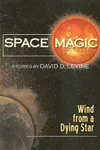
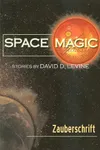
How to Read Space Magic: Recommended Starting Point
Because Space Magic is a curated anthology of short stories rather than a continuous novel series, there is no strict chronological narrative connecting the tales. Readers can approach the book in a few different ways, but the absolute best starting point is to read the stories in the curated collection order designed by David D. Levine for the original 2008 publication. This sequence offers a balanced flow between hard science fiction, whimsical fantasy, and poignant emotional dramas.
Alternatively, since most of these stories were released as standalone digital eBooks in 2012, some readers choose to acquire them individually. Whether you read them in the curated anthology order or pick and choose based on your favorite subgenres, each story stands completely on its own as a self-contained window into a unique universe.
The Core Space Magic Collection (2008)
Published in 2008 by Wheatland Press, the physical and digital collection of Space Magic features fifteen distinct stories. The collection earned Levine the prestigious 2009 Endeavour Award, which honors the best science fiction or fantasy book by a writer from the Pacific Northwest. Here is the official curated tracklist as it appears in the book:
- "Wind from a Dying Star" (Originally published in The Magazine of Fantasy & Science Fiction, 2005): A far-future story exploring nostalgia, post-human evolution, and ancestral roots.
- "Nucleon" (Winner of the James White Award, 2002): An alternate-history mystery inspired by Ford's 1950s concept for a nuclear-powered car.
- "I Hold My Father’s Paws" (Originally published in Albedo One, 2005): An emotional, animal-themed speculative tale that was a finalist for the Aeon Award.
- "Zauberschrift" (Originally published in Realms of Fantasy, 2003): A fantasy story about an apprentice who approaches magical curse-breaking as if he were debugging computer code.
- "Rewind" (Writers of the Future Award winner, 2003): A high-stakes military sci-fi story featuring a soldier genetically engineered to rewind time by a few seconds.
- "Fear of Widths" (Originally published in the anthology Land/Space, 2003): A literary-speculative blend about a man returning to his flat Midwestern home after years in Portland, finding himself unsettled by the horizon.
- "Brotherhood" (Originally published in the anthology Haunted Highways, 2004): A ghost story set along lonely highways.
- "Circle of Compassion" (Originally published in Realms of Fantasy, 2006): Set in a mythical ancient China, where a priestess utilizes protective jewelry and spiritual projection to save her village.
- "Tk’Tk’Tk" (Winner of the Hugo Award for Best Short Story, 2006): A brilliant, humorous, yet deeply melancholic story of an interplanetary human salesman struggling to pitch his wares to an alien bureaucracy.
- "Charlie the Purple Giraffe Was Acting Strangely" (Originally published in Realms of Fantasy, 2006): A playful, existential story about a cartoon character who realizes he is a fictional construct being watched by a creator.
- "Falling off the Unicorn" (Co-authored with Sara A. Mueller; originally published in Realms of Fantasy, 2004): A collaborative fantasy tale set in a modern world where unicorn riders must navigate reality and loss.
- "The Ecology of Faerie" (Originally published in Realms of Fantasy, 2004): A story focusing on a girl who uses scientific principles of ecology to protect herself from dangerous fae creatures.
- "At the Twenty-Fifth Annual Meeting of Uncle Teco’s Homebrew Gravitics Club" (Originally published in 2003): A whimsical celebration of orbital science fiction, written in honor of the 25th anniversary of the OryCon convention.
- "Love in the Balance" (Originally published in the anthology All-Star Zeppelin Adventure Stories, 2006): A steampunk-themed adventure featuring zeppelins and zombies.
- "The Tale of the Golden Eagle" (Originally published in The Magazine of Fantasy & Science Fiction, 2003): A Hugo and Theodore Sturgeon Memorial Award finalist detailing a pilot who encounters a derelict spaceship run by a cybernetic golden eagle's brain.
Chronological vs. Publication Order
Because the stories do not share a single timeline, there is no "chronological order" in the traditional sense. However, the original publication history of the individual stories differs from both the 2008 collection order and the 2012 digital singles release. While the anthology was compiled in 2008, the stories were originally published in various magazines and anthologies between 2002 and 2006. In 2012, fourteen of the fifteen stories were released as standalone digital eBooks. Notably, the story "Fear of Widths" was omitted from the 2012 standalone eBook campaign, making the original 2008 collection the only single volume where you can read all fifteen stories together.
What to Know Before You Start
David D. Levine's writing style is celebrated for its versatility, balancing the logical rules of hard science fiction with the wonder of fantasy. Readers should prepare for a wide shift in tone between stories; you will transition directly from the military action of "Rewind" to the quiet, psychological dread of "Fear of Widths" or the comedic bureaucracy of "Tk'Tk'Tk." Despite these shifts, Levine's stories are tied together by a common focus on empathy, connection, and what it means to be human—even when the protagonist is an alien, a cartoon giraffe, or a spaceship with a bird's brain.
Beyond Space Magic: Where to Go Next?
If you enjoy the steampunk elements of "Love in the Balance" or the imaginative world-building of Levine's short stories, your next logical step is his award-winning novel trilogy: The Adventures of Arabella Ashby. The series consists of three novels: Arabella of Mars (2016), which won the Andre Norton Award, Arabella and the Battle of Venus (2017), and Arabella the Traitor of Mars (2018). These novels expand on a steampunk, alternate 19th-century setting where wooden sailing ships navigate the solar system, making it the perfect companion series for fans of the *Space Magic* aesthetic.