

Welcome to the Flux: Jeffrey A. Carver’s Star Rigger Universe
Imagine navigating the endless dark of interstellar space not with cold coordinates or automated supercomputers, but with the raw power of your own imagination. This is the premise of Jeffrey A. Carver’s celebrated Star Rigger series. In this universe, faster-than-light travel is achieved by entering a subjective hyperdimensional realm known as the "Flux." Within this shifting reality, empathic pilots called "riggers" must visualize and manifest paths—conceptualizing the Flux as vast rivers, stormy oceans, or high-mountain passes—to guide their vessels safely to their destinations.
First launched in 1976 with Carver's debut novel, the series stretches across six novels, an omnibus, and key short fiction. Rather than presenting a single, continuous narrative following one set of characters, Star Rigger operates as a shared-history mosaic. Each book serves as a standalone window into different eras, cultures, and challenges across this unique timeline, blending the grand scale of space opera with the poetic, dreamlike imagery of fantasy.
The Core Reading Orders: Chronological vs. Publication
Because the Star Rigger books are largely independent, readers have two primary ways to approach the universe: following the internal timeline of the future history, or reading them in the order they were published. The author himself notes that both paths are fully viable, though certain volumes naturally build upon thematic elements introduced in others.
1. Chronological Timeline Order
Reading chronologically allows you to watch the technology and understanding of the Flux evolve, from the very first chaotic attempts at rigging to its eventual collapse and rediscovery. If you want to follow the history of the universe step-by-step, use this order:
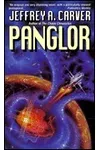
- Panglor (1980): A prequel novel set at the dawn of rigging technology. It follows a pilot fighting to survive a hostile space experiment.
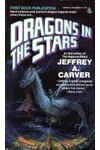
- Dragons in the Stars (1992): Introduces Jael LeBrae, a pilot who discovers a mystical, dragon-inhabited realm hidden inside the mountain passes of the Flux.
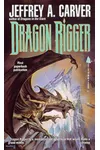
- Dragon Rigger (1993): The direct sequel to Dragons in the Stars, focusing on an epic struggle against a dark power threatening the dragon realm.
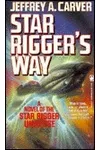
- Star Rigger's Way (1978): A coming-of-age story following a young rigger stranded in the deep Flux alongside a cat-like alien companion.
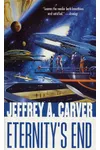
- Eternity's End (2000): An expansive, action-driven epic centering on a pilot caught between interstellar pirates, corporate conspiracies, and a legendary ghost ship.
- Seas of Ernathe (1976): Chronologically the final story. Centuries after the art of rigging has been forgotten, a pilot on an ocean world searches for a way to reconnect humanity to the stars.
2. Publication Order
Reading in the order the books were written lets you experience Jeffrey A. Carver’s development as a writer. It begins with his first published novel, moves into his classic early works, and transitions into the highly polished, award-nominated epics of the 1990s and 2000s.
- Seas of Ernathe (1976)
- Star Rigger's Way (1978)
- Panglor (1980)
- Dragons in the Stars (1992)
- Dragon Rigger (1993)
- Eternity's End (2000)
Where Should You Start?
If you are new to the series, choosing a starting point depends on what kind of reader you are. Here are the three best entry points recommended by fans and the author:
The Critical Favorite: Eternity's End
For readers who want the most polished, expansive showcase of Carver's worldbuilding, Eternity's End is widely considered the best place to begin. As a Nebula Award finalist, this novel combines deep space intrigue, military tension, and a rich exploration of the Flux. Because it was written later, it serves as a grand summation of the universe's mechanics while remaining entirely self-contained, meaning you do not need to have read the earlier books to understand it.
The Chronological Prequel: Panglor
If you prefer a tight, character-focused story that explains how the very concept of "rigging" came to be, start with Panglor. This book introduces Panglor Balef, a disgraced space pilot who is blackmailed into a dangerous mission. His journey of survival laying the groundwork for mapping the Flux makes it a logical historical starting point.
The Classic Coming-of-Age: Star Rigger's Way
For a smaller, more intimate look at the emotional connection required to sail the Flux, Star Rigger's Way is a fantastic entry point. It focuses on the psychological bond between Gev Carlyle and Cephean, a cat-like alien. It was the book that truly defined the series' central themes of empathy, isolation, and communication across species.
Deep Dive: The Star Rigger Library
The Dawn of the Flux: Panglor
Though written third, Panglor acts as the historical anchor. Before the Flux was tame or mapped, ships used standard engines to navigate realspace. Panglor Balef is forced onto a prototype vessel to test a new, volatile drive. When the ship is thrown into a chaotic, subjective dimension, Panglor must rely on his raw psychological instinct to stay sane and guide his ship back. This novel acts as the origin story for the mental discipline that would eventually become the rigger's art.
The Dragon Subseries (Dragon Space)
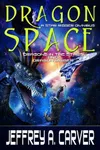
In the early 1990s, Carver expanded the boundaries of the Flux by introducing a fantasy-inspired subseries. Comprising Dragons in the Stars and Dragon Rigger, this duology centers on Jael LeBrae, a pilot who chooses to navigate a dangerous, untravelled region of the Flux known as the mountainous terrain. There, she encounters massive, sentient entities that resemble legendary dragons. These books are also collected in the omnibus volume Dragon Space. Carver strongly recommends reading these two in sequence, as Dragon Rigger acts as a direct continuation of Jael's story as she is swept up in a galactic civil war within the dragon realm.
The Lost Era: Seas of Ernathe
Published in 1976, Seas of Ernathe was Carver’s very first novel. Interestingly, it takes place at the absolute end of the timeline, set in a dark age where the art of rigging has been completely forgotten. Without the ability to cross the Flux, humanity's far-flung colonies have become isolated and isolated. When pilot Seth Perland arrives on the ocean planet of Ernathe, he discovers a native sea-dwelling species whose natural mental communion and connection to a psychoactive substance might hold the key to restoring interstellar travel.
Short Stories and Sparking Ideas
For completionists, the short story "Though All the Mountains Lie Between" is an essential read. Originally published in Orson Scott Card's anthology Dragons of Darkness, this story served as the creative spark that inspired Carver to write his dragon novels. It explores the early concepts of encountering mythical beasts within the folds of hyperspace and can be found in Carver's short story collections, such as Going Alien.
What to Know Before You Start
Before diving in, keep in mind that the Star Rigger books lean heavily into the psychological and emotional experiences of their characters. While there is plenty of traditional science fiction technology, the series stands out for its dreamlike, often hallucinogenic prose when describing the Flux. Thematic elements of isolation, the difficulty of alien communication, and the personal cost of navigating hyperspace run throughout the books, giving the series a uniquely poetic and introspective tone compared to standard militaristic space operas.