

How to Read the Starfist Universe
For readers jumping into the high-octane world of the Confederation of Human Worlds Marine Corps, the path forward is straightforward. The Starfist universe is best read in publication order. The main storyline follows a direct chronological path, tracing the growth, promotions, and harrowing campaigns of key characters like Private First Class (later Sergeant) Joseph F. Dean and Gunnery Sergeant Charlie Bass. Reading out of sequence will spoil major character developments, promotions, deaths, and the shifting landscape of interstellar politics.
The entire universe consists of 17 books: the 14-novel main Starfist series and a 3-novel spin-off series, Starfist: Force Recon. While the spin-off focuses on a different unit performing covert operations, its timeline runs parallel to the later books of the main series, and characters and events occasionally overlap—most notably in the Ravenette campaign.
The Main Starfist Series in Publication Order
The core series follows the 34th FIST (Fleet Initial Strike Team) across 14 novels published between 1997 and 2009. Here is the chronological publication list to follow:
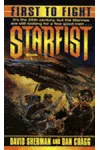
- First to Fight (1997): Introduces Private First Class Joseph F. Dean as he transitions from boot camp to his first brutal deployment on the desert world of Elneal. Here, we meet the veteran Marines of the 34th FIST and establish the series' gritty tone.
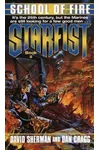
- School of Fire (1998): The Marines are sent to the planet Wanderer to protect a research station from local rebels, diving deeper into the political instability of the Confederation.
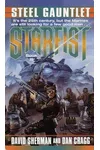
- Steel Gauntlet (1998): Pits the 34th FIST against a tank-heavy rebel force on the industrial world of Diamunde. The Marines must deal with obsolete equipment and poor coordination from senior commanders.
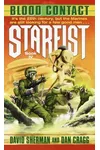
- Blood Contact (1999): The first official contact with a truly hostile alien threat. Sent to investigate a silenced research colony, the Marines find themselves fighting for survival against an unknown enemy.
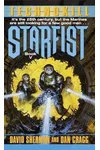
- TechnoKill (2000): Gunnery Sergeant Charlie Bass leads a covert mission onto a secretive corporate-controlled planet, uncovering a massive conspiracy within the Confederation's elite.
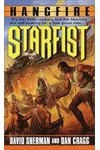
- Hangfire (2001): The 34th FIST is deployed to the colony world of Kingdom, where they face a complex insurgency and the growing threat of bureaucratic neglect from the home worlds.
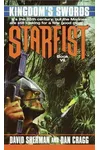
- Kingdom's Swords (2002): Part one of the major Skink invasion arc. The amphibious, technologically advanced alien race known as the Skinks launches a full-scale assault on Kingdom, catching the Confederation off-guard.
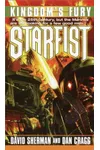
- Kingdom's Fury (2003): Part two of the Skink invasion. The conflict escalates into a desperate war of attrition, showcasing the limits of Marine endurance and the brutality of interstellar warfare.
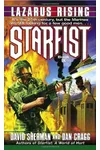
- Lazarus Rising (2003): Following the brutal campaign on Kingdom, the depleted 34th FIST is sent to a supposedly quiet planet for rest and refitting, only to be dragged into a local planetary civil war.
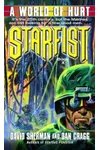
- A World of Hurt (2004): The Marines are deployed to the jungle planet of Bloodwell to put down an uprising, dealing with environmental hazards and asymmetrical warfare.
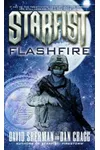
- Flashfire (2006): Set on the planet raven-black world of Ravenette, the Marines must secure strategic resources while dealing with local corporate greed and rising tensions.
- Firestorm (2007): The dramatic conclusion of the Ravenette campaign, where the 34th FIST battles alongside Force Recon units to break the back of the enemy forces.
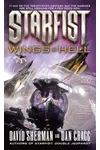
- Wings of Hell (2008): The FIST is sent to the volcanic world of Hells Gate to defend a vital mining outpost from an overwhelming alien assault.
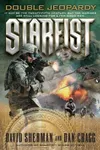
- Double Jeopardy (2009): The final novel in the main series. The 34th FIST takes on a dangerous peacekeeping and counter-insurgency mission that brings the overarching narrative of Dean and Bass to a fitting close.
The Starfist: Force Recon Spin-Off Trilogy
In 2005, Sherman and Cragg expanded the universe with the Starfist: Force Recon trilogy. This spin-off shifts focus from the heavy infantry actions of the 34th FIST to the stealthy, small-unit intelligence-gathering operations of the Marine Force Recon detachments. The trilogy consists of three novels:
- Backshot (2005): Sets up the specialized tactics of Force Recon, following a team dropped deep behind enemy lines to pave the way for a larger invasion.
- Pointblank (2006): The reconnaissance Marines execute high-stakes covert raids, highlighting the psychological toll of operating without immediate backup.
- Recoil (2008): The final installment in the spin-off, showcasing the unit's survival skills and tactical brilliance in the face of overwhelming odds.
How to Integrate Force Recon
There are two primary ways to read the spin-off trilogy alongside the main series:
- The Publication Match (Recommended): Read the first ten main novels up to A World of Hurt. Then, read Backshot and Pointblank. Return to the main series for Flashfire and Firestorm (which features the crossover of the Ravenette campaign), read the final Force Recon book Recoil, and then finish the main series with Wings of Hell and Double Jeopardy.
- The Omnibus Approach: Read the entire 14-book main series first to fully understand the universe and the history of the 34th FIST, then read the 3-book Force Recon trilogy as a prequel-like expansion that fills in the details of the covert operations running parallel to the main infantry battles.
What to Know Before You Start
The defining feature of the Starfist series is its authenticity. Co-authors David Sherman (a former U.S. Marine) and Dan Cragg (a retired Army Sergeant Major) infused the books with their real-world combat experience. Instead of glamorous starship battles or clean sci-fi operations, the books focus on the grit, boredom, camaraderie, and sheer chaos of infantry combat. Expect detailed discussions of military logistics, the impact of political bureaucracy on the front lines, and the deep bonds forged between enlisted soldiers.
The series is set in the 25th century, where humanity has colonized hundreds of worlds under the loosely governed Confederation of Human Worlds. While early books focus on peacekeeping, planetary rebellions, and corporate conspiracies, the mid-to-late series shifts toward a desperate struggle against hostile alien species, most notably the rail-gun-wielding Skinks. Because of this shifting focus, reading the books in order is crucial to appreciating the grand scale of the conflict.