






Where to Start Your Journey in Stay More
Donald Harington’s fictional Ozark hamlet of Stay More, Arkansas, is one of the most richly imagined settings in American literature. Spanning thirteen core novels and a posthumous collection, the series weaves together folklore, magical realism, regional dialect, and metafictional playfulness. Because the books function as an interconnected cycle rather than a linear narrative, you can technically start almost anywhere. However, three main entry points stand out for new readers:
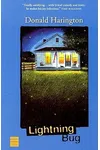
- The Classic Start: Lightning Bug (1970). As the first published novel in the series, this is the most natural place to begin. It introduces Latha Bourne, the town’s postmistress and spiritual muse, during the Great Depression. It sets the tone for the entire series, blending regional Ozark idioms with romantic nostalgia and mystery.
- The Historical Foundation: The Architecture of the Arkansas Ozarks (1975). If you prefer sweeping historical fiction, start here. This critically acclaimed novel traces six generations of the Ingledew family, from the town's founding by Jacob and Noah Ingledew in 1836 to its modernization and decline in the late 20th century. It lays down the geographical and mythological foundations of Stay More.
- The Whimsical Satire: The Cockroaches of Stay More (1989). For readers who appreciate bold, unusual storytelling, this novel offers a view of Stay More through the eyes of its articulate, religious, and class-conscious insect population. It is a brilliant, funny satire of human behavior and small-town life that showcases Harington's imaginative range.
The Stay More Series in Publication Order
Reading the Stay More books in the order they were written allows you to experience Harington's evolving style and the gradual unfolding of his metafictional universe, where the author himself sometimes enters the story as a character. Here is the publication sequence:
- Lightning Bug (1970): Set primarily in 1939, this novel follows a young narrator's obsession with Latha Bourne and explores the community's memories of the Great Depression.
- Some Other Place. The Right Place. (1972): A complex, metafictional ghost story that links a search for family heritage with the geography and spiritual presence of Stay More.
- The Architecture of the Arkansas Ozarks (1975): A mock-historical saga that chronicles the physical and cultural evolution of the town through its buildings and the generations who built them.
- The Cockroaches of Stay More (1989): A satirical, high-concept novel detailing the lives, loves, and struggles of the insect community living in the home of Every Dill.
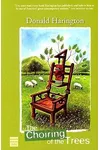
- The Choiring of the Trees (1991): Based on the true story of Arkansas's first woman lawyer, this historical novel follows the effort to save Nail Chism, a Stay More native sentenced to death in 1914.
- Ekaterina (1993): The story of a Russian princess who flees to America, becomes a beloved children's book author, and eventually seeks refuge in Stay More.
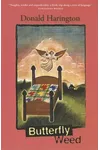
- Butterfly Weed (1996): A lyrical look at the early 20th-century life of Doc Swain, Stay More's resident physician, druggist, and keeper of local secrets.
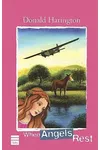
- When Angels Rest (1998): A homefront novel set during World War II, showing how the global conflict reshapes the lives of the town's children.
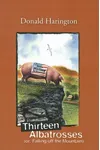
- Thirteen Albatrosses (or, Falling off the Mountain) (2002): A political satire focusing on Vernon Ingledew, a Stay More resident who runs for governor of Arkansas on a platform of absolute honesty.
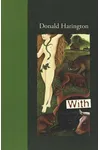
- With (2003): A modern survival fable following Robin Kerr, a young girl who is abducted and abandoned on Jasper Mountain, where she survives with the help of wild animals.
- The Pitcher Shower (2005): Set in the 1930s, this novel follows Landon Jacks, a circuit-riding projectionist who travels the Ozarks showing silent films to isolated communities.
- Farther Along (2008): A mysterious and reflective novel where characters search for a hidden beacon and graveyard, contemplating memory, loss, and the town's fading legacy.
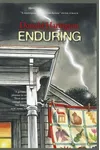
- Enduring (2009): The final novel published during Harington's lifetime, which circles back to Latha Bourne in her old age and brings the long history of Stay More to its ultimate, poignant conclusion.
Chronological Settings and Timeline Caveats
Because Harington frequently jumps through time, a strictly chronological reading order is not recommended for first-time readers. However, understanding the historical periods in which each book is set can help you navigate the town's history. The timeline ranges from the early 19th century to the early 21st century:
- 1836–1970s: The Architecture of the Arkansas Ozarks (covers the full historical arc of the town's founding, growth, and decline).
- 1914: The Choiring of the Trees (the trial and defense of Nail Chism).
- 1920s: Butterfly Weed (the medical career and personal trials of Doc Swain).
- 1930s: The Pitcher Shower (the travels of a film projectionist during the Depression).
- 1939: Lightning Bug (the peak of Latha Bourne's young adulthood).
- 1940s: When Angels Rest (the impact of World War II on the local children).
- Late 20th Century: The Cockroaches of Stay More, Ekaterina, Thirteen Albatrosses, and With.
- Early 21st Century: Farther Along and Enduring.
Posthumous Additions and Collections
For dedicated fans who have completed the main thirteen novels, a posthumous volume titled Double Toil and Trouble (2020) was published by the University of Arkansas Press, edited by Brian Walter. This book includes a previously unpublished, lost suspense novel alongside four uncollected short stories set in and around the Stay More universe. The stories, including "Telling Time" and "The Freehand Heart," provide valuable supplementary lore and depth to the town's legendary setting.
What to Know Before You Start
Before diving into Stay More, it helps to understand a few unique characteristics of Harington's writing. The novels heavily feature the regional, highly stylized Ozark dialect, which Harington reconstructed from his childhood summers spent with his grandparents in Drakes Creek. Although the author lost his hearing to meningitis at age twelve, his memory of the local cadence and speech patterns remained incredibly sharp, shaping the voices of his characters. Furthermore, the books often reference one another, with minor characters in one book becoming the protagonists of another. You do not need to worry about missing these connections on your first read, as each novel is designed to stand on its own, but reading the full series rewards you with a rich, interconnected map of community history.