



The Best Reading Paths for Donald Harington's Stay More
Donald Harington spent his career constructing an elaborate, mythic, and often hilariously bawdy version of the Arkansas Ozarks. Central to his bibliography is the Stay More series (or Stay More cycle), a collection of 13 novels set in a fictional, isolated mountain hamlet. Because the books jump back and forth across time and feature recurring characters at different stages of life, finding the perfect entry point is key to enjoying his work.
Option 1: The Publication Order (Recommended)
Reading the Stay More books in the order they were written is the most popular approach. It allows you to experience Harington's growth as a writer and watch the metafictional elements of his universe unfold naturally. Harington often inserts himself or a fictionalized version of himself as a narrator, and this playfulness makes the publication order highly rewarding.
Option 2: The Gateway Novels
If you aren't ready to commit to a 13-book sequence, there are two distinct standouts that serve as perfect introductions:
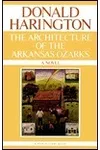
- The Architecture of the Arkansas Ozarks (1975): Often considered Harington's magnum opus, this novel spans from the town's founding in the 1830s through the mid-20th century. Told through the lens of the changing physical buildings of Stay More and the generations of the Ingledew family, it is a masterclass in American magical realism.
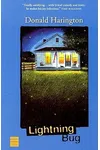
- Lightning Bug (1970): The very first book written in the Stay More cycle. It is a tender, atmospheric story set in the late 1930s that introduces Latha Bourne, the town's central matriarch and postmistress. It is a gentler, more nostalgic starting point than his later, more experimental books.
The Stay More Series in Publication Order
To follow the expansion of the Stay More universe as Harington conceived it, read the novels in this sequence:
- Lightning Bug (1970): Set in the late 1930s, this novel follows a young narrator looking back on the summer he spent in Stay More, captivated by the mysterious and beautiful postmistress, Latha Bourne.
- Some Other Place. The Right Place. (1972): A modern-day mystery where a young woman and her companion trace her ancestral roots back to Stay More, exploring themes of reincarnation and memory.
- The Architecture of the Arkansas Ozarks (1975): A sprawling history detailing six generations of the Ingledew family and the evolution of the town from a simple log cabin to modern structures.
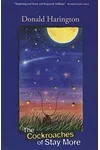
- The Cockroaches of Stay More (1989): A highly satirical, whimsical story told entirely from the perspective of the town's articulate, whiskey-drinking insect population.
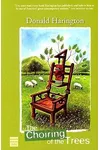
- The Choiring of the Trees (1991): Based on a true 1914 Arkansas court case, this historical novel follows a female artist from Little Rock who fights to save a young Stay More mountaineer wrongfully sentenced to the electric chair.
- Ekaterina (1993): A quirky, magical realist tale about a deposed Moldavian princess who becomes a children's book writer and finds her way to the Ozark mountains.
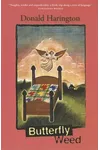
- Butterfly Weed (1996): Focuses on the life of Doc Colvin Swain, the town's eccentric doctor who heals his patients by entering their dreams.
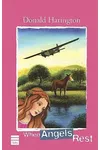
- When Angels Rest (1998): A coming-of-age story set during World War II, showing how the global conflict disrupts the isolation of Stay More through the eyes of its children.
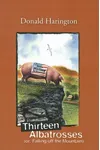
- Thirteen Albatrosses (2002): A satirical political novel following Stay More resident Vernon Ingledew as he runs for Governor of Arkansas.
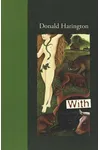
- With (2004): A survival story about a young girl who is kidnapped and raised in the deep Ozark wilderness, befriending the local wildlife and a ghostly presence.
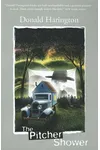
- The Pitcher Shower (2005): Follows a traveling projectionist in the 1930s who brings movies to isolated mountain communities, including Stay More.
- Farther Along (2008): Details the later years of Stay More as it transitions into a ghost town, exploring the lives of the few remaining residents.
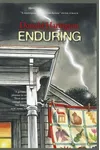
- Enduring (2009): The final novel in the cycle, which serves as a love letter to the town and brings the story of Latha Bourne full circle.
Chronological Eras of the Stay More Universe
While the books are standalone novels, they cover specific historical windows in the town's lifespan. If you want to understand where each book sits historically, keep this timeline in mind:
- 1830s–1970s: The Architecture of the Arkansas Ozarks (Covers the entire foundation and layout of the town's history).
- 1910s: The Choiring of the Trees (Set specifically in 1914–1915).
- 1920s–1930s: Butterfly Weed, The Pitcher Shower, and the childhood era of Lightning Bug.
- 1940s (WWII): When Angels Rest.
- 1980s–1990s: With and The Cockroaches of Stay More.
- 2000s: Thirteen Albatrosses, Farther Along, and Enduring.
Non-Stay More Works and Collections
Harington also wrote outside the boundaries of the Stay More cycle. For a complete look at his bibliography, keep an eye out for these titles:
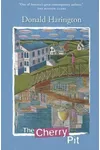
- The Cherry Pit (1965): Harington's debut novel. Set in Little Rock, it follows a man who returns to his hometown to find his childhood memories. It is a standalone work outside the Stay More mythos.
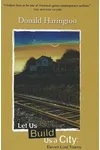
- Let Us Build Us a City (1986): A non-fiction exploration of Arkansas's history, focusing on eleven vanished or historic towns that once aspired to be great cities.
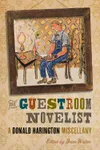
- The Guestroom Novelist (2019): A posthumously published collection of Harington's essays, lectures, and literary reviews.
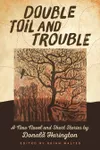
- Double Toil and Trouble (2020): A collection of posthumously published shorter writings, stories, and sketches.
What to Know Before You Start
Harington was deaf from the age of 12 due to meningitis, which makes his uncanny ability to write dialogue and capture the musical cadences of the Ozark dialect even more remarkable. His tone is characterized by a mix of high-brow literary references, deep historical grounding, and earthy, ribald humor. Readers should be prepared for magical realism—ranging from talking insects to ghosts—and a style that refuses to treat rural characters as stereotypes.