

The Recommended Reading Order
For the best experience, readers should follow the internal chronological timeline of the universe rather than the strict publication order. Because Anne McCaffrey returned to the early days of her universe decades after she began publishing, reading in publication order requires jumping back and forth across centuries of fictional history. The chronological pathway allows you to watch psychic abilities evolve from a misunderstood, newly discovered human trait into the backbone of a sprawling interstellar civilization.
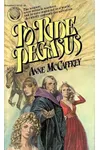
- To Ride Pegasus (1973) – A foundational collection of four linked stories detailing the discovery of talents and the creation of the first Parapsychic Center.
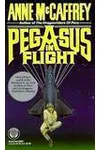
- Pegasus in Flight (1990) – Set years later, focusing on the growth of the Center and the challenges of societal integration.
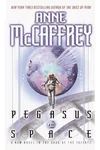
- Pegasus in Space (2000) – Concludes the early era, bridging the gap to space colonization through the efforts of telepath Peter Reidinger.
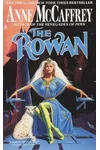
- The Rowan (1990) – Set generations later, introducing the Federal Telepath & Teleport (FT&T) network and the top-tier psychic known as The Rowan.
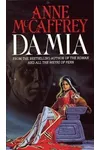
- Damia (1991) – Follows the Rowan's daughter, Damia, as she confronts new interstellar challenges.
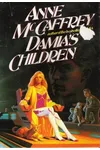
- Damia's Children (1993) – Shifts focus to the next generation of the Gwyn-Raven-Lyon dynasty.
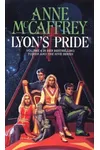
- Lyon's Pride (1994) – Follows the children as they defend the Alliance alongside their alien allies.
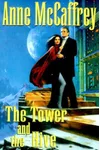
- The Tower and the Hive (1999) – The final book in the primary saga, focusing on the ultimate resolution of the Hiver threat.
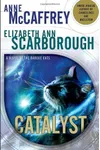
- Catalyst (2009) – A spin-off novel co-authored with Elizabeth Ann Scarborough, introducing the genetically enhanced Barque Cats.
- Catacombs (2010) – The second book in the Barque Cats duology.
Publication Order vs. Chronological Order
If you prefer to read books in the order they were written, you will experience the universe in the sequence McCaffrey created it. However, because she wrote the later Pegasus books (1990, 2000) long after the original collection (1973) and concurrently with the Tower and Hive series, this order breaks up the cohesive story arcs of the early characters.
The Talent (Pegasus) Series Publication Order
- To Ride Pegasus (1973)
- Pegasus in Flight (1990)
- Pegasus in Space (2000)
The Tower and the Hive Series Publication Order
- The Rowan (1990)
- Damia (1991)
- Damia's Children (1993)
- Lyon's Pride (1994)
- The Tower and the Hive (1999)
Tales of the Barque Cats Publication Order
- Catalyst (2009)
- Catacombs (2010)
Understanding the Subseries
The Talents Universe is divided into three distinct segments, each representing a different phase of humanity's expansion and relationship with psychic powers.
The Talent Trilogy (The Pegasus Era)
This trilogy is set on a near-future, overpopulated Earth. It focuses on the discovery of psionic abilities—telepathy, telekinesis, precognition, and teleportation—and the struggle to protect psychic individuals from public fear and exploitation. Key figures include Henry Darrow, who establishes the Parapsychic Center, and Peter Reidinger, a paralyzed boy whose immense telekinetic strength paves the way for mankind's expansion to the stars. The first book, To Ride Pegasus, is a collection of four linked stories originally published in magazines: "A Womanly Talent", "Apple", "To Ride Pegasus", and "A Bridle for Pegasus".
The Tower and the Hive Series (The Prime Era)
Taking place generations after the Pegasus trilogy, this five-book series details an era where "Primes"—the most powerful telepaths and telekinetics—are organized under the Federal Telepath & Teleport (FT&T) network. Primes act as human communication towers and transport hubs, throwing massive space cargo ships across light-years. The narrative follows the Gwyn-Raven-Lyon family line, starting with The Rowan (expanded from McCaffrey's 1959 short story "Lady in the Tower"), progressing through the lives of her daughter Damia, her grandchildren, and their alliance with the gentle, vegetarian Mrdini aliens to defend against the destructive Hiver species.
Tales of the Barque Cats
Co-authored by Elizabeth Ann Scarborough, this duology is a spin-off set in the same universe. It features genetically and psychically enhanced space-faring cats who work alongside human crew members on starships. These felines are critical for identifying environmental hazards and ship failures. While they represent a separate narrative, the concept of Barque Cats is rooted in the main series, with the first Barque Cat appearing in the opening pages of The Rowan.
What to Know Before You Start
Before diving into McCaffrey's psychic saga, there are a few important elements to keep in mind:
- Short Story Connections: If you want to read the absolute earliest seeds of the series, McCaffrey's 1977 collection Get Off the Unicorn contains "Lady in the Tower" (the foundation for The Rowan) and "A Meeting of Minds" (which was later woven into Damia).
- Standalone Potential: While the books in the Pegasus trilogy can function as standalone sci-fi adventures, the Tower and Hive series is a highly serialized generational family saga. It is not recommended to read the Tower and Hive books out of order, as characters age, marry, and have children who become the protagonists of subsequent novels.
- Tone and Genre: The series represents a distinct blend of soft science fiction and space opera, prioritizing human relationships, empathy, and social structures over hard scientific explanations of psionic mechanics.
Practical Reader Advice
If you are unsure where to begin, the safest starting point is To Ride Pegasus. This introduces the rules of the universe and the early history of how psychic talents were classified. However, some readers prefer to start with The Rowan because it has a faster-paced space opera feel and higher stakes. If you choose to start with The Rowan, you should read through the end of the Tower and the Hive series, and then treat the Pegasus trilogy as a historical prequel to understand how the FT&T system was created.
The co-authored Barque Cats duology is entirely optional. It serves as a lighthearted companion piece and is best enjoyed after reading The Rowan, where the felines are first introduced to the reader.