
The Recommended Reading Order: A Straightforward Journey
Unlike some sprawling fantasy universes, navigating the reading order for Tales From The Odyssey is incredibly simple. Mary Pope Osborne structured this adaptation as a single, continuous, and highly linear narrative. The story directly mirrors the chronology of Odysseus's epic attempt to return home to Ithaca after the fall of Troy. Because each book begins precisely where the previous one ends, there are no companion prequels, side stories, or alternate chronological paths. You must start at the beginning and follow the voyage step-by-step.
Readers have two main options for reading the series: the original six-book format or the compiled two-volume omnibus editions. Both versions contain identical content, so your choice depends on book format preferences and library availability.
The Six-Book Series in Publication and Chronological Order
If you are collecting the original individual books, here is the order in which they should be read:
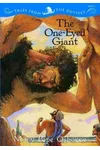
- The One-Eyed Giant (2002) – The journey begins right after the Trojan War. Odysseus and his crew set sail but quickly find themselves stranded on the island of the Cyclopes, where they must outwit the terrifying monster Polyphemus, earning the eternal wrath of the sea god Poseidon.
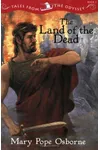
- The Land of the Dead (2002) – The journey grows more perilous as the crew encounters the wind god Aeolus, the giant cannibalistic Laestrygonians, and the enchantress Circe before Odysseus must travel to the Underworld to seek the advice of the blind prophet Tiresias.
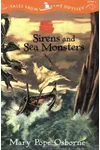
- Sirens and Sea Monsters (2003) – Odysseus faces some of the most famous trials of the sea, including the mesmerizing song of the Sirens, the deadly passage between the six-headed Scylla and the whirlpool Charybdis, and the tragic consequences of touching the sacred cattle of Helios.
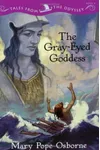
- The Gray-Eyed Goddess (2003) – With his crew lost, Odysseus is trapped on Calypso's island. Meanwhile, back in Ithaca, his wife Penelope is besieged by aggressive suitors, prompting their son Telemachus to set out on his own search for his father, guided by the goddess Athena.
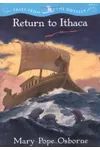
- Return to Ithaca (2004) – Odysseus finally escapes Calypso and, with the help of King Alcinous, arrives back on the shores of Ithaca in disguise. He seeks shelter with his loyal swineherd Eumaeus and reunites with his son Telemachus to plot their next move.
- The Final Battle (2004) – The thrilling conclusion to the saga. Still disguised as a beggar, Odysseus enters his own palace, participates in Penelope's archery contest, and fights the greedy suitors to reclaim his throne and reunite with his family.
The Two-Volume Omnibus Editions
In May 2010, publisher Disney-Hyperion released the entire story in a consolidated, two-volume edition. These editions are widely available in libraries and bookstores today, offering a more convenient and cost-effective format for young readers:
- Tales from the Odyssey: Part One (2010) – Compiles Books 1, 2, and 3 (The One-Eyed Giant, The Land of the Dead, and Sirens and Sea Monsters).
- Tales from the Odyssey: Part Two (2010) – Compiles Books 4, 5, and 6 (The Gray-Eyed Goddess, Return to Ithaca, and The Final Battle).
What to Know Before You Start
Mary Pope Osborne, the celebrated author behind the massive Magic Tree House series, brings her signature educational storytelling to this classic epic. Written for readers ages 8 and up (typically grades 4 to 8), the series does a masterful job of rendering Homer's complex, archaic poetry into accessible, fast-paced prose without stripping away the magic of the original source material. Osborne retains classic Homeric epithets—such as describing the morning as the "rosy-fingered dawn"—giving kids a genuine taste of classical literature's style.
To support young readers and educators, each book contains useful supplemental materials. These include detailed maps tracing Odysseus's journey across the Mediterranean Sea, pronunciation guides for challenging Greek names, and a family tree of the major Greek gods and goddesses. Parents should note that while the epic's inherent violence (such as the Cyclops eating sailors) is handled in an age-appropriate manner, the narrative does not shy away from the dangers of the ancient mythological world, keeping the stakes feeling high and exciting.
Companion Works and Next Steps
For readers who finish the series and want to explore more mythology retold by Mary Pope Osborne, her 1989 anthology Favorite Greek Myths serves as an excellent companion. Illustrated by Troy Howell, this collection retells twelve separate myths, including the tales of Arachne, King Midas, and Echo and Narcissus. However, readers should note a key difference in terminology: while Tales From The Odyssey uses Greek names (e.g., Zeus, Athena, Poseidon), Favorite Greek Myths adopts their Roman equivalents (e.g., Jupiter, Minerva, Neptune).
If your young reader has finished the Odyssey books and is looking for similar adventures, the natural next step is Rick Riordan's Percy Jackson & the Olympians series, which brings Greek myths into a modern-day setting, or the myth-focused installments of Osborne's own Magic Tree House Merlin Missions.