

How to Read Elmer Kelton's Texas Tradition Books
Elmer Kelton's Texas Tradition series is a unique cornerstone of Western literature. Rather than a conventional series following a single protagonist across a linear timeline, this collection is composed of standalone novels. Originally published between 1971 and 1991, these books are bound together by their rich, authentic Texas settings, historical accuracy, and Kelton's signature focus on complex, everyday people rather than larger-than-life heroes.
Because these novels are standalone stories, there is no strict or mandatory reading sequence. Readers can safely dive into any book without worrying about missing plot threads. However, there are two primary ways to approach the series: by publication order or by chronological setting.
Recommended Starting Point
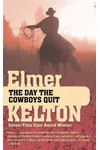
For most readers, the best starting point is The Day the Cowboys Quit (1971). As the novel that launched the collection, it perfectly encapsulates Kelton's storytelling style—grounded in real historical events, featuring flawed but honorable characters, and focusing on the social and economic changes that shaped the West. Another excellent entry point is The Good Old Boys (1978), which introduces one of Kelton's most beloved characters and offers a poignant look at the fading of the open range.
Texas Tradition Books in Publication Order
Reading the books in the order they were published allows you to experience Elmer Kelton's evolution as a writer. This sequence reflects how readers originally encountered these stories:
- The Day the Cowboys Quit (1971) – Set during the 1883 cowboy strike in the Texas Panhandle.
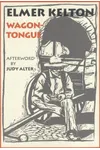
- Wagontongue (1972) – Explores racial tensions and the life of a Black cowhand in the post-Civil War era.
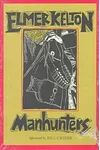
- The Manhunters (1974) – Inspired by the real-life flight and manhunt of Gregorio Cortez in 1901.
- The Good Old Boys (1978) – Follows Hewey Calloway in 1906 as modernization threatens the cowboy way of life.
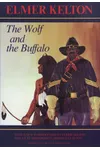
- The Wolf and the Buffalo (1980) – Focuses on the post-Civil War conflicts between Black Buffalo Soldiers and Comanche warriors.
- Stand Proud (1984) – Spans several decades from the Republic of Texas era to the early 20th century, centering on an obstinate cattleman.
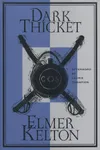
- Dark Thicket (1985) – Set during the American Civil War, highlighting the internal conflicts of Union loyalists in Texas.
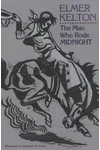
- The Man Who Rode Midnight (1987) – Set in the modern 1980s, detailing a clash between traditional ranching and modern land developers.
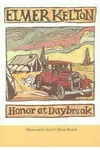
- Honor at Daybreak (1991) – Set in the 1920s, exploring how a wildcat oil boom transforms a small West Texas town.
Texas Tradition Books in Chronological Order
If you prefer to read the series chronologically by historical setting, you can follow the history of Texas from the early days of the Republic through to the late 20th century. Here is the chronological timeline of the novels:
- Stand Proud (Spans 1840s to 1910s) – While it concludes in the early 20th century, this novel starts the earliest, charting the long, harsh life of rancher Frank Claymore from the days of the Texas Republic.
- Dark Thicket (1860s) – Set during the Civil War, this book focuses on the bitter home-front divisions within Texas.
- Wagontongue (Late 1860s / 1870s) – A post-Civil War story addressing racial dynamics on the early ranching frontier.
- The Wolf and the Buffalo (1870s) – Depicts the clashes of the Indian Wars on the Texas plains.
- The Day the Cowboys Quit (1883) – Based on the actual Canadian River strike where cowboys stood up against syndicate ranches.
- The Manhunters (1901) – A dramatic chase novel based on historical events at the turn of the century.
- The Good Old Boys (1906) – Captures the transition from horse-and-wagon days to the era of barbed wire and automobiles.
- Honor at Daybreak (1920s) – Examines the lawlessness and sudden wealth of the West Texas oil boom.
- The Man Who Rode Midnight (1980s) – A contemporary Western that bridges the gap between old-time ranching values and modern development.
Understanding Subseries, Spin-offs, and Universe Connections
While the Texas Tradition books are standalones, one of the novels serves as the launchpad for a prominent subseries. The Good Old Boys (1978) introduced the wandering cowboy Hewey Calloway. Kelton later returned to this character and his family in several follow-up books, forming the Hewey Calloway series:
- The Good Old Boys (1978)
- The Smiling Country (1998)
- Six Bits a Day (2005) – A prequel showing Hewey's early years.
- The Familiar Stranger (2009)
- The Unlikely Lawman (2013) – A spin-off focusing on Hewey's brother, Tommy Calloway.
Additionally, readers should note that TCU Press's "Texas Tradition Series" is a publisher imprint designed to reissue classic literature. While Kelton's novels are the cornerstone of the imprint, the publisher has also included works by other notable Southwestern authors like Benjamin Capps and Robert Flynn under the same banner. The reading lists on Bookwrapt focus specifically on Elmer Kelton's contributions to this literary library.
What to Know Before You Start
Elmer Kelton is widely praised for steering away from the mythic, invincible archetype of the Western hero. Instead, his characters are realistic, flawed, and deeply human. To fully appreciate the Texas Tradition books, keep these aspects in mind:
- Historical Grounding: Kelton worked as an agricultural journalist for decades. His deep understanding of Texas land, ranching, and history shines through in every book, with many plots directly adapted from real-life historical events.
- Themes of Change: A central theme across all books is adaptation. Whether dealing with the Civil War, the introduction of barbed wire, the oil boom, or modern real estate development, Kelton’s characters must decide how to preserve their honor while adapting to a rapidly changing world.
- The Tommy Lee Jones Adaptation: The Good Old Boys was adapted into a highly regarded 1995 television film directed by and starring Tommy Lee Jones, which faithfully captured the tone of Kelton's work.