
The Recommended Reading Order
Because Conrad Richter wrote the novels of The Awakening Land in direct chronological order, there is no debate about where to start or how to navigate the trilogy. The narrative tracks a single family’s generational journey and the physical evolution of the American frontier from untamed wilderness to an industrialized landscape. Skipping a book or reading out of order will disrupt both the character arcs and the historical progression.
To experience the saga as intended, you should read the books in their publication order:
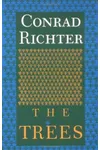
- The Trees (1940) – The story begins in the late 18th century as the Luckett family leaves Pennsylvania to settle in the deep, ancient forests of the Ohio Valley.
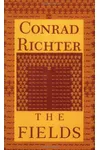
- The Fields (1946) – The wilderness begins to yield to human cultivation. The narrative focuses on Sayward’s efforts to establish a farm and build a community amidst the growing settlement.
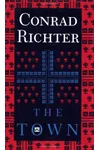
- The Town (1950) – The frontier vanishes as the settlement develops into the bustling, industrialized town of Americus, highlighting the generational conflicts between the pioneer founders and the modern generation.
Understanding the Trilogy: Book by Book
1. The Trees (1940)
In The Trees, readers are introduced to the Lucketts: Worth, his wife Jary, and their children, led by the eldest daughter, Sayward. Worth is a woodsy man who is driven by an urge to escape civilization, pushing his family deeper into the oppressive, primeval forests of the Northwest Territory. The woods in this first volume are dense, dark, and almost sentient, acting as both a resource and a threatening antagonist. As tragedy strikes the family, Sayward emerges as the resilient anchor, finding a way to survive the crushing isolation and harsh demands of pioneer life.
2. The Fields (1946)
The second volume, The Fields, transitions from survival to community. The thick canopy of the forest begins to clear as Sayward, now married to the educated Portius Wheeler, clears the land to make way for agriculture. The book details the painstaking work of farming the frontier, establishing local schools, and building social ties. As other settlers arrive, Sayward watches the slow birth of a town. Her personal journey continues to mirror the land itself—demanding, productive, and increasingly connected to the outside world.
3. The Town (1950)
The final book in the trilogy, The Town, brings the saga into the mid-19th century. The settlement has transformed into "Americus," a bustling town with brick houses, industry, and class distinctions. This volume shifts focus toward the emotional and ideological divide between Sayward, who clings to her simple pioneer values, and her youngest son, Chancey. Chancey is a sensitive, modern intellectual who rejects his mother's rugged worldview and edits a local newspaper. The novel, which won the 1951 Pulitzer Prize for Fiction, provides a poignant look at the cost of progress and the inevitable loss of the frontier spirit.
What to Know Before You Start
Conrad Richter did not write standard, romanticized Westerns. He was a dedicated historical researcher who collected oral histories, early pioneer letters, and historical archives to recreate the authentic dialect and gritty daily realities of the early settlers. Here are a few things to keep in mind before starting the series:
- The Pioneer Dialect: Richter writes using a unique, stylized voice that mimics the spoken English of late 18th-century settlers. While it can take a chapter or two to get used to, this prose style creates a highly immersive, authentic atmosphere.
- The Environment as a Character: The physical setting undergoes a complete transformation. The dark forest of The Trees gives way to the open agricultural fields of The Fields, which are ultimately covered by the cobblestones and buildings of The Town.
- Omnibus Editions: The trilogy is frequently published in a single volume titled The Awakening Land. Reading it in this format is highly recommended, as it emphasizes the continuous, epic nature of the story.
Adaptations and Related Works
In 1978, the trilogy was adapted into a highly acclaimed television miniseries also titled The Awakening Land. Starring Elizabeth Montgomery as Sayward and Hal Holbrook as Portius, the adaptation was praised for its faithfulness to Richter’s text and its historical accuracy. While the miniseries is a wonderful companion piece, reading the novels first is recommended to fully appreciate the depth of Richter’s prose.
While Richter did not write any direct sequels or spin-offs to this trilogy, readers who enjoy his style may appreciate his other frontier novels. The Light in the Forest (1953) explores the complex relationship between European settlers and Native Americans in the same historical region, while The Sea of Grass (1936) focuses on the changing landscape of the American West. Both books share the trilogy's thematic interest in how the changing landscape transforms human character.