






Where to Start Reading Conrad Richter
Conrad Richter was a master of American historical fiction, renowned for capturing the rugged grit of the frontier and the emotional complexity of early American life. Because his work spans tightly connected trilogies, thematic duos, and standalone historical portraits, choosing a starting point depends on what kind of journey you want to take.
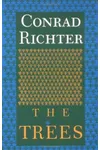
For the definitive Conrad Richter experience, the absolute best place to start is with The Awakening Land trilogy, beginning with The Trees (1940). This trilogy is his crowning achievement, charting the transformation of the Ohio wilderness through the life of a single pioneer woman. It showcases his meticulously researched pioneer dialect, deep empathy, and lyrical prose at its absolute peak.
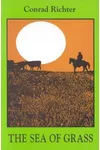
If you prefer a shorter commitment to sample his style, start with his classic standalone novel The Sea of Grass (1936). Set in late nineteenth-century New Mexico, it is a brief but powerful story exploring the bitter clash between free-range cattle barons and homesteading farmers. It acts as an excellent introduction to Richter's thematic focus on how landscapes shape human character and the bittersweet cost of progress.
The Awakening Land Trilogy (Publication Order)
This legendary trilogy is a continuous narrative that must be read in publication order. The story follows Sayward Luckett, a resilient young woman who enters the dense, ancient forests of the Ohio Valley as a pioneer and lives to see the wilderness tamed into a bustling industrial town.
- The Trees (1940) – Introduces the Luckett family as they move from Pennsylvania into the dark, uncharted forests of Ohio. It establishes Sayward's strength as she holds her family together after her mother's death and father's abandonment.
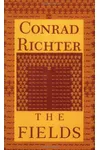
- The Fields (1946) – Follows Sayward as she clears the towering timber to establish a farm, marries, raises a family, and helps build a small farming community in the newly opened territory.
- The Town (1950) – Focuses on the transition from a farming outpost to a developed town, highlighting the generational conflicts between the aging pioneer generation and their more modern children. This concluding novel won the 1951 Pulitzer Prize for Fiction.
The Light in the Forest Duo
These two novels are companion pieces dealing with the deeply emotional theme of "white captives"—white children captured and raised by Native American tribes who are later forced by treaty to return to white colonial society. While they feature different main characters, they overlap and address the same profound identity struggles from distinct angles.
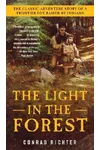
- The Light in the Forest (1953) – The story of True Son (John Cameron Butler), a teenager who has spent eleven years raised as a Delaware Indian and struggles bitterly against his forced return to his biological white family.
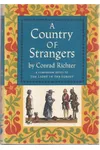
- A Country of Strangers (1966) – Follows Stone Girl, a white girl captured by the Lenni Lenape as a child. When she is forced back to her biological father, she finds herself rejected by white society. True Son makes a key crossover appearance in this book as their shared alienation links their struggles.
The Donner Family/Autobiographical Novels
Richter drew heavily from his own memories and his father's life as a Lutheran minister for these highly personal novels, which were intended to form an autobiographical trilogy before his death in 1968.
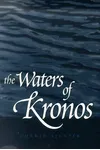
- The Waters of Kronos (1960) – Tells the story of John Donner, an aging writer who returns to his Pennsylvania hometown, only to find it submerged beneath a modern reservoir. In a dreamlike state, he travels back in time to walk the streets of his youth. This novel won the 1961 National Book Award for Fiction.
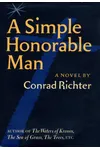
- Simple Honorable Man (1962) – Shifts the focus to John's father, Harry Donner, tracing his quiet, selfless life as a storekeeper who decides late in life to become a minister to poor mining communities.
Chronological Publication Order of Standalone Novels
Richter's standalone novels cover different periods of American history, from the Revolutionary War to the mid-twentieth century. These can be read in any order, though reading them in publication order showcases the evolution of his style.
- The Sea Of Grass (1936) – A brief, poetic tragedy of the Southwest, focusing on the epic struggle between cattlemen and farmers.
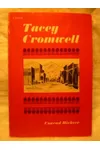
- Tacey Cromwell (1942) – Set in a Nevada mining town, this novel follows a former saloon worker attempting to establish a respectable life by raising orphaned children.
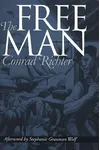
- The Free Man (1943) – Set during the Revolutionary War, tracing the journey of a young German immigrant who escapes indentured servitude to fight for liberty.
- Always Young and Fair (1947) – A psychological character study of a Pennsylvania woman whose life becomes frozen in time after her fiancé dies in the Spanish-American War.
- The Mountain on the Desert (1955) – A philosophical, essay-like novel reflecting on the landscape and spirituality of the American Southwest.
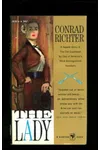
- The Lady (1958) – A drama set in New Mexico, centering on a clash between a wealthy Mexican-American woman and her husband's sheep-farming rivals.
- Grandfathers (1964) – A humorous portrait of a young girl growing up in a large, eccentric family in western Maryland.
- Over the Blue Mountain (1967) – A short fantasy-tinged tale drawing on Pennsylvania Dutch folklore and local legends.
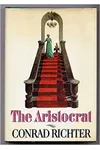
- The Aristocrat (1968) – Richter's final published novel, profiling an eccentric, strong-willed elderly woman maintaining her traditional values in a changing world.
Collections and Anthologies
In addition to his novels, Richter published numerous short stories throughout his career, which have been collected in the following volumes:
- Brothers Of No Kin, And Other Stories (1973) – Posthumously collected early short fiction, originally published in magazines during the 1910s and 1920s.
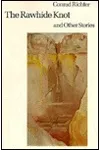
- The Rawhide Knot, Early Americana and Other Stories (1978) – A posthumous collection of his frontier-focused short stories.
- Phantom Perfumes And Other Shades (2000) & Pulp Classics: Ghost Stories (2004) – Specialty anthologies collecting his early, lesser-known supernatural and pulp magazine stories.
What to Know Before You Start
Conrad Richter was not a typical writer of westerns or historical adventures; he was a literary realist. He spent years researching historical archives, diaries, and old letters to replicate the exact dialect, syntax, and vernacular used by early pioneers. As a result, the dialogue in The Awakening Land might feel unusual or archaic at first, but it quickly establishes a rhythm that makes the historical setting feel deeply authentic.
His stories also deal realistically with the cost of progress. Whether it is the destruction of the primeval forest to make way for farms, the displacement of Native cultures, or the flooding of historic towns for industrial dams, Richter captures the bittersweet truth that every step forward in civilization requires the loss of something wild and beautiful.