
How to Read the Talents Universe
Anne McCaffrey’s Talents Universe (often referred to collectively as the Talents series or the Tower and the Hive saga) spans generations, evolving from a near-future Earth struggling to accept psychic abilities into a vast interstellar civilization. Because McCaffrey wrote these books over several decades, navigating the reading order can be tricky. Fortunately, readers have two primary paths to explore this universe: chronological order or the main family saga starting point.
Option 1: The Chronological Reading Order (Recommended)
Reading the books chronologically allows you to witness the entire evolution of the psychic "Talents" from their first discovery on Earth to their crucial role in deep space exploration. This order is highly recommended because it places the prequel trilogy first, building a firm foundation of how the psychic network works before you jump into the far future.
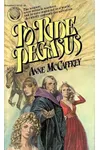
- To Ride Pegasus (1973) – The foundational collection of interconnected stories tracking the discovery of psychic abilities and the establishment of the first Parapsychic Center.
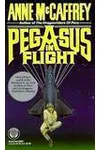
- Pegasus in Flight (1990) – Focuses on the struggle for psychic rights and the construction of the Padrugoi Space Station.
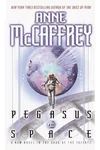
- Pegasus in Space (2000) – Serves as the direct bridge to the space opera era, following the development of the first telepathic space towers.
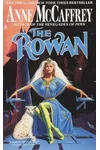
- The Rowan (1990) – Set generations later, introducing the legendary Prime Talent Rowan and launching the Tower and Hive saga.
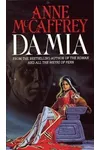
- Damia (1991) – Follows Rowan’s daughter, Damia, as she faces new responsibilities and alien threats.
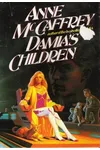
- Damia's Children (1993) – Centers on the next generation of the psychic dynasty as they encounter the mysterious Hiver species.
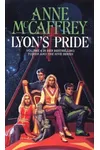
- Lyon's Pride (1994) – The battle against the Hivers intensifies as the telepathic children grow into their powers.
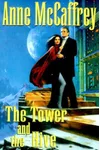
- The Tower and the Hive (1999) – The grand finale of the main Tower and Hive conflict.
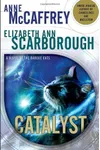
- Catalyst (2009) – A spin-off co-authored with Elizabeth Ann Scarborough, introducing the genetically engineered Barque Cats.
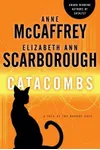
- Catacombs (2010) – The second and final book in the Barque Cats duology.
Option 2: The Publication Reading Order
Some readers prefer to read the books in the order they were published. This approach lets you experience the universe as original fans did. However, because McCaffrey returned to write the prequel finale (Pegasus in Space) in 2000—long after writing the bulk of the sequels—this order forces a mid-series flashback.
- To Ride Pegasus (1973)
- Pegasus in Flight (1990)
- The Rowan (1990)
- Damia (1991)
- Damia's Children (1993)
- Lyon's Pride (1994)
- The Tower and the Hive (1999)
- Pegasus in Space (2000)
- Catalyst (2009)
- Catacombs (2010)
Understanding the Subseries
To help you choose where to start, it is useful to understand how the broader Talents Universe is divided. The saga is split into three distinct segments, each with its own tone, focus, and main characters.
The Pegasus Trilogy (The Talents)
This initial trilogy (consisting of To Ride Pegasus, Pegasus in Flight, and Pegasus in Space) is grounded, near-future science fiction. Set primarily on Earth and its immediate orbit, it focuses on the societal, political, and ethical challenges of integrating telepaths, telekinetics, and precogs into a suspicious world. Key characters include Henry Darrow, the founder of the Parapsychic Center; Rhyssa Owen, who fights to protect gifted youths; and Peter Reidinger, a paralyzed teenager whose massive telekinetic abilities lay the groundwork for interstellar travel.
The Tower and the Hive Series
This five-book series shifts the setting centuries into the future, transforming the franchise into a sweeping, romantic space opera. Humanity has colonized the galaxy, aided by "Primes"—the most powerful Talents who run telepathic communication and transportation towers. The story follows a single family dynasty, beginning with an orphan girl known as The Rowan, and expands to cover her children and grandchildren. As the series progresses, the family becomes the front line of defense against the Hivers, a colonizing alien species that poses an existential threat to humanity.
Tales of the Barque Cats
Co-authored with Elizabeth Ann Scarborough, this two-book spin-off (Catalyst and Catacombs) is set in the same universe but focuses on genetically bred, telepathic cats that serve on interstellar space vessels. While they are lighter and cozier in tone, they expand the lore of the Federated Sentient Planets and tie directly into the broader themes of psychic partnership. Notably, the concept of Barque Cats was first introduced briefly in the pages of The Rowan decades prior.
Crucial Reading Guidance and Caveats
If you are planning to read the entire series, here are a few practical tips to keep in mind:
The Bridge Book: Pegasus in Space
Though published in 2000, Pegasus in Space acts as a crucial narrative bridge. It resolves the plotlines of the Pegasus trilogy while showing the birth of the Tower system that is fully active in The Rowan. Reading it third (in chronological order) provides a much smoother transition into the space opera era than reading it last.
Tone and Style Shifts
Because the writing of these books spanned nearly forty years, you will notice significant changes in tone. The early short stories in To Ride Pegasus are structured, episodic, and focused on social integration. The 1990s books (the Tower and Hive series) are much faster-paced, featuring heavy elements of space opera romance, interstellar politics, and alien warfare. Adjust your expectations accordingly when transitioning between the subseries.
Can You Read Them as Standalones?
The Pegasus trilogy is best read as a continuous story, as Peter Reidinger's growth and the development of the space program build directly from book to book. Similarly, the Tower and the Hive series functions as a continuous generational family tree; reading Damia or Lyon's Pride without reading The Rowan will leave you highly confused. However, you can easily read the Pegasus trilogy and stop there, or skip straight to The Rowan if you prefer soft space opera over near-future Earth politics.