
The Witcher Reading Order: Where to Start Geralt’s Journey
Few fantasy series have captured the global imagination quite like The Witcher. Originally written in Polish by Andrzej Sapkowski, the saga of Geralt of Rivia, Yennefer of Vengerberg, and Princess Ciri spans short story collections, a five-book epic saga, and standalone prequel novels. However, because of the way the books were translated into English—and the order in which publishers numbered them—new readers frequently find themselves starting in the wrong place.
If you pick up Blood of Elves because it is labeled "Book 1" on many covers, you will miss crucial world-building, key character introductions, and the emotional foundation of the entire saga. To truly appreciate Sapkowski's dark, folklore-rich world, you need to understand the difference between publication order and chronological order.
The Recommended Reading Order
For the best experience, the standard recommendation is to read the books in chronological order, with one major caveat: read the prequels last. Even though Season of Storms and Crossroads of Ravens take place earliest on the timeline, they were written long after the main story concluded and are best enjoyed with full knowledge of the saga's events.
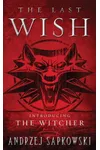
- The Last Wish (Short Story Collection) - The essential starting point. This collection introduces Geralt, his witcher medallions, his signs, and his core relationships, including his meeting with Yennefer of Vengerberg and his friendship with the bard Dandelion (Jaskier).
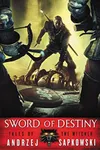
- Sword of Destiny (Short Story Collection) - Directly follows the events of the first collection. This book is crucial as it introduces Ciri and establishes the Law of Surprise, setting up the political and emotional stakes of the main novels.
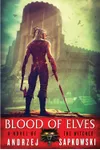
- Blood of Elves (Witcher Saga, Book 1) - The official start of the five-book main saga. The narrative shifts from episodic short stories to a continuous novel format, focusing on Ciri's training and the looming threat of the Nilfgaardian Empire.
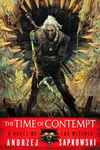
- The Time of Contempt (Witcher Saga, Book 2) - The war intensifies, the Brotherhood of Sorcerers fractures, and Geralt must protect Ciri as she becomes the target of multiple powerful factions.
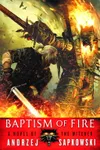
- Baptism of Fire (Witcher Saga, Book 3) - Geralt forms a band of companions, including the beloved vampire Regis, to search for Ciri across a war-torn landscape.
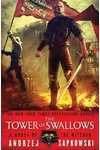
- The Tower of the Swallow (Witcher Saga, Book 4) - Ciri is on the run, trying to reach the mythical Tower of the Swallow, while Geralt and his allies continue their search amidst rising political conspiracies.
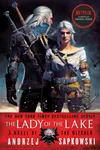
- The Lady of the Lake (Witcher Saga, Book 5) - The epic conclusion to the main narrative arc, wrapping up the destinies of Geralt, Yennefer, and Ciri, and resolving the continental war.
- Season of Storms (Prequel/Midquel Novel) - Published in Polish in 2013 and translated to English in 2018. While its events take place during the timeframe of The Last Wish, its epilogue contains flash-forwards that spoil or reference the end of The Lady of the Lake.
- Crossroads of Ravens (Prequel Novel) - Published in Polish in 2024 and translated to English in 2025. It follows a teenage Geralt of Rivia just starting out on "the Path" after leaving Kaer Morhen. Like Season of Storms, it is best read as a prequel callback after completing the main saga.
The Polish Publication Order vs. English Translation Order
The history of how The Witcher was published explains much of the reading order confusion. In Poland, the stories began appearing in the magazine Fantastyka in 1986. The first book collection published was actually Sword of Destiny in 1992, followed by The Last Wish in 1993 (which compiled older stories along with a new framing narrative, "The Voice of Reason").
When the books were translated into English by David French, the sequence became even more disjointed. The Last Wish was translated first in 2007, but the publisher decided to skip Sword of Destiny and translate the first novel, Blood of Elves, in 2008. Sword of Destiny was not officially published in English until 2015, long after several of the main novels had already been released. This caused significant confusion, as readers who skipped the short stories did not understand why Geralt and Ciri shared such a profound bond at the beginning of Blood of Elves.
Breaking Down the Witcher Collections and Novels
The Witcher series is divided into three distinct styles of books. Understanding these will help you navigate the shift in tone as you read through the series.
The Short Story Collections
The Last Wish and Sword of Destiny are not optional spin-offs; they are the foundation of the entire narrative. Sapkowski uses these collections to deconstruct classic fairy tales (like Snow White and Beauty and the Beast) through a gritty, realistic lens, while gradually building the overarching plot of destiny, empire, and the extinction of magical creatures.
The Core Witcher Saga
Starting with Blood of Elves and concluding with The Lady of the Lake, the saga is a continuous, five-volume epic fantasy. The focus shifts from Geralt’s individual monster contracts to a massive political conflict involving the Northern Kingdoms, the expanding Nilfgaardian Empire, and various secret societies. At the center of it all is Ciri, whose Elder Blood gives her the power to travel between worlds, making her the key to the Continent’s salvation or destruction.
The Standalone Prequels
The two standalone novels, Season of Storms and Crossroads of Ravens, expand the lore without extending the main storyline forward. Season of Storms follows Geralt when he loses his signature silver and steel swords and must navigate the intrigues of the kingdom of Kerack. Crossroads of Ravens takes readers back to Geralt's youth, introducing a young witcher who is naive and idealistic—a stark contrast to the cynical, experienced hunter we meet in the short stories. It also introduces the witcher Preston Holt, who saves Geralt from execution and guides his early days on the Path.
What to Know Before You Start
Before diving into the Continent, here are a few practical tips to keep in mind:
- Slavic Mythology and Tone: The series is deeply rooted in Slavic folklore, featuring creatures like strigas, noonwraiths, and kikimoras. The tone is dark, cynical, and morally gray. There are rarely clear "good guys" and "bad guys"—most conflicts arise from prejudice, political convenience, and human greed.
- The Role of the Video Games: The popular video games by CD Projekt Red (such as The Witcher 3: Wild Hunt) are not adaptations of the books. Instead, they act as non-canon sequels that take place after the events of The Lady of the Lake. While the games reference the books extensively, you do not need to play them to understand the novels, and reading the books will enrich your gaming experience.
- The Netflix Adaptation: The Netflix television series adapts elements from both the short stories and the main novels, though it introduces significant deviations in plot and characterization. If you have watched the show, you will find the books offer a much deeper exploration of the lore, political machinations, and characters' internal struggles.
- David French's Translation: The English editions translated by David French are widely praised for capturing Sapkowski's sharp wit, archaic Polish terminology, and distinct dialogue. Keep in mind that some editions may number the books differently on the spine, so always refer to the titles rather than the publisher's volume numbers.