
The Witcher Series: Recommended Reading Order
For years, English-language editions of Andrzej Sapkowski's works created massive confusion by labeling the first novel, Blood of Elves, as "Book 1" of the series. However, starting there will leave you completely lost. The true foundation of the saga is laid in two essential short story collections that introduce Geralt of Rivia, his beloved Yennefer of Vengerberg, his friend Dandelion, and his child of destiny, Ciri. Reading these collections first is non-negotiable for understanding the plot, emotional stakes, and world-building of the novels.
To experience the story as it was intended, follow the recommended chronological reading order:
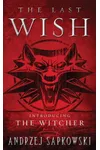
- The Last Wish (Short Story Collection) - This volume introduces Geralt, his witcher training, and his core relationships. It includes the pivotal story of the "Last Wish" itself, which binds Geralt and Yennefer together, and explains the Law of Surprise that connects Geralt to Ciri.
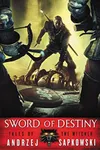
- Sword of Destiny (Short Story Collection) - Directly follows the themes of the first collection. This book is critical as it depicts the first meetings between Geralt and Ciri, bridging the gap directly into the main novels.
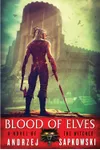
- Blood of Elves (The Witcher Saga, Book 1) - The official beginning of the five-book novel sequence, focusing on Ciri's training at Kaer Morhen and the hunt for her by various factions.
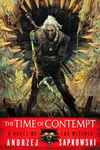
- The Time of Contempt (The Witcher Saga, Book 2) - Escalates the political intrigue, leading to a massive coup that scatters the main characters across the continent.
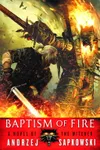
- Baptism of Fire (The Witcher Saga, Book 3) - Follows Geralt on a quest to rescue Ciri, during which he assembles his famous company of companions, including Regis and Milva.
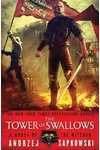
- The Tower of Swallows (The Witcher Saga, Book 4) - Focuses heavily on Ciri's survival under brutal circumstances and her attempt to reach the mythical Tower of the Swallow.
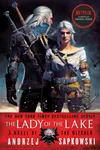
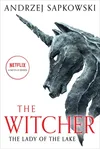
- The Lady of the Lake (The Witcher Saga, Book 5) - The grand finale to the main saga, wrapping up the journeys of Geralt, Yennefer, and Ciri.
- Season of Storms (Standalone Prequel) - Set chronologically during the events of the short stories in The Last Wish, but published much later. It contains an epilogue with major spoilers for the end of The Lady of the Lake, which is why it must be read after the main saga.
- Crossroads of Ravens (Standalone Prequel) - The newest addition to the Witcher universe. Published in Polish in late 2024 (and translated into English in late 2025), this prequel focuses on a very young Geralt shortly after completing his Kaer Morhen trials, embarking on his earliest contracts. Like Season of Storms, it is best enjoyed as a companion piece after reading the main series.
Witcher Publication History vs. Chronology
In Poland, the publication order differed slightly from the recommended chronological list. The very first Witcher stories appeared in the Polish magazine Fantastyka starting in 1986. When compiled into book format, the publishing timeline was as follows:
- Sword of Destiny (Polish: 1992 / English: 2015)
- The Last Wish (Polish: 1993 / English: 2007)
- Blood of Elves (Polish: 1994 / English: 2008)
- The Time of Contempt (Polish: 1995 / English: 2013)
- Baptism of Fire (Polish: 1996 / English: 2014)
- The Tower of the Swallow (Polish: 1997 / English: 2016)
- The Lady of the Lake (Polish: 1999 / English: 2017)
- Season of Storms (Polish: 2013 / English: 2018)
- Crossroads of Ravens (Polish: 2024 / English: 2025)
Although Sword of Destiny was published in Poland a year before The Last Wish, the stories in The Last Wish take place earlier chronologically and serve as the ideal introduction to the characters. English readers also had to wait years for translated editions, which were frequently released out of order—most notably with Sword of Destiny arriving in English long after Blood of Elves, a choice that baffled fans due to the sudden introduction of Ciri without the prior context of her meeting Geralt.
The Hussite Trilogy: Historical Fantasy
If you have finished the Witcher saga and want more of Sapkowski’s signature style, your next stop should be the Hussite Trilogy. Set in the 15th century during the turbulent Hussite Wars in Silesia and Bohemia, this series blends meticulous historical detail with dark magic, alchemy, and folklore. It follows Reinmar of Bielawa, also known as Reynevan, a young apothecary, physician, and magician who finds himself caught in a web of religious warfare, inquisitors, and supernatural threats.
Unlike the Witcher, the reading order for this trilogy is straightforward and follows both publication and chronological order:
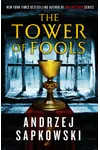
- The Tower of Fools (Polish: 2002 / English: 2020)
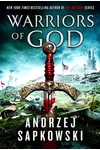
- Warriors of God (Polish: 2004 / English: 2021)
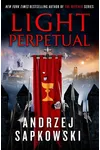
- Light Perpetual (Polish: 2006 / English: 2022)
This series features the same sharp dialogue, grey morality, and dense cultural references that made the Witcher famous, though it trades high fantasy for a rich, historical setting.
Short Story Collections and Samplers
Apart from the core Witcher books, there are a couple of other compilations that feature Sapkowski's shorter fiction. Understanding what these are can prevent redundant purchases:
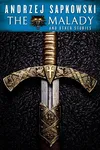
- The Malady and Other Stories (English: 2013) - This is a short promotional digital sampler published by Gollancz. It contains two Witcher short stories extracted from The Last Wish, excerpts from the novels Blood of Elves and Baptism of Fire, and a standalone non-Witcher story called "The Malady," which is a fantasy retelling of the Tristan and Iseult legend. It is not a complete new book.
- Something Ends, Something Begins (Polish: 2000) - This is a collection of short stories that has not been fully translated into English. It includes a famous non-canon, humorous short story depicting the wedding of Geralt and Yennefer, written by Sapkowski as a wedding gift for friends. While not official canon, it remains a beloved piece of Witcher trivia.
What to Know Before You Start
Sapkowski’s universe is distinct from traditional Anglo-American high fantasy. It is heavily grounded in Slavic, Germanic, and Celtic folklore, subverting classic fairy tales into dark, gritty, and morally ambiguous scenarios. Geralt is not a knight in shining armor, but a blue-collar mutant performing hazardous work for coin, navigating a world where the humans are often more monstrous than the creatures he hunts.
It is also worth noting the relationship between the books and the famous multimedia adaptations. The video games by CD Projekt Red act as unofficial, non-canonical sequels to the book series, taking place after the events of The Lady of the Lake. The Netflix television series is a direct adaptation of the books, starting with the short stories. To fully appreciate the narrative design, starting with the original texts in their proper order remains the best path.