



The Recommended Reading Path for Thomas Chaloner
For readers diving into the murky waters of Restoration London, the recommended way to read the Thomas Chaloner series is in publication order. Because the books follow a strict chronological sequence tracking real-world historical events from the winter of 1662 to the Great Fire of 1666, the publication order and chronological order are identical. Reading the novels in sequence allows you to experience Thomas Chaloner's character development, his evolving status within the court of King Charles II, and the mounting political tensions of the period as they actually unfolded.
The Thomas Chaloner Series in Chronological & Publication Order
Here is the complete sequence of the Thomas Chaloner novels, matching both the order they were published and the timeline of 17th-century London:
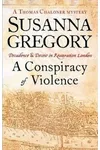
- A Conspiracy of Violence (2006): Set in the winter of 1662. Newly returned from exile in Holland, Thomas Chaloner is hired by Edward Hyde, the Earl of Clarendon, to investigate a mysterious death inside the Tower of London and rumors of hidden Commonwealth gold.
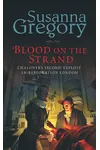
- Blood on the Strand (2007): Set in 1663. Chaloner investigates a suspicious death linked to the powerful Barber-Surgeons Company amidst rising courtly factions and political unrest.
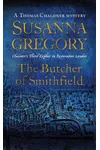
- The Butcher of Smithfield (2008): Set in 1663. Sent to investigate the death of a wealthy businessman in the chaotic district of Smithfield, Chaloner uncovers a web of counterfeiters and illegal cattle trading.
- The Westminster Poisoner (2009): Set during the Christmas season of 1663. A wave of poisonings sweeps through the Palace of Westminster, putting Chaloner on the trail of a killer targeting high-profile political figures.
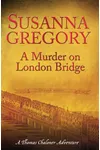
- A Murder on London Bridge (2009): Set in 1664. When a wealthy merchant is murdered on the congested, shop-lined expanse of London Bridge, Chaloner must untangle a conspiracy involving local trade guilds.
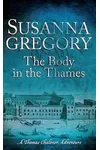
- The Body in the Thames (2010): Set in 1664. A body pulled from the river leads Chaloner into a dangerous investigation involving counterfeit coiners, spies, and Dutch intelligence.
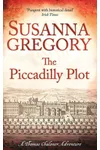
- The Piccadilly Plot (2012): Set in 1665. As the West End undergoes a massive building boom, Chaloner investigates the suspicious deaths of wealthy property developers in Piccadilly.
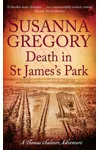
- Death in St James's Park (2013): Set in 1665. A murder in the Royal Park takes place just as the terrifying shadow of the Great Plague begins to fall over London.
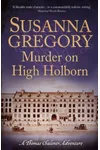
- Murder on High Holborn (2014): Set in late 1665. With the plague ravaging the city, Chaloner is tasked with finding a killer who targeted a local printer, risking the exposure of sensitive political pamphlets.
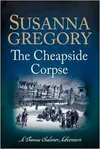
- The Cheapside Corpse (2015): Set in early 1666. In the commercial hub of Cheapside, Chaloner investigates financial fraud and murder in a city struggling to recover from the plague.
- The Chelsea Strangler (2016): Set in 1666. The investigation moves to the outlying village of Chelsea, where a serial killer threatens the King's new hospital project and courtly escape plans.
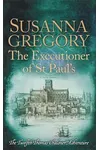
- The Executioner of St Paul's (2017): Set in 1666. A series of gruesome murders occurs around the gothic ruins of old St Paul's Cathedral, drawing Chaloner into a dark religious conspiracy.
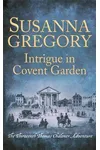
- Intrigue in Covent Garden (2019): Set in 1666. Chaloner navigates espionage and murder in the trendy piazza of Covent Garden, uncovering foreign plots against the crown.
- The Clerkenwell Affair (2020): Set in the summer of 1666. With the Anglo-Dutch War escalating, rumors of a massive rebellion and a plot to burn down the capital send Chaloner deep into the radical underground of Clerkenwell.
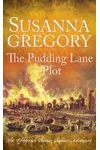
- The Pudding Lane Plot (2022): Set in September 1666. In the final installment to date, Chaloner investigates conspiracy and murder against the terrifying backdrop of the Great Fire of London.
Can the Books Be Read as Standalones?
While the central murder mystery in each novel is self-contained and resolved by the final page, reading the books out of order is not recommended. The overarching story arcs rely heavily on continuity. Thomas Chaloner's relationship with his employer, the Earl of Clarendon, changes significantly as Clarendon's political influence waxes and wanes. Furthermore, Chaloner's personal life—including his lingering grief, his search for stability, and his interactions with recurring secondary characters—develops incrementally from one book to the next. Starting mid-series will spoil major plot points and diminish the impact of Chaloner's personal journey.
What to Know Before You Start: The History and Tone
Susanna Gregory is the pseudonym of Elizabeth Cruwys, a Cambridge academic and former coroner’s officer. This unique background shines through in her meticulous research and atmospheric prose. Unlike lighthearted cozy mysteries, the Thomas Chaloner series has a gritty, noir-inspired tone. Chaloner is a disillusioned, weary former Commonwealth spy who served Oliver Cromwell before the monarchy was restored. Working for the Royalist court means he is constantly forced to serve employers he does not trust, navigating a morally gray world where loyalty is bought and sold.
Gregory draws heavily from actual historical records, notably the diaries of Samuel Pepys, to recreate the sights, sounds, and smells of 1660s London. Key historical events like the Anglo-Dutch Wars, the Great Plague of 1665, and the Great Fire of 1666 serve as major plot drivers rather than simple backdrops. If you enjoy cerebral, deeply researched historical fiction with a slightly dark, realistic edge, this series is an excellent choice.
Connections to Other Works
Susanna Gregory is also famous for her long-running Matthew Bartholomew series, which features a physician solving crimes in 14th-century Cambridge. While the two series are set centuries apart and do not feature crossover characters, they share Gregory's trademark historical authenticity and complex mystery plotting. If you enjoy the style of the Chaloner books, the Matthew Bartholomew series offers a similarly immersive experience in medieval England.