







The Recommended Reading Path
For readers looking to dive into Stephen R. Donaldson's landmark dark fantasy series, the path is straightforward but carries a few unique options. The primary recommendation is to read the books in their publication order. Because the narrative is deeply serialized and follows a continuous, complex progression of character development and cosmic consequences, skipping around is not advised. However, the placement of the companion novella Gilden-Fire offers a minor chronological variation for completionists.
Publication Order vs. Chronological Order
The entire main series was published chronologically, meaning publication order and chronological order are identical for the ten core novels. The only exception is the novella Gilden-Fire, which was originally written as a chapter for the second book, The Illearth War, but cut due to space and point-of-view considerations. Here is how the two paths compare:
The Standard Publication Order
- Lord Foul's Bane (1977)
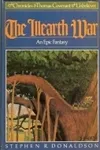
- The Illearth War (1977)
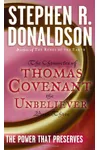
- The Power That Preserves (1977)
- The Wounded Land (1980)
- Gilden-Fire (1981) - Novella/Companion piece
- The One Tree (1982)
- White Gold Wielder (1983)
- The Runes of the Earth (2004)
- Fatal Revenant (2007)
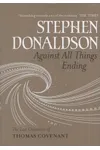
- Against All Things Ending (2010)
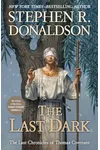
- The Last Dark (2013)
The Chronological Order (With Gilden-Fire Inserted)
If you want to experience the events strictly as they happen in the timeline of the Land, you can insert the novella directly into the second book:
- Lord Foul's Bane (1977)
- The Illearth War (1977) - Read up to the end of Chapter 7
- Gilden-Fire (1981) - Insert here to follow Korik and the Bloodguard's mission
- The Illearth War (1977) - Resume from Chapter 8 to the end
- The Power That Preserves (1977)
- The Wounded Land (1980)
- The One Tree (1982)
- White Gold Wielder (1983)
- The Runes of the Earth (2004)
- Fatal Revenant (2007)
- Against All Things Ending (2010)
- The Last Dark (2013)
Breaking Down the Subseries
The overall epic is divided into three distinct eras, each building on the events of the previous one while escalating the stakes and introducing new key perspectives.
The First Chronicles
This is where the journey begins. We are introduced to Thomas Covenant, a bitter novelist diagnosed with leprosy who is suddenly transported to a magical, vibrant world called the Land. Because he refuses to believe the Land is real—fearing it is a psychological delusion that will cause him to neglect his strict self-care routine—he becomes "the Unbeliever." Yet, he holds the white gold wedding ring, a material of legendary wild magic that the villainous Lord Foul the Despiser seeks to exploit. Over the course of the trilogy, Covenant must grapple with his skepticism and the desperate moral choices thrust upon him.
The Second Chronicles
Set several thousand years later in the Land's timeline (though only a few years have passed in Covenant's world), the Land is suffering under a new blight called the Sunbane. Covenant is pulled back along with Linden Avery, a doctor from the real world who brings her own trauma and medical perspective. Together, they embark on a quest to find the One Tree and forge a new Staff of Law to heal the Land.
The Last Chronicles
This final tetralogy brings the overarching saga to its grand conclusion. Linden Avery takes center stage as the primary protagonist, facing a shattered reality where the barriers of time and space are collapsing. She must navigate complex temporal paradoxes, ancient monsters, and the final machinations of Lord Foul to save both the Land and the universe itself.
What to Know Before You Start
Donaldson's series is a landmark of epic fantasy, but it is not standard fare. Thomas Covenant is a deeply flawed, often unsympathetic anti-hero who commits a highly controversial act early in the first book, which remains a key point of discussion among readers. The prose is dense, operatic, and highly focused on psychological struggle, guilt, and the burden of unwanted power. Newcomers should be prepared for a darker, emotionally challenging narrative that rewards patience and close attention to character growth.