

How to Read the Time Warp Trio Series
The Time Warp Trio series, created by Jon Scieszka and illustrated by Lane Smith and Adam McCauley, is a beloved staple of children's time-travel literature. The books follow Brooklyn boys Joe, Sam, and Fred as they are transported across history by a mysterious, magic-infused volume simply known as "The Book."
When it comes to reading the series, the best path is the Publication Order. While each time-hopping adventure is self-contained and can be enjoyed as a standalone, reading the books in the order they were published allows young readers to watch the rules of "The Book" unfold, appreciate recurring gags, and meet recurring characters like Joe's annoying sister Anna and his uncle Joe the Magician.
Why Chronological Order Doesn't Work
Because the boys travel to a different era in almost every installment—ranging from the prehistoric Stone Age in Your Mother Was a Neanderthal to the futuristic year 2095 in 2095—attempting to read the series chronologically by historical setting is not recommended. The jumps are intentionally chaotic, and the characters remain the same age throughout, meaning there is no linear timeline to follow other than the publication order of their Brooklyn lives.
The Core Novels vs. The TV Tie-Ins
When looking at the complete list of 27 books, the series is divided into two distinct eras:
- The Core Novels (Books 1–16): Written directly by Jon Scieszka between 1991 and 2006. These are the original, highly acclaimed chapter books that established the franchise's signature blend of history and slapstick humor.
- The TV Show Tie-In Books (Books 17–27): Released between 2006 and 2007, these chapter books were adapted from the animated television series (co-produced by WGBH and Soup2Nuts). They were written by adaptation authors like Jennifer Frantz and introduce the "Future Trio"—Jodie, Freddi, and Samantha—who are the boys' great-granddaughters from 2105.
Complete Publication Order
The Core Series by Jon Scieszka
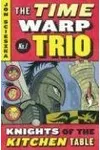
- Knights of the Kitchen Table (1991) – The boys face Camelot’s Black Knight and a fire-breathing dragon.
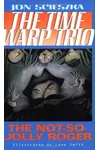
- The Not-so-Jolly Roger (1991) – A run-in with Blackbeard the pirate.
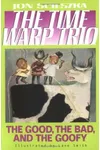
- The Good, the Bad, and the Goofy (1992) – A wild trip to the American Old West.
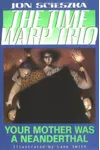
- Your Mother Was a Neanderthal (1993) – The trio lands in the Stone Age without their clothes.
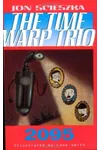
- 2095 (1995) – A journey into a high-tech future where they meet their own descendants.
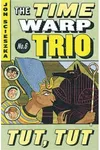
- Tut, Tut (1996) – An adventure in ancient Egypt alongside mummies and pyramids.
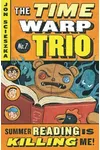
- Summer Reading is Killing Me! (1998) – The boys are sucked into a world where all library book characters come to life.
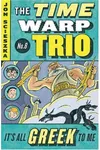
- It's All Greek to Me (1999) – Outsmarting the gods of Mount Olympus.
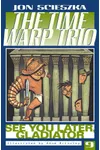
- See You Later, Gladiator (2000) – Wrestling in the coliseums of ancient Rome.
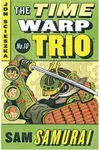
- Sam Samurai (2001) – A trip to 17th-century Japan.
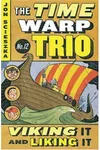
- Viking It and Liking It (2002) – Sailing with Leif Erikson.
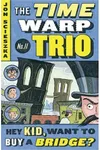
- Hey Kid, Want to Buy a Bridge? (2002) – Navigating New York City in the late 19th century during the Brooklyn Bridge construction.
- Me Oh Maya (2003) – A narrow escape from high-stakes Mayan ball games.
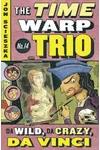
- Da Wild, Da Crazy, Da Vinci (2004) – Tinkering with inventions in Renaissance Italy.
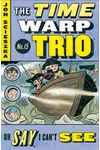
- Oh Say, I Can't See (2005) – Meeting George Washington during the American Revolution.
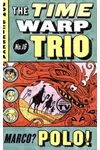
- Marco? Polo! (2006) – Trekking with the famous explorer in 13th-century China.
The TV Animation Tie-In Books
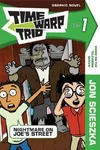
- Nightmare On Joe's Street (2006) – Frankenstein's monster escapes into Brooklyn.
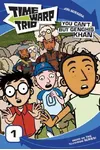
- You Can't, But Genghis Khan (2006) – A trip to meet a young Genghis Khan in Mongolia.
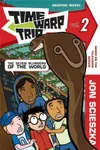
- The Seven Blunders of the World (2006) – Exploring the ancient wonders.
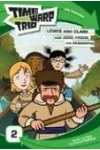
- Lewis and Clark...and Jodie, Freddi, And Samantha (2006) – The Future Trio joins the historic American expedition.
- Plaid to the Bone (2007) – High-flying adventure in medieval Scotland.
- South Pole or Bust (an Egg) (2007) – An icy journey to Antarctica.
- The High and the Flighty (2007) – Meeting the pioneers of early aviation.
- Meet You at Waterloo (2007) – A front-row seat to Napoleon's famous defeat.
- Wushu Were Here (2007) – Martial arts antics in ancient China.
- What's So Great About Peter? (2007) – Visiting the court of Peter the Great in Russia.
- Harem Scare'em (2007) – An adventure set in the historical Ottoman Empire.
What to Know Before You Start
Originally conceptualized by Jon Scieszka during his time as an elementary school teacher, the Time Warp Trio was designed to hook young readers—particularly boys—with fast-paced, funny, and educational tales. In 2008, Scieszka was named the first U.S. National Ambassador for Young People's Literature, a testament to his impact on children's literacy. The series' educational value lies in its ability to present authentic historical contexts through the lens of modern, sarcastic Brooklyn kids, ensuring the stories never feel like dry school textbooks.