
The Ultimate Way to Read Simon Hawke’s Time Wars
If you love the idea of time-traveling commandos jumping into the middle of classic literature to fight rogue agents and preserve the space-time continuum, Simon Hawke's Time Wars series is the perfect adventure. Written between 1984 and 1991, this twelve-book series merges high-concept science fiction with historical fiction and literary homage. But with historical eras jumping from medieval England to ancient Rome and the Wild West, how should you tackle the reading order?
We highly recommend reading the series in publication order. While the Temporal Corps travels back and forth through time, the overarching narrative, character development, and ongoing conflicts of the core cast—including Lucas Priest, Finn Delaney, and Andre Cross—unfold in a linear fashion. Reading them out of order will spoil major character arcs and the evolving politics of the 27th-century future they call home.
Time Wars Books in Publication (and Recommended) Order
Here is the complete list of all twelve novels in the recommended reading order, detailing the classic literary backdrops and historical periods they inhabit:
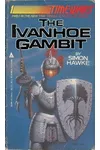
- 1. The Ivanhoe Gambit (1984): The book that started it all. Lucas Priest is clocked into medieval England, where he must impersonate Sir Wilfred of Ivanhoe to thwart a rogue referee threatening the timeline.
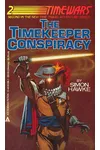
- 2. The Timekeeper Conspiracy (1984): The Temporal Corps heads to 17th-century France, blending real history with the swashbuckling intrigue of Alexandre Dumas's The Three Musketeers.
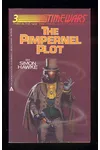
- 3. The Pimpernel Plot (1984): Set during the chaotic days of the French Revolution, the team must navigate the dangerous espionage of Emma Orczy’s The Scarlet Pimpernel.
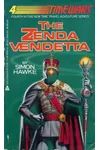
- 4. The Zenda Vendetta (1985): A mission to 19th-century Ruritania weaves directly into the royal identity crisis of Anthony Hope's The Prisoner of Zenda.
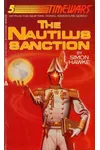
- 5. The Nautilus Sanction (1985): The team goes underwater and back in time to deal with time pirates and Jules Verne’s iconic Captain Nemo from Twenty Thousand Leagues Under the Sea.
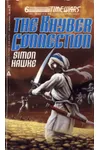
- 6. The Khyber Connection (1986): Set in 1897 India, this adventure brings the Temporal Corps into the world of Rudyard Kipling's colonial stories, including Soldiers Three and the poem 'Gunga Din'.
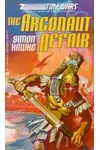
- 7. The Argonaut Affair (1987): The series takes a mythological turn, drawing heavily on the legend of Jason and the Argonauts (with strong nods to classic fantasy films).
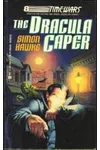
- 8. The Dracula Caper (1988): A highly popular entry that mixes Victorian London, Bram Stoker's Dracula, and cameos from historic figures like Arthur Conan Doyle and H. G. Wells.
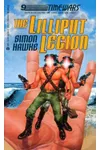
- 9. The Lilliput Legion (1989): The commandos confront bioengineered miniature soldiers in a sci-fi spin on Jonathan Swift's satirical masterpiece, Gulliver's Travels.
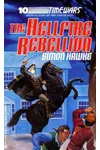
- 10. The Hellfire Rebellion (1990): Set in 1765 Boston, the team investigates the mysterious Hellfire Club and historical figures like Benjamin Franklin amidst early revolutionary tensions.
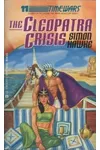
- 11. The Cleopatra Crisis (1990): The Temporal Corps travels to ancient Rome and Egypt, working to ensure the dramatic history of Julius Caesar, Marc Antony, and Cleopatra plays out correctly.
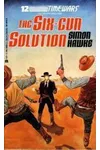
- 12. The Six-Gun Solution (1991): The final book of the series moves to 1881 Tombstone, Arizona, where the team participates in the events surrounding the famous Gunfight at the O.K. Corral.
What to Know Before You Start
Simon Hawke (the pen name of Nicholas Valentin Yermakov) built a fascinating sandbox with Time Wars. In this universe, the 27th century has banned modern global warfare, resolving international disputes instead by sending soldiers to fight in historical conflicts. However, rogue factions and temporal terrorists constantly try to alter history to change the future. The series treats classic novels not as fiction, but as historical accounts of real events, allowing the characters to interact directly with literary legends.
Readers should prepare for a fast-paced, action-oriented tone that doesn't take itself too seriously. The novels are relatively short, averaging around 200 pages each, making them quick, episodic reads. Hawke frequently weaves in sci-fi tropes like bioengineered monsters, cybernetics, and parallel universes alongside his historical settings.
Common Misconceptions: The Timestalkers Movie
A common point of confusion for fans of 1980s sci-fi is the 1987 television movie Timestalkers (starring William Devane and Klaus Kinski). While both Timestalkers and Time Wars are time-travel stories featuring Old West gunslingers and temporal agents, Timestalkers is actually based on an unpublished novel called The Tintype by Ray Brown. It is not an adaptation of Simon Hawke's books, nor are there any official film or television adaptations of the Time Wars series.