
The Recommended Reading Order
For anyone diving into K.J. Parker's sprawling military fantasy epic, the path forward is straightforward but requires understanding the format. The Two of Swords was originally written and published as a serialized story in 19 digital installments. Today, the most practical and widely recommended way to experience the entire narrative is through the three collected print and digital volumes published by Orbit. Reading them in their collected sequence preserves the complex narrative arc exactly as the author intended.
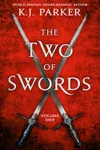
- The Two of Swords: Volume One (2017) – Collects Parts 1 to 8. This volume introduces the primary players, setting the stage for the conflict with the conscription of the young farm boy Teucer and the introduction of the assassin Telamon.
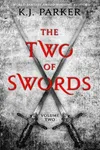
- The Two of Swords: Volume Two (2017) – Collects Parts 9 to 15. The conspiracy deepens in this middle volume, focusing on the machinations of the shadowy organization known as the Lodge (or the Craft) and shifting the perspective to the command of the opposing armies.
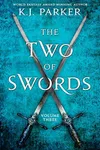
- The Two of Swords: Volume Three (2017) – Collects Parts 16 to 19. The grand finale weaves all the disparate threads together, bringing the long-running war between the East and West to its cynical, inevitable conclusion.
The Serial Roots: Monthly Novellas vs. Collected Volumes
Between 2015 and 2017, K.J. Parker (the well-known pseudonym of British author Tom Holt) embarked on a bold publishing experiment. Instead of releasing a traditional doorstopper fantasy novel, the saga was released as monthly digital-first novellas. This unique release schedule gave the story a highly episodic rhythm, with each part focusing on a different character or side story, slowly building the jigsaw puzzle of the wider conflict.
For readers tracking down the original releases or curious about how the compilation was structured, here is how the 19 parts map to the three main volumes:
- Volume One: Contains Parts 1 through 8. These early parts establish the ground rules of the war and introduce characters like Teucer (The Crown Prince card) and Telamon (Poverty card).
- Volume Two: Contains Parts 9 through 15. These parts expand the geography of the war, detailing the logistics of siege warfare and introducing the command perspectives of the rival generals.
- Volume Three: Contains Parts 16 through 19. These final parts resolve the conflict and reveal the ultimate motives of the puppet masters steering the empire's fate.
Shifting Perspectives: Shuffling the Cards of the Narrative
One of the defining features of The Two of Swords is its fragmented, non-linear storytelling. Parker frequently jumps between timelines, geographic locations, and character perspectives. A single chapter might follow a high-ranking general executing a brilliant tactical maneuver, while the next drops the reader into the mud alongside a starving foot soldier or a blacksmith trying to manufacture weapons under siege. The narrative functions like a mosaic; only when you step back and view all three volumes together does the full picture of the war emerge.
This structure has divided some readers. Those who prefer a traditional, single-viewpoint epic with a linear quest may find the shifting perspectives disorienting. However, fans of political thrillers and military history praise it as one of Parker's most realistic depictions of the chaos and confusion inherent in long-term warfare.
The Motif of the Tarot and the Lodge
Central to the organization of both the characters and the plot is a modified, tarot-like deck of cards. Within the story, a secretive, Mason-like fraternal organization called "the Craft" (or "the Lodge") uses these cards to communicate, categorize individuals, and predict political shifts. Each key character is associated with a specific card:
- Teucer: The farm boy turned conscripted archer, symbolically linked to "The Crown Prince."
- Telamon: The pragmatic spy and cold-blooded assassin, linked to "Poverty."
- Senza Belot: The brilliant general of the East, linked to "Two of Arrows."
- Forza Belot: Senza's equally brilliant brother and general of the West, linked to "Two of Spears."
As the series progresses, the cards serve as a thematic reminder of how individuals—no matter how powerful or clever—are often reduced to mere suits and numbers in the grand game played by the Lodge.
Chronological Caveats and Shared Universe Connections
A common question among K.J. Parker fans is how The Two of Swords fits into the broader timeline of the author's other works, collectively referred to by readers as "Parkerland." Parker's novels are famous for sharing a loose, historically grounded setting modeled on the Byzantine Empire, late antiquity, and medieval Europe. However, these connections are thematic and structural rather than narrative.
While books like the Engineer Trilogy, the Fencer Trilogy, and standalones like Savages share similar cultural names, tribes, and technologies, they are not direct sequels or prequels. For instance, while some fans suggest that Savages (published in 2015) takes place in the same world a few decades before the events of The Two of Swords, reading them in any particular order is unnecessary. You do not need to read any other K.J. Parker book to fully understand and enjoy The Two of Swords.
What to Know Before You Start
Before diving into Volume One, there are a few stylistic quirks of K.J. Parker's writing that readers should keep in mind:
- No Traditional Magic: Unlike traditional high fantasy, there are no dragons, wizards, or spellcasting. The story is a low-fantasy military drama focused on logistics, economics, and human psychology.
- Cynical Tone: The characters are morally gray, and the narrative has a dark, dryly humorous outlook on human nature. Don't expect clean-cut heroes or clear moral victories.
- Attention to Detail: Parker has a famous obsession with the practical mechanics of the pre-industrial world. Expect detailed descriptions of bow-making, metallurgy, siege machinery, and military rations.