
The Recommended Reading Order
Because The War That Came Early is a continuous, chronological narrative following a massive cast of characters through an evolving timeline, there is only one logical way to read the series. You should read the books in order of their publication, which matches their internal chronology exactly. Jumping in mid-series is not recommended, as the global alliances and character arcs shift dramatically from one novel to the next.
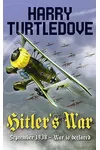
- Hitler's War (2009)
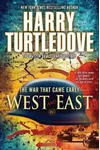
- West and East (2010)
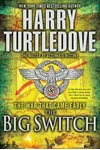
- The Big Switch (2011)
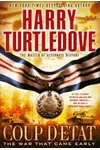
- Coup d'Etat (2012)
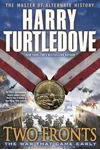
- Two Fronts (2013)
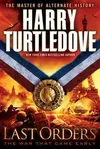
- Last Orders (2014)
What to Know Before You Start
In the real world, the Munich Agreement of 1938 saw British Prime Minister Neville Chamberlain concede the Sudetenland to Nazi Germany in an attempt to achieve "peace for our time." World War II broke out a year later, in September 1939, when Germany invaded Poland. Turtledove's series explores the ultimate "what-if": what if Chamberlain had stood firm, and war had erupted over Czechoslovakia in 1938 instead?
Two key historical alterations, or points of divergence, drive the entire plot of the series:
- The Henlein Assassination: In 1938, Sudeten German leader Konrad Henlein is assassinated by a Czech nationalist. Rather than back down or negotiate, Adolf Hitler uses this as an immediate pretext to invade Czechoslovakia, dragging Great Britain and France into a premature global conflict. Because the major powers are less industrialized and unprepared for war in 1938 compared to 1939, the early conflict becomes chaotic and unpredictable.
- The Survival of José Sanjurjo: In our timeline, Spanish military leader José Sanjurjo died in a plane crash in 1936, paving the way for Francisco Franco to lead the Nationalist forces. In this alternate history, Sanjurjo survives the crash, leads Spain to victory in the Spanish Civil War, and ultimately aligns Spain with the Axis powers. This permits an early Axis capture of Gibraltar, closing the Mediterranean to Allied shipping.
Chronological Order vs. Publication Order
Readers often wonder if there are prequel stories, spin-offs, or concurrent anthologies that alter the chronological reading order. For The War That Came Early, the timeline is straightforward. There are no side novellas, companion guides, or short stories set in this specific universe. The timeline flows linearly from the start of the Sudeten crisis in late 1938 through to the closing chapters of the global conflict in 1944. Therefore, the publication order is the chronological order, making the reading path simple and clear.
The Shifting Sands of Alternate Alliances
One of the most praised aspects of the series is how alliances do not remain static. As the conflict drags on, the political landscapes of Europe and Asia undergo seismic shifts, particularly in the middle volumes:
- The Big Switch features a shocking political turnaround following a pivotal event in England—the suspicious death of Winston Churchill—which leads to Britain and France forming an uneasy alliance with Nazi Germany against the Soviet Union.
- Coup d'Etat and Two Fronts follow the consequences of these unnatural alliances as internal rebellions, changing military fortunes, and secret projects force nations to re-evaluate who their true enemies are.
Practical Reader Advice
If you are planning to dive into this series, keep these tips in mind:
- Start at the Beginning: Do not attempt to read these books as standalones. The plot is heavily serialized, and characters reference events from previous volumes constantly. Hitler's War is the essential starting point.
- Expect a Sprawling Cast: Turtledove writes from a mosaic of viewpoints, including a Czech sniper, a German panzer driver, an American marine stationed in China, a Jewish family inside Germany, and a French soldier. Keeping track of these disparate individuals across multiple global fronts can be challenging, but it pays off as their paths occasionally cross.
- Focus on Tone: Unlike some of Turtledove's more sci-fi alternate histories (such as the Worldwar series featuring an alien invasion), The War That Came Early is a grounded, gritty, and historically focused military fiction series. It deals heavily with the logistics of war, early-generation military hardware, and the human cost of global combat.