

The Recommended Reading Order for the War of the Roses
If you want to experience the sheer scale of the civil war that tore medieval England apart, there is only one way to read Conn Iggulden’s War of the Roses series: in chronological order, which also happens to be the publication order. The series is a linear, four-part epic that follows the historical timeline from the weak reign of King Henry VI in 1437 to the definitive rise of the Tudor dynasty at the Battle of Bosworth Field in 1485.
Because each book picks up precisely where the previous one leaves off, skipping around or reading out of order will ruin the narrative flow. Here is the recommended path through the conflict:
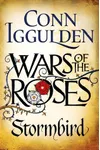
- Stormbird (2013) – Sets the stage in 1437, exploring the early discontent, the marriage of Henry VI to Margaret of Anjou, and Jack Cade’s rebellion.
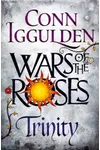
- Trinity (also published as Margaret of Anjou) (2014) – Focuses on the years starting around 1454 during King Henry VI’s mental illness, the rise of the Yorkist protectorate, and the outbreak of open hostilities.
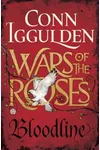
- Bloodline (2015) – Covers 1461 to 1464, detailing the bloody aftermath of the Battle of Wakefield, the rise of King Edward IV, and the savage Battle of Towton.
- Ravenspur: Rise of the Tudors (2016) – Beginning in 1470, this finale follows Edward IV’s exile and return, the tragic fate of Henry VI, and the rise of Henry Tudor, culminating in the Battle of Bosworth Field in 1485.
Publication Order vs. Chronological Order
Unlike some sprawling historical fiction sagas that bounce back and forth in time, write prequels, or branch into side novellas, Conn Iggulden constructed the War of the Roses series as a straightforward, sequential narrative. The chronological sequence matches the publication order exactly. There are no prequels, spin-off novellas, or co-authored side stories to worry about. You start with Stormbird and read straight through to Ravenspur.
A Closer Look at the Books
1. Stormbird (2013)
The series opens in 1437. England has been at war with France for a hundred years, and the young King Henry VI is a pious, gentle soul who lacks the iron will of his father, Henry V. To secure a fragile peace, the King's closest advisors negotiate a secret treaty to trade away English-held lands in France in exchange for a French bride, Margaret of Anjou. When the truth of this surrender leaks, anger boils over among the English lords and commoners alike. This book does an excellent job of setting up the historical pieces, showing how local uprisings like Jack Cade's rebellion and political betrayals in London paved the way for decades of civil war.
2. Trinity / Margaret of Anjou (2014)
By 1454, the political situation has worsened. King Henry VI has fallen into a catatonic state, leaving England without an active ruler. The Duke of York, Richard, is appointed Protector of the Realm and forms a powerful political alliance (the "trinity" of the UK title) with the Earls of Salisbury and Warwick. However, Queen Margaret of Anjou is determined to defend the throne for her husband and her infant son. When Henry recovers his senses, the fragile peace is shattered, and the Houses of Lancaster and York clash in the first open battles of the civil war. Note that if you are buying books in the US, this installment is titled Margaret of Anjou, while UK editions use the title Trinity.
3. Bloodline (2015)
Set between 1461 and 1464, Bloodline plunges readers into the bloodiest phase of the war. Following the brutal Battle of Wakefield where Richard, Duke of York, is slain, his ambitious son Edward of March steps forward to claim the crown as King Edward IV. Backed by the military might of the Neville family, particularly the "Kingmaker" Earl of Warwick, the Yorkists clash with the Lancastrians in the snowstorm of the Battle of Towton—historically remembered as the bloodiest battle fought on English soil. Iggulden paints a gritty, visceral picture of medieval combat that is not for the faint of heart.
4. Ravenspur: Rise of the Tudors (2016)
The final book begins in 1470. The Yorkist alliance has fractured. King Edward IV is forced into exile while his brother Richard (the future Richard III) helps him plot a return. Edward lands at Ravenspur with a small army to reclaim his crown, setting off a chain of events that will witness the tragic deaths of the Lancaster heirs, the brief, controversial reign of Richard III, and the rise of a new contender from across the English Channel: Henry Tudor. The novel culminates in the Battle of Bosworth Field in 1485, bringing a satisfying and historically accurate end to this massive saga.
What to Know Before You Start
To get the most out of your read, keep the following tips and context in mind:
- The Title Discrepancy: Do not buy Trinity and Margaret of Anjou thinking they are different books. They are the exact same second novel; Penguin published it as Trinity in the UK, while Dutton/Penguin Random House released it as Margaret of Anjou in the US.
- Fact vs. Fiction: Iggulden is famous for his historical research. However, to keep the narrative tight, he introduces a key fictional character: Derry Brewer, a spymaster for King Henry VI. Derry acts as the reader's eyes and ears behind the scenes, allowing Iggulden to link complex political plots together without overwhelming readers with too many real historical minor characters.
- Historical Notes: Always read the historical notes at the back of each book. Iggulden uses these sections to explain where he altered historical timelines slightly for dramatic purposes and where he stayed strictly true to the archival record.
- A Master of Battle Scenes: If you enjoy military history, Iggulden’s depictions of 15th-century warfare—from the archery lines to the muddy, hand-to-hand combat—are widely regarded as some of the most cinematic and realistic in modern historical fiction.
What to Read Next
Once you finish the War of the Roses, Conn Iggulden has plenty of other historical epics to explore. If you enjoyed the medieval English setting, his standalone novel Dunstan (2017) is a natural next step, focusing on the powerful 10th-century archbishop Dunstan during the dawn of a unified England. If you want to dive into other historical periods, his five-book Emperor series (starting with The Gates of Rome) follows the life of Julius Caesar, while his five-book Conqueror series (starting with Genghis: Birth of an Empire) tells the story of Genghis Khan and his successors. More recently, Iggulden has written the Athenian series and a trilogy on the Roman Emperor Nero.