
The Recommended Reading Order for The Warlord Chronicles
For readers looking to dive into Bernard Cornwell’s masterful Arthurian epic, the recommended reading path is simple and direct. The Warlord Chronicles (often published in omnibus editions as The Warlord Trilogy or The King Arthur Trilogy) is a linear story meant to be read in its original publication order. Fortunately, the chronological progression of the narrative aligns perfectly with the order in which the books were released.
Here is the recommended reading order for the trilogy:
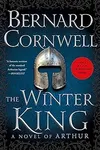
- The Winter King (Published in 1995) – Introduces the narrator, Derfel Cadarn, and details Arthur's struggle to protect the infant King Mordred and maintain peace in a fracturing Britain.
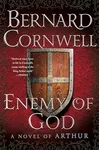
- Enemy of God (Published in 1996) – Follows Arthur at the peak of his power as his dream of a united Britain is threatened by religious factionalism and personal betrayal.
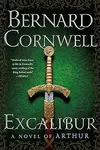
- Excalibur (Published in 1997) – The final chapter, which covers the decline of Arthur's influence, the inevitable conflict with Saxon invaders, and the tragic battle of Camlann.
Publication Order vs. Chronological Order
In many epic fantasy and historical fiction series, readers must choose between reading in order of publication or following a complex timeline of prequels and spin-offs. With the Warlord Chronicles, there is no such dilemma. Bernard Cornwell wrote the books in a strict, contiguous timeline, and there are no companion short stories, prequels, or spin-off novels in this universe.
Because the story is presented as the retrospective memoirs of an elderly monk named Derfel Cadarn, the narrative follows a single lifetime. Reading the books out of order will spoil major plot points, character deaths, and the evolution of the political landscape of Dark Age Britain. Always start with The Winter King and read through to Excalibur.
The Core Novels of the Trilogy
1. The Winter King (1995)
The trilogy opens in the late 5th century, during a time of immense vulnerability for the island of Britain. High King Uther Pendragon is dying, leaving behind an infant heir, Mordred. Arthur, Uther's illegitimate son, returns from banishment in Armorica to serve as one of the protectors of the baby king. Through the eyes of Derfel, a Saxon-born orphan rescued by Merlin and raised as a Briton warrior, we witness Arthur's attempts to unite the petty kingdoms of Britain, form a critical shield wall against the encroaching Saxons, and navigate the shifting alliances of a lawless land.
2. Enemy of God (1996)
The second novel shifts the focus to Arthur's grand vision for a peaceful, unified Britain. While Arthur achieves military victories and attempts to establish a coalition of kings, his idealistic ambitions are undermined by internal division. The primary conflict in this volume is ideological and spiritual, showing the fierce clash between traditional Druidic paganism, spearheaded by Merlin and Nimue, and the rising, intolerant force of early Christianity. Simultaneously, the betrayal of Arthur's close ally Lancelot begins to sow the seeds of destruction for Arthur's dream.
3. Excalibur (1997)
The concluding volume of the trilogy represents the tragic twilight of Arthurian Britain. The Saxon invasion forces, led by Cerdic, press deeper into the British territories, while the internal alliances that Arthur worked decades to build completely crumble. The book is named after the legendary sword of Arthur, which symbolizes the final, desperate magical efforts of Merlin and Nimue to restore the old gods to Britain. It culminates in the bloody and heartbreaking Battle of Camlann, wrapping up Derfel's long narrative journey and providing a bittersweet, realistic resolution to the legends.
What to Know Before You Start
Before launching into the Warlord Chronicles, readers should prepare for a version of the Arthurian myth that is vastly different from traditional French romance or modern fantasy blockbusters. Bernard Cornwell is a historical novelist first and foremost, and he deliberately strips away the medieval elements—such as shining plate armor, tournaments, stone castles, and chivalric codes—because they did not exist in the 5th century. Instead, you will find a dark, muddy, and violent post-Roman Britain where warriors fight in shield walls, mail coats are prized treasures, and kings rule over small, thatched-roof settlements.
Another key element of the series is its approach to magic. While characters like Merlin and Nimue are powerful druidic figures who claim to perform spells, the magic is presented with historical ambiguity. Cornwell leaves it up to the reader to decide whether Merlin's magic is truly supernatural, or if it is a mix of clever psychology, optical illusions, coincidences, and the superstitions of the era. This grounding of myth in psychological realism makes the world feel incredibly tangible and historical.
Practical Reader Guidance: Can the Books Be Read Standalone?
Due to the continuous nature of the narrative, it is highly recommended that you do not read the books as standalones. The Winter King sets up the characters, political relationships, and the narrator's personal motivations. Enemy of God relies heavily on the emotional weight established in the first book, and Excalibur serves as a direct resolution to the conflicts built up across the previous two novels. Reading any of the sequels without the context of the preceding volumes will lead to confusion regarding the large cast of characters, their complex histories, and their shifting allegiances.
The TV Adaptation
In 2023, Bad Wolf production company released a television adaptation titled The Winter King, which premiered on MGM+. Starring Iain De Caestecker as Arthur and Stuart Campbell as Derfel, the 10-episode series adapted the events of the first book. However, the adaptation received mixed reviews from critics and fans of the books alike, as it altered several key character motivations and changed the visual aesthetic of Cornwell's gritty 5th-century Britain. The series was canceled after its first season and does not continue the story into the events of Enemy of God or Excalibur. Readers looking for the complete, authentic story should stick to Cornwell's original prose.