
How to Read the Warlock of Gramarye Series
Christopher Stasheff’s Warlock of Gramarye series is a foundational classic of science fantasy, blending interstellar space travel and advanced technology with a feudal medieval society populated by witches, elves, and ghosts. Because the series was written over several decades and includes a prequel, readers generally choose between two primary reading orders: Publication Order and Chronological Order.
1. The Chronological Reading Order (Recommended)
Reading chronologically allows you to follow the history of the universe from the origins of the totalitarian threats to the establishment of the Gramarye colony, before jumping into the main adventures of Rod Gallowglass and his family. In this order, the prequel is read first:
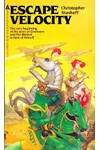
- Escape Velocity (1983) – A prequel set generations before the main series, introducing the telepaths Dar Mandra and Samantha Bine fleeing the prison world of Wolmar.
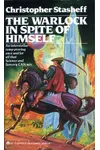
- The Warlock in Spite of Himself (1969) – The official start of Rod Gallowglass’s adventures on Gramarye.
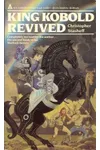
- King Kobold (1971) / King Kobold Revived (1984) – Rod faces a threat from Neanderthal-like espers.
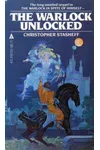
- The Warlock Unlocked (1982) – Rod and his family are trapped in an alternate universe where magic actually works.
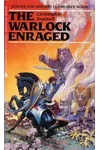
- The Warlock Enraged (1985) – Rod deals with the political fallout of his high warlock status.
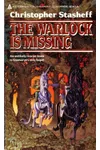
- The Warlock Is Missing (1986) – Rod’s children must step up when their parents vanish.
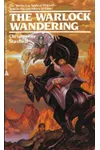
- The Warlock Wandering (1986) – Rod travels through space and time to trace the roots of Gramarye's colonists.
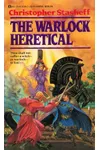
- The Warlock Heretical (1987) – The church challenges the powers and role of the warlock on Gramarye.
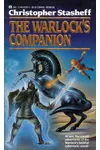
- The Warlock's Companion (1988) – Focuses on the backstory and perspective of Fess, Rod’s robotic horse.
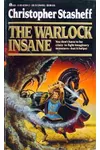
- The Warlock Insane (1989) – Rod is pushed to his psychological limits by telepathic manipulation.
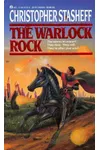
- The Warlock Rock (1990) – Mysterious singing stones disrupt the youth of Gramarye in a magical take on rock music.
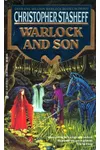
- Warlock and Son (1991) – Rod teams up with his growing eldest son, Magnus.
- The Warlock's Last Ride (2004) – The final conclusion to Rod Gallowglass's long journey.
2. The Publication Order
If you prefer to experience the series exactly as original readers did in the 1970s and '80s, you should start with the core book and insert the prequel later. Under this path, read The Warlock in Spite of Himself (1969) first, followed by King Kobold (1971) and The Warlock Unlocked (1982), before doubling back to read the prequel Escape Velocity (1983) as a flashback before resuming with The Warlock Enraged (1985).
The Core Spin-offs and Sequel Series
Once you finish Rod Gallowglass’s main story, the universe (known to fans as the DDT-verse, named after the interstellar Decentralized Democratic Tribunal) branches out into two major sequels focusing on his children.
The Rogue Wizard Series
This series follows Rod’s eldest son, Magnus d'Armand (using the alias Gar Pike), a powerful telepath and telekinetic who leaves Gramarye to travel the galaxy. Like his father, Magnus works for SCENT to help oppressed populations overthrow local tyrants and establish democracy. While the first book published was actually A Wizard in Bedlam (1979), the official chronological order of this subseries is:
- A Wizard in Absentia (1993)
- A Wizard in Mind (1995)
- A Wizard in Bedlam (1979)
- A Wizard in War (1995)
- A Wizard in Peace (1996)
- A Wizard in Chaos (1997)
- A Wizard in Midgard (1998)
- A Wizard and a Warlord (2000)
- A Wizard in the Way (2000)
- A Wizard in a Feud (2001)
The Warlock's Heirs Series
This subseries stays on the planet Gramarye and follows Rod's other children—Cordelia, Geoffrey, and Gregory—as they grow into their own powerful psychic abilities and navigate romance, politics, and ancient threats. The order for this series is straightforward:
ol>Broader DDT-Verse Connections
For readers who want to explore every corner of Christopher Stasheff's shared universe, several other series share the same continuity:
- Starship Troupers: Consisting of A Company of Stars (1991), We Open on Venus (1993), and A Slight Detour (1994), this series features a 23rd-century theatrical troupe traveling through space during the early history of the Terran Sphere.
- Saint Vidicon: Featuring the patron saint of high-tech and electronics (Saint Vidicon of Cathode), these stories (such as Saint Vidicon to the Rescue) deal with the troubles of maintaining high technology in a complex universe.
- G.R.I.P.E. Series: Centered on time travelers defending intellectual property rights across history.
Note that Stasheff's popular A Wizard in Rhyme series is a completely separate high fantasy universe and is not connected to the Warlock of Gramarye or the DDT-verse.
What to Know Before You Start
Gramarye is a lost colony planet populated by the descendants of romanticists who fled a highly centralized Terran government to recreate a idealized, feudal medieval England. Over generations, the radiation and environment of Gramarye mutated the human colonists, awakening latent psychic abilities (such as telepathy, telekinesis, and teleportation) which the medieval population interprets as magic, witchcraft, and miracle-working. Rod Gallowglass arrives armed with science, logic, and his faithful robotic horse companion Fess, only to realize he must play along with their supernatural framing to survive and achieve his mission.