






How to Read the Waverley Novels
Sir Walter Scott’s legendary Waverley Novels comprise over two dozen novels and several short stories published between 1814 and 1832, plus a posthumously published manuscript. Because these works are almost entirely standalone narratives set across different centuries and countries, you do not need to read them in a strict chronological or publication order. However, having a clear roadmap helps you navigate Scott’s immense literary landscape without feeling lost.
Depending on your reading style, there are three primary ways to approach the Waverley series:
- The Starter Path (Recommended): Start with the most famous, accessible novels to get a feel for Scott’s style, then branch out based on your historical interests.
- The Publication Order Path: Read the books in the order they were originally released to trace how Scott’s style and themes evolved over his career.
- The Chronological Setting Path: Read the books according to the historical eras they depict, ranging from the Crusades in the 12th century to the late 18th century.
Recommended Starting Points
If you are new to Sir Walter Scott, starting at book one (Waverley) is a classic choice, but it is not always the easiest. Scott's prose can be dense, and his early chapters often feature slow setups. Here are the three best entry points for modern readers:
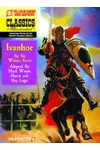
1. Ivanhoe (1819)
Set in 12th-century medieval England, this is Scott’s most famous adventure. It features knights, tournaments, Robin Hood (as Locksley), and the conflict between Normans and Saxons. It is fast-paced, highly cinematic, and does not require any prior knowledge of Scottish history.
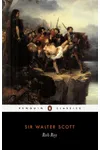
2. Rob Roy (1817)
For those wanting a taste of the Scottish Highlands, this swashbuckling adventure introduces the legendary outlaw Rob Roy MacGregor. It balances political intrigue with romance and outlaw justice, making it an excellent representation of Scott’s signature blend of history and fiction.
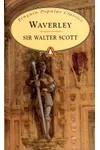
3. Waverley (1814)
The novel that started it all. Set during the Jacobite Rising of 1745, it follows the English soldier Edward Waverley as he travels north and finds his loyalties torn between the British Crown and the romantic cause of Bonnie Prince Charlie. It is highly rewarding but requires some patience during the opening chapters.
Publication Order of the Waverley Books
Reading the novels in their publication order allows you to experience the series exactly as 19th-century readers did. During the initial run, Scott published these works anonymously, credited simply as the "Author of Waverley" to maintain public intrigue. He did not publicly reveal his identity as the sole author until 1827. Here is the publication sequence of the novels:
- Waverley; or, 'Tis Sixty Years Since (1814)
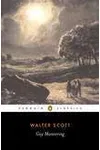
- Guy Mannering; or, The Astrologer (1815)
- The Antiquary (1816)
- The Black Dwarf and Old Mortality (1816) — Published together as the first series of Tales of My Landlord.
- Rob Roy (1817)
- The Heart of Midlothian (1818) — Published as the second series of Tales of My Landlord.
- The Bride of Lammermoor and A Legend of Montrose (1819) — Published together as the third series of Tales of My Landlord.
- Ivanhoe (1819)
- The Monastery (1820)
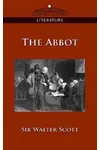
- The Abbot (1820) — The direct sequel to The Monastery.
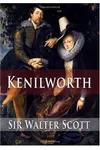
- Kenilworth (1821)
- The Pirate (1822)
- The Fortunes of Nigel (1822)
- Peveril of the Peak (1822)
- Quentin Durward (1823)
- Saint Ronan's Well (1823)
- Redgauntlet (1824)
- The Betrothed and The Talisman (1825) — Published together as Tales of the Crusaders.
- Woodstock; or, The Cavalier (1826)
- Chronicles of the Canongate (1827) — A collection including the novel The Surgeon's Daughter and several short stories.
- The Fair Maid of Perth (1828) — Originally published as the second series of Chronicles of the Canongate.
- Anne of Geierstein; or, The Maiden of the Mist (1829)
- Count Robert of Paris and Castle Dangerous (1832) — Published together as the fourth series of Tales of My Landlord.
- The Siege of Malta (Completed 1832, Published 2008) — Scott’s final, unfinished work, suppressed for over 170 years due to its unpolished state before being officially edited and published by Edinburgh University Press.
Understanding Subseries and Connected Books
While the Waverley Novels are generally standalone, Scott grouped several of them under distinct umbrella titles. Additionally, a few books share characters and plotlines:
Tales of My Landlord
This is the largest sub-collection within the Waverley canon. Scott framed these stories as being compiled by a fictional schoolmaster assistant named Peter Pattieson and published by Jedediah Cleishbotham. It consists of four series:
- First Series (1816): The Black Dwarf and Old Mortality.
- Second Series (1818): The Heart of Midlothian.
- Third Series (1819): The Bride of Lammermoor and A Legend of Montrose.
- Fourth Series (1832): Count Robert of Paris and Castle Dangerous.
The Monastery & The Abbot Duology
Unlike almost all other Waverley books, these two share a direct narrative connection. The Abbot (1820) is a direct sequel to The Monastery (1820), continuing the story of the Avenel family and focusing on the captivity of Mary, Queen of Scots. You should read The Monastery before reading The Abbot.
Tales of the Crusaders
This thematic pair consists of The Betrothed and The Talisman, both published in 1825. They explore different campaigns of the Crusades, with The Talisman focusing on the Third Crusade and Richard the Lionheart.
Chronological Order of Historical Settings
If you prefer to read the novels according to the historical eras they depict, the timeline spans more than six centuries. Reading in this order provides an immersive journey through European history:
- 11th Century: Count Robert of Paris (First Crusade / Constantinople)
- 12th Century: Ivanhoe (Richard the Lionheart's return to England); The Talisman (Third Crusade)
- 13th Century: The Betrothed (Welsh Marches border conflicts)
- 14th Century: Castle Dangerous (Wars of Scottish Independence); The Fair Maid of Perth (Clan combat under Robert III)
- 15th Century: Quentin Durward (Louis XI's France); Anne of Geierstein (Burgundian Wars / Switzerland)
- 16th Century: The Monastery and The Abbot (Reformation and Mary, Queen of Scots); Kenilworth (Elizabethan England)
- 17th Century: The Fortunes of Nigel (James I's London); A Legend of Montrose (Scottish Civil War); Woodstock (English Civil War / Charles II); Peveril of the Peak (Popish Plot / Restoration England); Old Mortality (Covenanter Rebellion)
- 18th Century: The Black Dwarf (Jacobite plotting of 1708); Rob Roy (Jacobite Rising of 1715); The Heart of Midlothian (Porteous Riots of 1736); Waverley (Jacobite Rising of 1745); Redgauntlet (Fictional final Jacobite conspiracy of the 1760s); Guy Mannering (Mid-18th century smuggling and inheritance); The Antiquary (French invasion scare of the 1790s); Saint Ronan's Well (Early 19th-century spa-town social satire)
What to Know Before You Start
Sir Walter Scott essentially invented the modern historical novel, blending real figures (like Richard the Lionheart, Mary, Queen of Scots, and Rob Roy) with fictional protagonists who act as the reader's guide through turbulent times. Here are a few tips to help you get the most out of the Waverley Novels:
- Don't feel pressured to read every single book: The Waverley canon is massive. Many modern readers choose to focus on the "Great Novels"—namely Waverley, Old Mortality, Rob Roy, The Heart of Midlothian, and Ivanhoe—before deciding if they want to tackle the lesser-known works.
- Expect a slow start: Scott’s style belongs to the early 19th century. He frequently spends the first few chapters explaining the historical context, ancestry, and social environment before the main plot begins. Once the action starts, however, the pace accelerates rapidly.
- Navigate the dialect: Scott frequently writes dialogue in Scots dialect for his working-class characters. While it can take a few pages to get used to, this local color adds immense flavor and realism. Most modern editions include a glossary to assist with unfamiliar terms.