
How to Read the Waxahachie Smith Series
For readers looking to dive into British Western author J.T. Edson's fast-paced tales, the Waxahachie Smith series offers a unique twist on the classic gunfighter archetype. Smith is a former Texas Ranger who, after a brutal mutilation leaves him without trigger fingers, adapts by using a modified Colt Peacemaker called a 'slip gun.' Because the books were published out of chronological sequence, readers have two primary paths to choose from: Chronological Order and Publication Order.
Chronological Reading Order (Recommended)
Reading the trilogy chronologically is highly recommended for first-time readers. This path allows you to witness Smith's origin story, his tragic injury, and his grueling transition to the slip gun before seeing him deploy his skills as a town marshal. In chronological order, the books are read as follows:
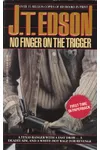
- No Finger on the Trigger (Published in 1985) — This is the chronological starting point. Waxahachie Smith works undercover in Bonham County to prevent a range war. During his investigations, he is captured by the ruthless Fuente brothers, who sever his trigger fingers to end his career as a gunfighter. Instead of giving up, Smith adapts his weapon and learns to shoot using the slip-gun method.
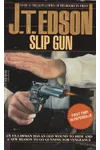
- Slip Gun (Published in 1971) — Set years after his injury, this novel finds Smith hired as the provisional marshal of the lawless town of Willow Creek (often referred to as Widow's Creek). Considered washed up by the locals, Smith must protect the town and survive a contract killer using his modified Colt and a triggerless pump-action carbine.
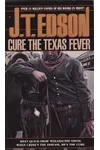
- Cure the Texas Fever (Published in 1996) — The final book in the trilogy. Smith is now a wanted man, but he is offered a pardon if he can successfully guard a veterinarian working on a cure for the devastating Texas Fever cattle disease. This installment features prominent crossovers with Edson's broader universe.
Publication Reading Order
If you prefer to experience the books in the order J.T. Edson wrote them, follow the publication sequence. While this order introduces Waxahachie as an already established, mystery-shrouded marshal before flashing back to explain his disability, it offers a fun B-movie mystery feel:
- Slip Gun (1971)
- No Finger on the Trigger (1985)
- Cure the Texas Fever (1996)
Understanding the Slip Gun Weaponry
A key appeal of the series is J.T. Edson's focus on firearms mechanics. Because Smith has no index or middle fingers on his right hand, a standard revolver is useless to him. The 'slip gun' is a Colt Peacemaker modified by removing the trigger and trigger guard. To fire, Smith holds the gun and uses his thumb to fan or 'slip' the hammer back, releasing it to strike the firing pin. To compensate for his handicap, he also uses specialized ammunition containing three lead balls per cartridge, maximizing his spread and stopping power in close-quarters combat.
Crossovers and the Interconnected Floating Outfit Universe
Waxahachie Smith does not exist in a vacuum. J.T. Edson constructed a massive, interconnected universe containing over 100 novels. Smith is close friends with Dusty Fog, Mark Counter, and the Ysabel Kid — the legendary trio from Edson's popular Floating Outfit series. Waxahachie makes guest appearances in several Floating Outfit stories, and the Outfit returns the favor by assisting him in Cure the Texas Fever.
Edson's universe also connects to the Wold Newton Universe, a popular crossover theory connecting famous literary characters. Because of this, Smith's books include cameos from descendants of classic fictional characters, such as Lord Maidstone (the son of C.S. Forester's Horatio Hornblower) and Secret Service director Donald Garfew Beech.
Practical Reader Advice
While the books are full of pulp-action thrills, new readers should keep a few details in mind:
- Standalone Appeal: Each book functions as a self-contained adventure with a distinct mystery or conflict, meaning you won't be left on a cliffhanger. However, reading them out of chronological order might make the transition from ranger to disabled marshal feel disjointed.
- Style and Tone: Edson writes with a distinct, technical style. Fight scenes are highly detailed, often breaking down the mechanics of a draw step-by-step. Expect fast pacing, standard Western tropes, and a touch of vintage B-movie melodrama.
- Availability: Because these books went out of print for long stretches, finding physical paperbacks can be a treasure hunt. Fortunately, digital editions have made the trilogy widely accessible to modern readers.