

Introduction to the Galactic Commons
When Becky Chambers first introduced readers to the Galactic Commons, she didn't just write a science fiction series; she helped define a subgenre. The Wayfarers series is the quintessential example of "hopepunk"—a form of speculative fiction that rejects grimdark cynicism in favor of empathy, cooperation, and gentle optimism. Instead of galaxy-spanning wars, superweapons, and high-stakes military conflicts, these books focus on the everyday lives of ordinary citizens, engineers, pilots, and artificial intelligences trying to find their place in a massive, diverse universe.
The series consists of four standalone companion novels and one elusive short story. Because the novels focus on different cast members and separate corners of the galaxy, new readers often wonder where they should begin and whether they need to follow a strict sequence. This guide will walk you through the optimal reading path, the connections between the books, and where to find the series' sole short story.
Recommended Reading Path: Start at the Beginning
Although each of the four novels functions as a standalone story with its own self-contained plot, we strongly recommend reading the Wayfarers series in publication order. While you will not be lost if you pick up a later book first, the world-building is cumulative. Becky Chambers introduces technologies, alien species, historical events, and political dynamics in the first book that she takes for granted in later installments. Reading in order allows you to experience the natural expansion of the Galactic Commons just as the author intended.
Wayfarers Books in Publication Order
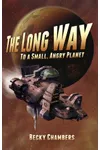
1. The Long Way to a Small, Angry Planet (2014 / 2015)
Originally self-published via a Kickstarter campaign in 2014 before being picked up for traditional trade publication in 2015, this debut novel is the perfect gateway to the series. It follows Rosemary Harper, a young human clerk with a secretive past, who joins the crew of the Wayfarer. The ship is a tunneling vessel tasked with punching wormholes through space to connect distant systems. Under the leadership of the gentle human Captain Ashby, the crew is a colorful patchwork of species, including the reptilian Aandrisk pilot Sissix, the hyperactive tech Kizzy, the grumpy algaeist Corbin, and the Sianat Pair navigator Ohan. The story plays out like a cozy road trip through deep space, focusing on character relationships, cultural differences, and found family dynamics as they travel toward a dangerous tunneling job near a volatile planet.
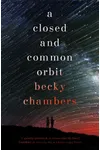
2. A Closed and Common Orbit (2016)
The second book picks up immediately after the dramatic conclusion of the first novel, but it shifts its focus entirely away from the Wayfarer crew. Instead, it follows Lovelace, the ship's former artificial intelligence, who has been installed into an illegal synthetic body (an "android"). Taking the name Sidra, she struggles to adapt to the sensory overload of physical existence and the danger of being discovered as an illegal AI. She is aided by Pepper, a tough human modification specialist who has her own tragic backstory of escaping a robotic scrap factory. The narrative alternates between Sidra's present-day struggles with identity and Pepper's childhood survival story. It is a deeply personal, intimate exploration of personhood, agency, and friendship.
3. Record of a Spaceborn Few (2018)
The third novel turns its lens toward the Exodan Fleet—the massive flotilla of generational ships that carried humanity away from a dying Earth before they were welcomed into the Galactic Commons. While humans on the Wayfarer are scrappy outsiders, the Fleet represents the heart of traditional human space culture. Rather than focusing on a single journey, the book is a multi-perspective slice-of-life look at several characters living on the homestead ship Asteria. These include Tessa, a mother questioning her life in the fleet; Isabel, an aging archivist preserving human history; Eyas, a caretaker responsible for composting the dead; Kip, a restless teenager seeking an escape; and Sawyer, a "grounder" immigrant who has newly arrived from a planetary colony. The novel examines themes of heritage, sustainability, and what happens to a community when its original purpose has long been fulfilled.
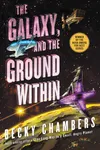
4. The Galaxy, and the Ground Within (2021)
The final novel in the quartet takes place entirely at a cosmic rest stop on the atmosphere-free planet Gora, a dull but busy transit hub. When a satellite network failure gridlocks all space traffic, a small group of travelers from different alien species is stranded together at the Five-Hop One-Stop, run by an enterprising Lluur named Ouloo and her gender-fluid child Tupo. The guests include Pei, an Aeluon cargo runner who is secretly in love with Captain Ashby; Roveg, a Quelin exile who designs children's games; and Speaker, a small Lanu who relies on a mechanical mech-suit to breathe. With no option but to wait out the delay, these disparate individuals must navigate their political prejudices, physical limitations, and personal crises. It serves as a beautiful micro-cosmic summation of the entire series' focus on cross-cultural empathy.
The Elusive Short Story: "A Good Heretic" (2019)
For completionists, there is one piece of short fiction set in the Wayfarers universe. The short story "A Good Heretic" was published in the 2019 science fiction anthology Infinite Stars: Dark Frontiers, edited by Bryan Thomas Schmidt, and later reprinted in the 2024 anthology New Adventures in Space Opera, edited by Jonathan Strahan. The story centers on Mas, a Sianat who chooses not to undergo the standard viral infection that allows Sianat individuals to become "Pairs"—specialized, multi-minded entities capable of navigating the complex dimensions of space. The story acts as a prequel/companion to the series, offering a fascinating look at the internal culture of one of Chambers' most unique alien species.
What to Know Before You Start
- Cozy Sci-Fi / Hopepunk: If you are looking for military operations, dogfights in space, or grand political conspiracies, you won't find them here. The stakes are emotional and personal.
- Diverse Representation: The series is celebrated for its natural inclusion of queer, non-binary, polyamorous, and neurodivergent characters. In the Galactic Commons, diversity is normalized and celebrated.
- Awards and Accolades: The Wayfarers series won the prestigious 2019 Hugo Award for Best Series. Individual novels have also been shortlisted for the Hugo Award for Best Novel, the Arthur C. Clarke Award, and longlisted for the Baileys Women's Prize for Fiction.