
The Recommended Wayward Pines Reading Path
When diving into the mysterious world of Wayward Pines, there is no need to worry about complex chronological jumps, prequel novellas, or branching paths. Author Blake Crouch designed the series as a tightly structured, linear trilogy. To experience the mystery, the slow-burn horror, and the final survival stakes exactly as intended, you should read the books in order of their publication.
Here is the definitive reading order for the core Wayward Pines series:
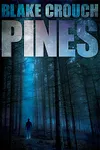
- Pines (Published in August 2012)
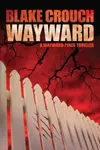
- Wayward (Published in September 2013)
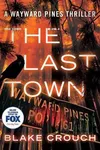
- The Last Town (Published in July 2014)
Reading these books out of order will completely ruin the central mysteries. The first book relies heavily on a classic mystery setup where the reader discovers the nature of the town along with the protagonist. Starting with the second or third book would immediately spoil the massive twists that redefine the entire narrative landscape.
The Core Trilogy Breakdown
1. Pines (2012)
The series begins with Pines, introducing readers to Secret Service Agent Ethan Burke. Sent to the idyllic mountain town of Wayward Pines, Idaho, to investigate the disappearance of two fellow agents, Ethan's mission goes sideways before it even starts. Following a violent car crash, he wakes up by a river with no wallet, no phone, and no identification. As he walks into the town, he finds a picture-perfect community complete with manicured lawns, white picket fences, and friendly residents. However, the surface-level perfection hides a deep sense of dread. There are no working phones to call the outside world, the locals behave with cult-like conformity, and a massive electrified fence topped with barbed wire surrounds the entire valley—not to keep people in, but to keep something else out. The first novel reads like an intense psychological thriller with horror undertones, culminating in a jaw-dropping revelation about what Wayward Pines actually is.
2. Wayward (2013)
The second book, Wayward, shifts gears from a mysterious escape thriller to a complex look at community dynamics, surveillance, and leadership. Ethan Burke has transitioned from an outsider trying to escape to the town's new sheriff. He is now privy to the grand scheme behind the town and must work within the system run by David Pilcher, the visionary creator of this strange sanctuary. As Ethan investigates a brutal murder of a resident, he is forced to balance his duty to keep the peace with his growing moral objections to the town's draconian laws. Crouch uses this book to explore the psychological toll of living under absolute surveillance and the extreme lengths humans will go to for security at the expense of their personal freedom.
3. The Last Town (2014)
The final book, The Last Town, picks up immediately after the chaotic cliffhanger of the second novel. The fragile facade of Wayward Pines has shattered, and the electric fence is no longer keeping the dangers of the outside world at bay. Ethan Burke must lead the residents of the town in a desperate, high-stakes battle for survival against the terrifying evolutionary predators known as the Abbies. The thriller elements take a backseat to pure dystopian science fiction and action, wrapping up the character arcs of Ethan, his family, and the remaining citizens of the valley. It serves as a definitive conclusion to the narrative arc that Crouch set out to tell.
What to Know Before You Start
Before you crack open the first page of Pines, it helps to understand what kind of story you are stepping into. Blake Crouch has openly shared that the series was heavily inspired by the surreal, unsettling atmosphere of the 1990s television show Twin Peaks. He wanted to capture that classic Americana aesthetic where something deeply wrong is festering beneath a beautiful surface. If you enjoy stories that mix small-town secrets, high-concept science fiction, and fast-paced survival horror, this series is custom-built for you.
In terms of structure, the writing style in the trilogy is highly cinematic. Crouch writes with short, punchy sentences, rapid paragraph breaks, and a relentless pace. The books are designed to be page-turners, making them ideal choices for quick weekend reads or binge-reading sessions.
The Wayward Pines TV Show Adaptation
In 2015, Fox premiered a television adaptation of the trilogy executive-produced by M. Night Shyamalan. The show starred Matt Dillon as Ethan Burke and ran for two seasons. For readers looking to experience both mediums, it is important to know how the television show corresponds to the books:
- Season 1: The first season covers the narrative arc of the entire three-book trilogy. Because it compresses all three novels into just ten episodes, the pacing is incredibly fast, and major twists that occur at the end of the first and second books are revealed much earlier in the television timeline.
- Season 2: The second season consists almost entirely of original material written for television, continuing past the events of the books. It shifts focus to new characters and explores the aftermath of the first season's finale, offering a significantly different trajectory than Crouch's original print ending.
If you plan to watch the show, most fans recommend reading the books first. The novels offer a much deeper exploration of Ethan's psychological state, more claustrophobic tension, and a much tighter, more satisfying resolution than the show's polarizing second season.
Spin-Offs and the Kindle Worlds Program
For readers looking to spend more time in the Idaho valley, there is a unique corner of the literary world to explore. In 2013, Amazon launched the Kindle Worlds program, a platform that allowed fan-fiction writers and independent authors to publish licensed, monetized stories within popular established universes. Wayward Pines was one of the flagship properties for this launch.
Under this program, several notable authors wrote novellas and spin-off stories set within the Wayward Pines universe, exploring the town's history, different residents, and alternative events. While Blake Crouch did not write these stories himself, he officially licensed and supported them, making them a fun addition for hardcore fans. However, Amazon permanently shut down the Kindle Worlds program in August 2018. As a result, these licensed spin-offs are no longer actively sold or published under that banner, though copy searchers can still occasionally find them second-hand or on independent author archives. The core trilogy remains the only official, canon work written by Blake Crouch himself.
Where to Go After Wayward Pines
Once you finish the final pages of The Last Town, you might find yourself craving more of Blake Crouch's signature style. Fortunately, the success of the Wayward Pines trilogy marked a turning point in Crouch's career, leading him to write several bestselling standalone novels that build on similar themes. If you loved the high-concept science fiction and thriller pacing of Wayward Pines, we recommend picking up Dark Matter (which deals with the multiverse and identity) or Recursion (which tackles memory manipulation and time loops). Both books offer the same relentless pacing and mind-bending concepts that made the Pines trilogy a modern sci-fi classic.