


The Recommended Reading Order
To fully appreciate the emotional depth and shifting perspectives of the Werner Family Saga, you should read the books in their official publication order. Because the narrative structure involves overlapping timelines and multi-generational secrets, reading them as they were released provides the most satisfying experience. Starting with the family's roots and watching the legacy unfold across generations allows the recurring characters and family mysteries to build naturally.
Here is the recommended reading path for the Werner Family Saga:
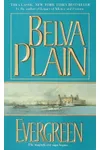
- Evergreen (1978)
- The Golden Cup (1986)
- Tapestry (1988)
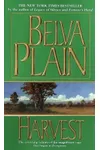
- Harvest (1990)
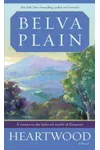
- Heartwood (2011)
Detailed Guide to the Werner Family Saga Books
1. Evergreen (1978)
The saga begins with Belva Plain's blockbuster debut novel, Evergreen. The story introduces Anna Friedman, a spirited, red-haired teenager who flees grinding poverty in Poland at the turn of the 20th century to start a new life in New York City. Working as a maid for the wealthy, established Werner family, Anna finds herself torn between two worlds and two loves: the affluent, charismatic Paul Werner, and Joseph Friedman, a poor but hardworking immigrant. Anna eventually marries Joseph, launching a family dynasty. Spanning from 1906 to 1972, the novel follows Anna through the Jazz Age, the Great Depression, and the post-WWII era, showing her struggle to preserve her family and guard a closely held secret that could shatter everything she has built.
2. The Golden Cup (1986)
While published second, The Golden Cup acts as both a companion and a prequel-of-sorts to the early parts of Evergreen. It shifts the spotlight to Hennie De Rivera, Paul Werner's aunt, who lives on the edges of the wealthy Werner banking family. Hennie is a progressive, independent woman who rejects her family's superficial status, choosing instead to marry Dan Roth, a passionate social reformer dedicated to fighting for New York's impoverished immigrant communities. The novel details the early 20th-century social reforms, the rise of the labor movement, and the buildup to World War I. Crucially, it provides a deeper look at Paul Werner's youth, his marriage to the socialite Mimi, and the lingering shadow of his forbidden love for Anna Friedman.
3. Tapestry (1988)
Tapestry continues the saga by weaving together the lives of the Werners and the Roths during the tumultuous decades of the 1920s, 1930s, and 1940s. The focus returns to Paul Werner as he navigates middle age, his failing marriage, and the burdens of his family's banking empire. As the Great Depression devastates the global economy, the family must also confront the terrifying rise of Nazi Germany in Europe. Paul travels to Europe and becomes involved in dangerous efforts to rescue Jewish families from the Nazi regime, bringing the historical realities of World War II directly into the family dynamic. The novel explores how the thread of historical tragedy impacts the personal relationships and loyalties of the next generation.
4. Harvest (1990)
Set during the cultural upheaval of the late 1960s and 1970s, Harvest brings the family drama back to the secrets established in Evergreen. Anna Friedman, now a family matriarch, has spent decades guarding a secret about her family's parentage. As her daughter Iris Stern navigates a troubled marriage and her grandchildren get swept up in the turbulent social movements of the Vietnam War era and conflicts in Israel, these long-buried truths begin to resurface. The emotional toll of decades-old lies threatens to dismantle the family's unity, forcing Anna and Paul Werner to finally confront their shared past and decide what legacy they will leave to the next generation.
5. Heartwood (2011)
The final chapter of the saga, Heartwood, centers on Iris Stern (Anna's daughter) as she enters her golden years. Living a comfortable life with her physician husband, Theo, Iris considers herself a modern woman with traditional values. However, she must face the challenges of aging, the marital struggles of her daughter Laura, and the changing morals of her adult children. When a fresh family crisis reveals a new layer of historical secrets, Iris must draw on the strength of her ancestors—the resilient "heartwood" of the family tree—to guide the family forward. Published posthumously following Belva Plain's death in 2010, the novel serves as a poignant conclusion to the multi-generational journey.
Publication Order vs. Chronological Order Caveats
For readers who prefer a strict chronological timeline, the Werner Family Saga presents a unique challenge. Because Evergreen covers almost seventy years (1906 to 1972), it completely overlaps the settings of The Golden Cup, Tapestry, and Harvest. The Golden Cup loops back to the beginning of the 20th century to explore Hennie's life and the events surrounding World War I from a different perspective. Tapestry fills in the middle decades, and Harvest covers the latter half of the century. Attempting to read the books chronologically by character ages would result in constant jumping between novels, spoiling major secrets revealed late in Evergreen. Therefore, sticking to the publication order is highly recommended to preserve the narrative pacing and dramatic tension.
Practical Reader Advice and Starting Points
If you are planning to dive into the Werner Family Saga, you should absolutely start with Evergreen. It is the foundation of the entire series, introducing the core characters and the central secrets that drive the plots of the subsequent novels. While books like The Golden Cup or Heartwood can technically be read as standalone historical dramas, you will miss the emotional impact of the recurring character arcs, the family's growth, and the long-term consequences of Anna's early choices.
Belva Plain did not write any official spin-offs or co-authored books for the Werner Family Saga. However, fans of her writing style will find similar multi-generational themes and rich historical backdrops in her many standalone novels, such as Random Winds (1980) and Crescent City (1985).
What to Know Before You Start
Before reading, it is helpful to know that the Werner Family Saga is deeply grounded in Jewish-American history, tracing the evolution of Jewish immigrant communities in New York from the tenements of the Lower East Side to the affluent suburbs of Westchester. The series deals heavily with themes of class, cultural assimilation, social activism, and the evolving role of women in the 20th century. For those interested in adaptations, Evergreen was adapted into a highly successful three-part NBC miniseries in 1985, starring Lesley Ann Warren as Anna and Armand Assante as Paul Werner, which remains a beloved adaptation among fans of the books.