
The Recommended Reading Order
The Witch Child series by Celia Rees is a tightly woven historical fiction duology. Because the second book relies heavily on the events, character mysteries, and diary pages discovered in the first, you should read these books in their strict chronological and publication order. Fortunately, keeping track of the series is straightforward since it consists of just two novels.
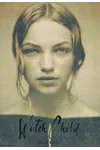
- Book 1: Witch Child (2000)
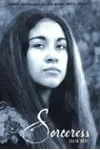
- Book 2: Sorceress (2002)
Witch Child Publication vs. Chronological Order
For the Witch Child series, publication order and chronological order are identical. However, the timeline of the narrative is unique because the story uses a multi-generational framing device that bridges the 17th century with the modern day.
In Witch Child, the story takes place entirely in the past, beginning in 1659 England and moving to the Puritan colonies of North America. The book is presented as a series of diary entries written by Mary Newbury, which she sews into a quilt to preserve her secrets. In the modern framing narrative, these pages are found and compiled by a contemporary researcher named Alison Ellman.
In Sorceress, the timeline splits. It features a modern-day narrative focusing on Agnes Herne, a college student of Mohawk descent who possesses a deep spiritual connection to her ancestors. Through Agnes's visions and Alison Ellman's ongoing research, the book uncovers the second half of Mary Newbury’s life in the late 17th century after she fled the Puritan settlement. Because of this structure, reading the books out of order will spoil the central mystery of Mary's fate and make the modern-day framing segments difficult to follow.
Deep Dive into the Witch Child Duology
Witch Child (2000)
Set against the backdrop of 1659 England, the story begins with a young girl named Mary Newbury witnessing her grandmother, Martha, being executed for witchcraft during the height of the post-Civil War witch trials. Before she can be targeted next, a mysterious wealthy benefactor rescues Mary and places her aboard a ship named The Gull, bound for the New World. Mary travels with a group of Puritans seeking to establish a godly settlement in the wilderness of Massachusetts.
To survive, Mary must hide her healing abilities, her affinity for nature, and her independent spirit from the deeply suspicious and religious community of Beulah. Written entirely as a secret diary, the book captures Mary’s quiet observation of the paranoia, prejudice, and hypocrisy that infest the fledgling colony. When the settlement falls into a state of panic, Mary's secrets are threatened, forcing her to flee into the forest to avoid the same fate as her grandmother.
Sorceress (2002)
The sequel opens in the modern era, where researcher Alison Ellman has published Mary Newbury’s diary but is left with unanswered questions about where Mary went after fleeing Beulah. Alison meets Agnes Herne, a Native American student studying in Boston. Agnes feels an overwhelming, spiritual connection to the historical documents and begins experiencing vivid visions of Mary's life after her escape.
Through Agnes's ancestral memories, the novel reveals that Mary found refuge with the local Native American tribes, who did not fear her powers but instead respected her as a healer and medicine woman. The narrative weaves between Agnes’s modern struggles with identity and heritage and Mary’s 17th-century life as she marries, raises a family, and faces new conflicts between indigenous groups and expanding European settlers. Sorceress serves as both a historical continuation and a resolution to Mary’s legacy.
The Inspiration and Creation of the Duology
Celia Rees’s inspiration for the series began during a visit to the American Museum near Bath, England, where she became fascinated by the isolation and survival struggles of early New England settlers. Drawing on her academic background in history, Rees researched the English Civil War, the witch-hunting activities of Matthew Hopkins, and the Salem witch trials. She wanted to explore how a young woman with healing skills and a close connection to nature would be treated differently by two opposing cultures: condemned as a witch by the Puritans, but revered as a shaman or medicine woman by Native American tribes.
Rees originally conceived the narrative of Witch Child and Sorceress as a single, continuous manuscript. However, because of the massive scope of Mary's life and the introduction of the modern framing sequence, she decided to divide the story into two distinct books. This structural split allowed her to focus the first book entirely on Mary's struggle for survival in the Puritan colony, and the second book on her integration into Native American society and her lasting family legacy.
Practical Reader Advice
If you are new to Celia Rees's work, here are a few practical tips to help you get the most out of your reading experience:
- Start with Witch Child: Do not attempt to read Sorceress first. The sequel relies on the emotional weight of Mary's diary entries and the modern characters introduced in the first book's framing device.
- Can they be read as standalones? Witch Child has a self-contained ending that offers a satisfying, albeit open-ended, conclusion. It can easily be read as a standalone novel. However, Sorceress cannot be read on its own, as its entire plot is dedicated to resolving the cliffhangers and mysteries left behind in the first book.
- Historical Context: Keep in mind that the books deal with mature themes of persecution, execution, and cultural conflict. Rees handles these historical realities with sensitivity, making them highly educational but emotionally resonant for young adults and adult readers alike.