
How to Start Reading Celia Rees
If you are new to the atmospheric, meticulously researched worlds of Celia Rees, finding the right starting point depends on your favorite genre:
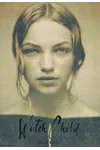
- For Historical Fiction Lovers: Start with her breakout masterpiece, Witch Child (2000). It is her most famous work and serves as the perfect introduction to her vivid, diary-style historical writing.
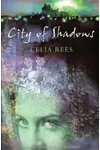
- For Paranormal Adventure Fans: Begin with City of Shadows (2002), the first installment of her Supernatural Trilogy.
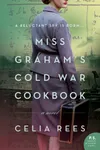
- For Adult Mystery & Spy Thriller Readers: Start with Miss Graham's Cold War Cookbook (2020), her first novel written specifically for adult audiences.
The Witch Child Duology: The Mary Newbury Saga
Rees's most celebrated series is a haunting historical duology that explores the hysteria of the 17th-century witch trials and its long-reaching impact across generations. Readers should experience these books in publication order:
- Witch Child (2000): Written in the form of journal entries hidden within a colonial quilt, this book follows fourteen-year-old Mary Newbury. After her grandmother is hanged as a witch in England, Mary escapes to the American colonies, where she must conceal her heritage and healing powers from a rigid, suspicious Puritan community.
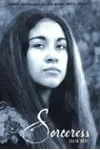
- Sorceress (2002): The sequel connects the past with the present. Alison Ellman, a modern researcher, discovers Mary's papers. She meets Agnes Herne, a young Native American student who can connect to Mary's spirit. Through Agnes's shamanistic visions, the story reveals Mary's life after fleeing the Puritan settlement and finding refuge within a Native American clan.
The Supernatural Trilogy: The Davey Williams Adventures
Also known as the Trap in Time trilogy, this series focuses on time-slips, ghosts, and ancient folklore. It follows a continuous narrative and should be read in sequence:
- City of Shadows (2002): Introduces Davey Williams, a "chime child" born at midnight who possesses the gift of second sight. While exploring ancient ruins in his hometown, Davey is pulled through a magical mirror into a ghostly parallel universe.
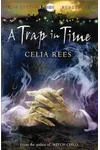
- A Trap in Time (2002): Davey's supernatural adventures continue as he navigates historical time-slips and dangerous entities threatening to trap him in the past.
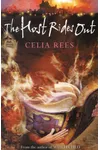
- The Host Rides Out (2002): The high-stakes conclusion where Davey must use his psychic gifts to confront the dark forces of the Wild Hunt and seal the boundary between worlds.
The H.A.U.N.T.S. Series: Episodic YA Horror
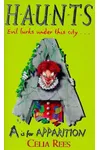
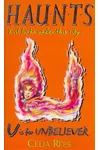
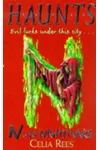
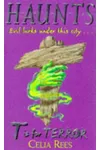
For younger readers looking for quick, episodic paranormal suspense, Rees penned the six-book H.A.U.N.T.S. series in 1998. The title of each book contributes to spelling out the acronym "H-A-U-N-T-S":
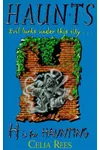
- H Is for Haunting (1998)
- A Is for Apparition (1998)
- U Is for Unbeliever (1998)
- N Is for Nightmare (1998)
- T Is For Terror (1998)
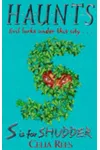
- S Is for Shudder (1998)
While these books are structurally standalone stories featuring eerie investigations, they are best enjoyed in their alphabetical order to complete the spine-chilling set.
Point Horror Unleashed and Gothic Teen Thrillers
During the late 1990s and early 2000s, Rees was a key contributor to the Point Horror Unleashed imprint, writing psychological thrillers and gothic tales that keep readers on the edge of their seats. These books are completely standalone and can be read in any order:
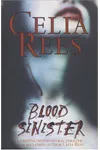
- Blood Sinister (1996): A gothic dual-narrative following a modern teen suffering from a blood disorder who discovers the diary of her Victorian ancestor, exposing a dark family secret involving vampires.
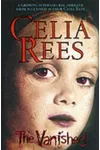
- The Vanished (1997): A tense mystery about missing teens and hidden secrets.
- Catchman (1998): A dark thriller surrounding local urban legends and seaside terrors.
- Facetaker (1999): A suspenseful story dealing with stolen identities and supernatural theft.
- The Cunning Man (2000): A tale rooted in traditional folk magic and rural superstition.
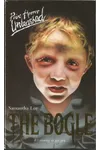
- The Bogle (2000) & Amy (2000): Creepy supernatural and psychological stories exploring isolation and fear.
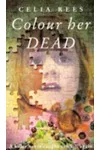
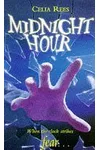
Similarly, her standalone thrillers Colour Her Dead (1994) and Midnight Hour (1997) offer gripping contemporary YA mysteries that stand apart from the main imprints.
Epic Standalone Historical Novels and Retellings
Beyond her series, Celia Rees has written several highly acclaimed standalone historical novels for young adults, showing her versatility in bringing different eras to life. These can be read in any order:
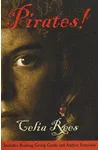
- Pirates! (2003): A swashbuckling story of Nancy Kington, a merchant's daughter, and Minerva Sharpe, a runaway slave, who escape their restrictive lives to become feared pirates on the high seas.
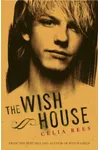
- The Wish House (2005): A nostalgic coming-of-age story set in the summer of 1976, blending art, family secrets, and gothic mystery.
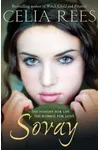
- Sovay (2008): A thrilling romance set during the French Revolution, featuring a bold highwaywoman who steals from the rich to uncover a conspiracy.
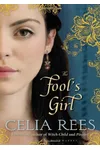
- The Fool's Girl (2010): A creative historical reimagining of Shakespeare's Twelfth Night, following Viola's daughter, Violetta, in Jacobean London.
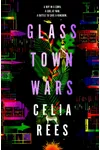
- Glass Town Wars (2018): A unique blend of virtual reality and historical fantasy inspired by the childhood writings and imaginary worlds of the Brontë siblings.
Transition to Adult Fiction
In 2020, Rees expanded her repertoire with her adult fiction debut, Miss Graham's Cold War Cookbook. Set in the immediate aftermath of World War II, the story follows Edith Graham, a British schoolteacher recruited as a spy in occupied Germany. She utilizes recipes published in a magazine to send coded intelligence back to England, creating a suspenseful and clever story of espionage, friendship, and moral complexity.
Reading Guidance and Caveats
For almost all of Celia Rees's bibliography, publication order is the recommended approach. The Witch Child duology relies on structural shifts between historical diary entries and modern discovery, making it essential to read Witch Child before Sorceress. While the Supernatural Trilogy follows a continuous arc for Davey Williams, the rest of her library consists of standalone books that can be read according to reader interest. Fans of historical fiction will appreciate how Rees weaves themes of female independence, resilience, and resistance against social constraints throughout all her historical standalones.