


The Recommended Reading Order for A Wizard in Rhyme
To experience Matthew Mantrell's transformation from a modern literature Ph.D. student to the Lord Wizard of Merovence, you should read the series in order of publication. Because the series follows a linear chronological timeline, the publication order matches the narrative progression perfectly. Reading the books out of order will spoil major character developments, shifts in political power, and the evolving relationships of the characters.
Here is the complete publication and chronological order for the series:
- Her Majesty's Wizard (1986)
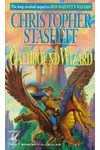
- The Oathbound Wizard (1993)
- The Witch Doctor (1994)
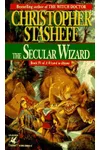
- The Secular Wizard (1995)
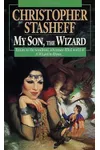
- My Son, the Wizard (1997)
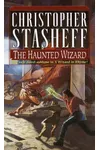
- The Haunted Wizard (1999)
- The Crusading Wizard (2000)
- The Feline Wizard (2000)
Book-by-Book Breakdown
Her Majesty's Wizard (1986)
The saga begins when Matthew Mantrell, a modern-day English literature Ph.D. student, deciphers an ancient parchment containing mysterious runes. He is instantly transported to the magical land of Merovence, an alternate-history version of medieval France. Matt quickly discovers that in this world, poetry is the key to casting spells. Using his vast knowledge of classical verse, he becomes a powerful wizard, rescues the rightful queen, Princess Alisande, and joins forces with a drunken dragon named Stegoman to battle the wicked sorcerer Malingo.
The Oathbound Wizard (1993)
Settled in his role as the Lord Wizard of Merovence, Matt finds himself bound by a rash vow to help conquer the neighboring kingdom of Ibile. The throne of Ibile is held by a tyrannical king backed by dark magic, forcing Matt to face heavy moral decisions. Along the way, he must rally new allies—including a cyclops named Fadecourt—while learning that magic bound by oaths carries high and unpredictable costs.
The Witch Doctor (1994)
The third book shifts the focus to Matt's best friend from the modern world, Saul Bremener. An avowed atheist and skeptic, Saul investigates Matt's disappearance and ends up stepping through the same magical portal. He lands in Allustria, an alternate Germany/Austria, where magic also operates through verse. As Saul searches for his friend, he is caught in the middle of a conflict with the evil witch queen Suettay, forcing him to grapple with his own skepticism in a world where divine and hellish forces are objectively real.
The Secular Wizard (1995)
Matt Mantrell returns as the focal character and travels south to Latruria, an alternate medieval Italy. Latruria's wicked old king has died, and a new ruler has taken the throne who rejects both the forces of Heaven (Good) and Hell (Evil), attempting to run a completely secular kingdom. Disguising himself as a traveling minstrel, Matt must navigate local political intrigue, dodge a deadly manticore, and solve the magical imbalance threatening the region.
My Son, the Wizard (1997)
Looking to rescue his parents from a modern Jersey City neighborhood ravaged by urban decay and gang violence, Matt brings them into the relatively peaceful realm of Merovence. However, their arrival coincides with an impending invasion by the conquest-hungry Moors. Matt must protect his family and the kingdom, while also introducing his father to the rules of verse-based magic.
The Haunted Wizard (1999)
When Prince Gaheris of the rival kingdom of Bretanglia (alternate Britain) is found murdered inside a Merovence tavern, the peace between the two nations is threatened with collapse. Matt is tasked with investigating the crime, which leads him to uncover a sinister cult, political plots, and a rival spellcaster determined to ignite a devastating war.
The Crusading Wizard (2000)
A massive, unstoppable barbarian horde threatens the civilized world, marching steadily toward the borders of Merovence. When Matt and Queen Alisande receive an urgent cry for help from Jerusalem, the barbarians' next target, Matt travels to the front lines to defend the city and confront the massive threat before it can destroy his new home.
The Feline Wizard (2000)
The final novel centers on Balkis, a were-cat princess and wizard's apprentice. When Balkis is abducted by the followers of an ancient, evil snake goddess and taken to the far East, Matt leads a rescue party to retrieve her. Meanwhile, Balkis must rely on her wits, her cat form, and the help of a local young man named Anthony to survive and escape captivity.
What to Know Before You Start
The Magic of the Word
The defining feature of Christopher Stasheff's series is its unique, verse-based magic system. Magic in this alternate medieval Europe operates on the power of language. Reciting a rhyming poem or stanza will shape reality according to the literal meaning of the words. A simple nursery rhyme might perform a minor trick, while a classic piece of literature like Shakespeare or Milton can summon storm-level power. Because Matt is a literature scholar, his head is filled with hundreds of poems, making him instantly more powerful than the native wizards who must craft their own rhymes from scratch.
The Geography of Alternate Europe
Stasheff's setting is a geographical "what-if." The world resembles Europe during the high Middle Ages, but with key differences. For instance, a physical land bridge connects Bretanglia (Britain) to the European mainland, allowing easier travel and conflict. The nations are fantasy analogs of real historical states, populated by mythical creatures like dragons, trolls, and unicorns alongside knights and peasants.
The Battle of Good and Evil
Unlike many modern, morally gray fantasy novels, A Wizard in Rhyme has a clear moral framework strongly influenced by Christian theology. All magic is ultimately fueled by either the divine (represented by Heaven) or the demonic (represented by Hell). Characters who use magic must choose their source, and using black magic has corrupting, soul-damning consequences. Stasheff uses this framework to explore themes of faith, loyalty, and the responsibilities of power, often with a lighthearted, humorous touch.
Practical Reader Advice
For the best experience, you should start with Her Majesty's Wizard. While books like The Witch Doctor and The Secular Wizard focus on different regions and characters, they still rely on the world-building established in the first two novels. The books are relatively short, fast-paced, and maintain a consistent, lighthearted tone throughout. They are excellent reads for fans of classic portal fantasy, puns, and literature-focused magic systems.