
How to Read the Wizards Series
Simon Hawke’s Wizards series (often referred to as the Wizard of 4th Street series) blends Arthurian myth, futuristic sci-fi, and quirky urban fantasy. The series takes place in a world where modern technology has collapsed due to depleted resources, only for ancient magic to return and power the cities of the 23rd century. To help you navigate this magic-powered future, we have broken down the two main ways to read the series: the Chronological Order and the Publication Order.
Option 1: The Chronological Reading Order
If you want to experience the timeline of this world from its earliest magical origins to its modern thaumaturgy era, the chronological order is a fantastic path. Under this arrangement, the seventh published book, The Wizard of Camelot, moves to the absolute front of the queue as "Book 0," establishing the return of Merlin to a collapsing Earth.
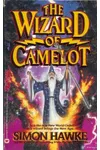
- The Wizard of Camelot (1993) – Chronologically Book 0. Set during the transition era where Merlin returns to save humanity amidst global anarchy, acting as a direct prequel.
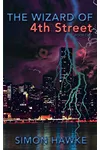
- The Wizard of 4th Street (1987) – The original entry point. Introduces Wyrdrune, an apprentice wizard who struggles to cast spells correctly, and Kira, a clever thief.
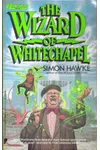
- The Wizard of Whitechapel (1988) – Set in London, Wyrdrune and Kira take on dark forces lurking in the Victorian-era legacy streets.
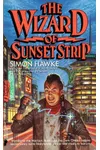
- The Wizard of Sunset Strip (1989) – The magical adventures head to the neon-drenched streets of Los Angeles.
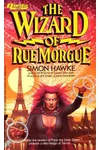
- The Wizard of Rue Morgue (1990) – Pits our magical heroes against gothic and supernatural mysteries in Paris.
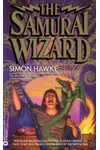
- The Samurai Wizard (1991) – Wyrdrune travels to Tokyo, blending Eastern martial arts with Western thaumaturgy.
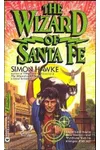
- The Wizard of Santa Fe (1991) – The action shifts to the American Southwest, introducing unique localized magic systems.
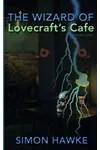
- The Wizard of Lovecraft's Cafe (1993) – Combines Hawke's classic humor with cosmic horror themes and Cthulhu-inspired threats.
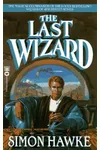
- The Last Wizard (1997) – The final volume of the original 1980s and '90s run, wrapping up Wyrdrune's main character arc.
- A Spell for the Dying (2023) – Revives the series after a 26-year hiatus, shifting focus to new investigations in the Bureau of Thaumaturgy.
- A Spell for the Changing (2025) – Follows Special Adept Agent William Slade as he navigates being possessed by the spirits of Merlin and Gorlois.
- A Spell for Sedition (2026) – The latest installment, dealing with political conspiracies and anti-thaumaturgy movements.
Option 2: The Publication Reading Order
Reading in publication order is highly recommended for first-time readers. This allows you to experience the natural evolution of Hawke’s writing style, world-building, and the long gap between the classic 20th-century run and the modern revival novels. It also places the spin-off novel in its natural release context.
- The Wizard of 4th Street (1987)
- The Wizard of Whitechapel (1988)
- The Wizard of Sunset Strip (1989)
- The Wizard of Rue Morgue (1990)
- The Samurai Wizard (1991)
- The Wizard of Santa Fe (1991)
- The Nine Lives of Catseye Gomez (1992) – Spin-off novel.
- The Wizard of Camelot (1993) – Prequel novel.
- The Wizard of Lovecraft's Cafe (1993)
- The Last Wizard (1997)
- A Spell for the Dying (2023)
- A Spell for the Changing (2025)
- A Spell for Sedition (2026)
What to Know Before You Start
Before you dive in, it is helpful to understand how the series is structured. Simon Hawke (the pen name of Nicholas Valentin Yermakov) built this world as a "Thaumaturgic Age." Instead of computer chips and fossil fuels, society relies on runic formulas and spell casting. The tone of the books is lighthearted, sarcastic, and fast-paced, very much in line with late-1980s adventure fantasy.
The series splits into two distinct eras. The first nine books (published between 1987 and 1997) focus on Wyrdrune's growth from a clumsy apprentice to an accomplished hero, accompanied by Kira and a colorful supporting cast. The modern revival books (starting with A Spell for the Dying in 2023) shift focus to the Bureau of Thaumaturgy, taking on the tone of a magical police procedural. These newer books feature Special Adept Agent William Slade, who must deal with political conspiracies and the literal spirits of ancient wizards sharing his mind.
Spin-offs and Universe Connections
In addition to the main line of novels, Simon Hawke wrote one primary spin-off in this universe: The Nine Lives of Catseye Gomez (1992). Originally appearing as a short story in 1991, the concept was expanded into a full-length novel. Catseye Gomez is a genetically engineered, talking cat who works as a hard-boiled private investigator in the same magic-ruled future. Gomez features a cynical, noir-inspired attitude and a prosthetic eye capable of firing stun bolts. This spin-off can be read at any point after the first few novels, though it fits best right after The Wizard of Santa Fe.
While Simon Hawke is also famous for his TimeWars series and his contributions to the Dark Sun campaign setting, those universes remain entirely separate from the Wizards books. Reading the Wizards series does not require any knowledge of his other works, making it a perfectly self-contained adventure.