

The Recommended Reading Order for Worldweavers
For the best experience, readers should follow the Worldweavers books in their publication order. The series follows a linear chronological progression, tracking the growth of protagonist Thea Winthrop as she moves from a magically powerless teenager to an experienced elemental mage. Reading the books out of order will spoil major character developments, shifts in the magical system, and key plot points.
Here is the recommended reading path for the series:
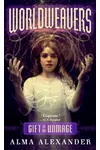
- Gift of the Unmage (2007)
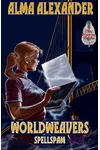
- Spellspam (2008)
- Cybermage (2009)
- Dawn of Magic (2015)
Detailed Book Breakdown
1. Gift of the Unmage (2007)
The series begins with Gift of the Unmage, introducing us to fourteen-year-old Thea Winthrop. In this alternate America, magic is real, structured, and deeply integrated into daily life. Thea is a 'double seventh' child—the seventh child of a seventh child—which by all traditional laws of magic should make her an incredibly powerful mages. Yet, she cannot cast even the simplest spell. Labeled an 'Unmage,' she is sent to the Wandless Academy, a boarding school designed for magically challenged adolescents. It is here that Thea embarks on a spirit quest guided by Cheveyo, an Anasazi mage, and begins to discover that her lack of conventional magic is actually the key to a rare and ancient power known as 'worldweaving.'
2. Spellspam (2008)
In the second book, Spellspam, the stakes rise as Alexander introduces a brilliant blend of technology and mysticism. The digital and magical worlds collide when ordinary junk email becomes infected with literal magic. This 'spellspam' runs rampant across the internet, wreaking havoc in the mundane world and threatening the delicate balance of the magical community. Having discovered her abilities as a worldweaver, Thea is one of the few who can stand against this digital contagion. Alongside her friends Magpie and Terry, she must figure out how to debug a network of rogue spells before the entire magical infrastructure collapses.
3. Cybermage (2009)
The third installment, Cybermage, serves as the grand finale of the original trilogy. Thea, now recognized as an elemental mage, is drafted by the Federal Bureau of Magic to deal with a growing global crisis. The story introduces a sci-fi/fantasy blend featuring Nikola Tesla, reimagined as a legendary quad-elemental mage trapped inside a mysterious white cube. Thea must protect the cube from the hostile alien race known as the Alphiri, while navigating betrayals, changing friendships, and the immense pressure placed on her shoulders as the world's premier cybermage.
4. Dawn of Magic (2015)
Though the initial story arc concluded in 2009, Alexander returned to Thea's universe in 2015 with Dawn of Magic. Set during Thea's university years, the novel explores a new phase of her life. The world's magical foundations are beginning to fracture, and the very source of magic is under threat. Thea must utilize everything she has learned about cyber-magic and worldweaving to trace the source of the decay and restore balance, making it a crucial epilogue and continuation of her journey.
The definitive 'Author's Cut' Editions
In 2023, Alma Alexander reissued the entire saga as the definitive Worldweavers: Author's Cut editions. Over the years, the series had gone through different publishers and formats, occasionally causing confusion about its status. With the Author's Cut editions, Alexander restored her original vision for all four books, establishing them as the absolute version of the text. When purchasing or borrowing the series today, it is highly recommended to look for these 2023 editions, as they present the most polished, complete, and cohesive version of Thea's story.
What to Know Before You Start
Before diving into Worldweavers, it helps to understand what makes this series distinct from traditional young adult magic school fantasies. While it shares some basic tropes with series like Harry Potter, Alexander consciously built an American magic system heavily influenced by Native American lore and cybernetic concepts rather than European folklore.
Key elements of the world include:
- Spellspam and Cyber-Magic: Magic is treated like a system of coding. Spells can be sent via email, servers can hold magical energy, and hackers use programming skills to manipulate elemental elements.
- Native American Lore: Instead of traditional wands and cauldrons, Thea's journey involves vision quests, interactions with mythical figures like Grandmother Spider, and guidance from indigenous mages.
- The 'Four-Book Trilogy': The author frequently and affectionately refers to the series as a 'four-book trilogy.' This is because the story was originally conceived and sold as a three-part arc (ending with Cybermage), but the addition of Dawn of Magic expanded it into a tetralogy.
- No Standalones: Each book builds directly on the events, character growth, and lore established in the previous volume. Reading them out of order is not recommended, as the narrative functions as a continuous story.