
The Recommended Reading Order for the Worldwar Saga
Harry Turtledove’s acclaimed Worldwar series is a masterpiece of alternate history and science fiction. The saga spans eight novels, divided into three distinct segments: the original tetralogy, the sequel trilogy, and a final concluding book. Because the narrative is strictly linear and follows continuous storylines across decades, there is only one logical way to read this series: in order of publication.
Phase 1: The Original Worldwar Tetralogy
The series begins at the height of World War II in 1942. The Allied and Axis powers are locked in a brutal struggle when an alien fleet arrives in Earth's orbit. These reptilian conquerors, known as the Race, expect to find a primitive world of sword-wielding knights. Instead, they must face a rapidly developing, industrialized humanity that refuses to submit. You must read these four books in sequence:
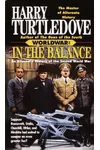
- Worldwar: In the Balance (1994) – The invasion begins as the Race launches its assault, forcing historic enemies to consider desperate alliances.
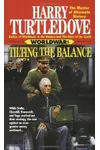
- Worldwar: Tilting the Balance (1995) – Humanity starts to adapt to the advanced alien technology, and the battle lines shift across the globe.
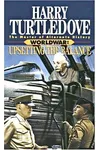
- Worldwar: Upsetting the Balance (1996) – The Race struggles with human resilience and unpredictable battle tactics, while human factions attempt to reverse-engineer alien weaponry.
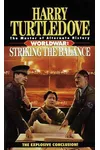
- Worldwar: Striking the Balance (1996) – The thrilling climax of the initial invasion, ending with a tense ceasefire that permanently alters the balance of power on Earth.
Phase 2: The Colonization Sequel Trilogy
Set roughly twenty years after the events of the original tetralogy, the Colonization trilogy moves the timeline into the 1960s. The long-awaited colonization fleet of the Race arrives, bringing millions of civilian aliens who expect to settle on their newly conquered world. Instead, they find an uneasy Cold War-style truce between the human empires and the initial military force of the Race. Read this trilogy next:
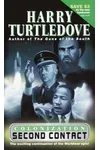
- Colonization: Second Contact (1999) – A new generation of humans and aliens interact as the colonization fleet arrives, sparking fresh political and military friction.
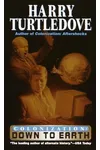
- Colonization: Down to Earth (2000) – The cultural clashes intensify as alien civilians settle on Earth, introducing new technologies, drugs, and societal changes.
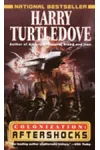
- Colonization: Aftershocks (2001) – Tensions reach a boiling point as rogue factions threaten to shatter the fragile peace and plunge the planet back into global war.
Phase 3: The Epic Finale
The saga concludes with a standalone novel that fast-forwards several decades into the 21st century. It serves as the ultimate resolution to the threads spun throughout the previous seven books:
- Homeward Bound (2004) – Earth has developed its own interstellar technology. An American starship makes the long journey to Home, the home planet of the Race, forcing the alien empire to negotiate with humanity on equal terms.
What to Know Before You Start
Before diving into In the Balance, it helps to understand Harry Turtledove’s unique narrative style. As a trained historian with a Ph.D. in Byzantine history, Turtledove brings unmatched political and military realism to his speculative worlds. The series is celebrated for its massive, sprawling cast of characters, featuring a mix of fictional regular soldiers, resistance fighters, scientists, and real historical figures like Vyacheslav Molotov and Mao Zedong.
Crucially, the books also feature perspective chapters from the aliens themselves. You will get inside the minds of the Race, learning about their rigid, slow-to-change bureaucracy, their shock at human rapid innovation, and their struggles to comprehend human concepts like family, romance, and political independence. This multi-perspective approach ensures that the conflict feels grounded, complex, and deeply human (and alien).
Are There Any Spin-offs or Co-authored Books?
Unlike some of Turtledove's other alternate history worlds, the Worldwar universe is self-contained. There are no official spin-offs, short story collections, or co-authored books set in this specific timeline. The eight core novels represent the entirety of the narrative. Readers looking for related concepts can check out Turtledove's other massive alternate history works, such as the Southern Victory series, though they are entirely separate universes.
Can the Subseries Be Read Independently?
We strongly advise against reading the Colonization trilogy or Homeward Bound as standalones. The character arcs, geopolitical status, and technological leaps in the later books rely heavily on the events and resolutions of the original tetralogy. Starting with Second Contact will spoil the ending of Striking the Balance and leave you confused about the complex relationships between the human factions and the Race. For the best experience, start at the very beginning with In the Balance.